


TL;DR: Getting people through the doors doesn’t necessarily mean you’re accomplishing your mission. Kohl’s partnership with Amazon drove foot traffic but may not have translated into enough sales to justify the costs. Churches should learn from that: know what you’re trying to accomplish with your building, and measure that—not simply how many people come through it.
“Being in a garage doesn’t make you a car anymore than being in a church makes you a Christian.”
I remember hearing some version of this phrase repeatedly during my upbringing in conservative Christianity. While the tone and tenor changed depending on the preacher delivering the line, the point was obvious.
Yet, all these years later, it seems there are some retail business leaders who might have done well to take the saying to heart, perhaps only rephrased a little:
Being in a store doesn’t make you a customer anymore than being in a garage makes you a car.
The Kohl’s-Amazon Experiment
It’s no secret that the retail shopping industry has experienced significant disruption with the advent of Amazon and other online shopping trends, further exacerbated by the COVID-19 pandemic.
Recognizing sagging demand for the traditional retail shopping experience, Kohl’s made what seemed like a strategic move: it would serve as a designated location for Amazon returns. More than that, Kohl’s would staff and handle those returns on its own dime.
Kohl’s began accepting Amazon returns in select stores in 2017 and expanded the service nationwide in 2019.
The logic was something like this: Amazon returns would increase foot traffic. Those same people, fresh off the feeling of getting money back from a return—and perhaps handed a Kohl’s coupon—might browse the store and make another purchase.
It sounded like a great idea.
And initially, the numbers seemed promising. In 2021, Kohl’s said it had gained two million new customers through its Amazon partnership.
But then something interesting happened.
Kohl’s largely stopped talking about it.
According to more recent reporting, the company stopped accepting Amazon returns at some locations. Modern Retail noted that the expected boost in foot traffic and sales “never seemed to have materialized,” while The Washington Post reported that the deluge of Amazon returns weighed on store employees, slowing operations without necessarily boosting sales.
The Amazon partnership unquestionably drove traffic to Kohl’s.
What’s much less clear is whether that traffic translated into enough purchasing to justify the operational burden of processing all those returns.
Which brings me to churches.
How Many People Come Through Your Building?
Back about ten or fifteen years ago, when I was new to the Mainline Protestant world, I remember hearing a common refrain whenever church leaders talked about average attendance or Sunday participation.
It was something like:
“Rather than count who comes on Sunday mornings, we’re tallying everyone who comes through our building during the week—Boy Scouts, childcare, community groups, and so on. That tells us more about our true impact and reach than Sunday attendance.”
But does it really?
Even back then, I remember thinking that didn’t sound quite right.
The Kohl’s-Amazon partnership illustrates why.
Getting people in the door isn’t automatically a win.
Someone walking through Kohl’s carrying an Amazon return is certainly foot traffic. But that doesn’t necessarily make them a Kohl’s customer.
Likewise, someone attending a community meeting, dropping a child off at daycare, or attending a recital inside a church building certainly came through the doors.
But what does that actually tell us about the church’s impact?
Maybe something or maybe very little.
And meanwhile, all that activity comes with costs: staff time, volunteer energy, utilities, maintenance, cleaning, wear and tear on the building, and the opportunity cost of using the space for one thing rather than another.
Be Strategic
The connections between established churches and Kohl’s are worth noting.
As one article observed, Kohl’s “has long had a loyal fan base,” but even that loyalty hasn’t made the company immune to competition and shrinking demand. It needs to be strategic as it navigates uncertain times.
And strategic is the word worth repeating.
As I hope you’ve already seen, I have a book coming out September 8 called The Church as Community Hub, which is all about utilizing church buildings to impact their communities.
So perhaps it sounds strange for me to say this:
Not every opportunity to use your building is worth pursuing.
First, as the Kohl’s example illustrates, bringing more people into your building creates additional demands on your people and physical plant.
But even more importantly, bringing in more people doesn’t automatically mean you’re accomplishing whatever you hoped bringing them in would accomplish.
To be clear, The Church as Community Hub isn’t about bait-and-switching people into joining churches. But neither do I think the point is simply filling church buildings with activity. As I try to make clear in the book, I believe these spaces can help churches be good neighbors while also sharing the good news of Jesus.
Whatever your church understands its ultimate “bottom line” to be—to borrow from the first article in this series—the important thing is to ask whether your strategy is actually advancing it.

Because in the Kohl’s example, it appears plenty of people were running in and out of the stores, treating them as another errand to check off, while Kohl’s staff and stores bore the operational burden without an obvious corresponding payoff.
Churches should pay attention to that.
Maybe simply getting more people into your building is the win. If that’s your goal, fine.
But if you’re hoping that foot traffic will produce something else—relationships, community impact, evangelism, discipleship, financial sustainability, or something entirely different—then make sure that’s actually happening.
Don’t mistake the thing that’s easy to measure for the thing you’re actually trying to accomplish.
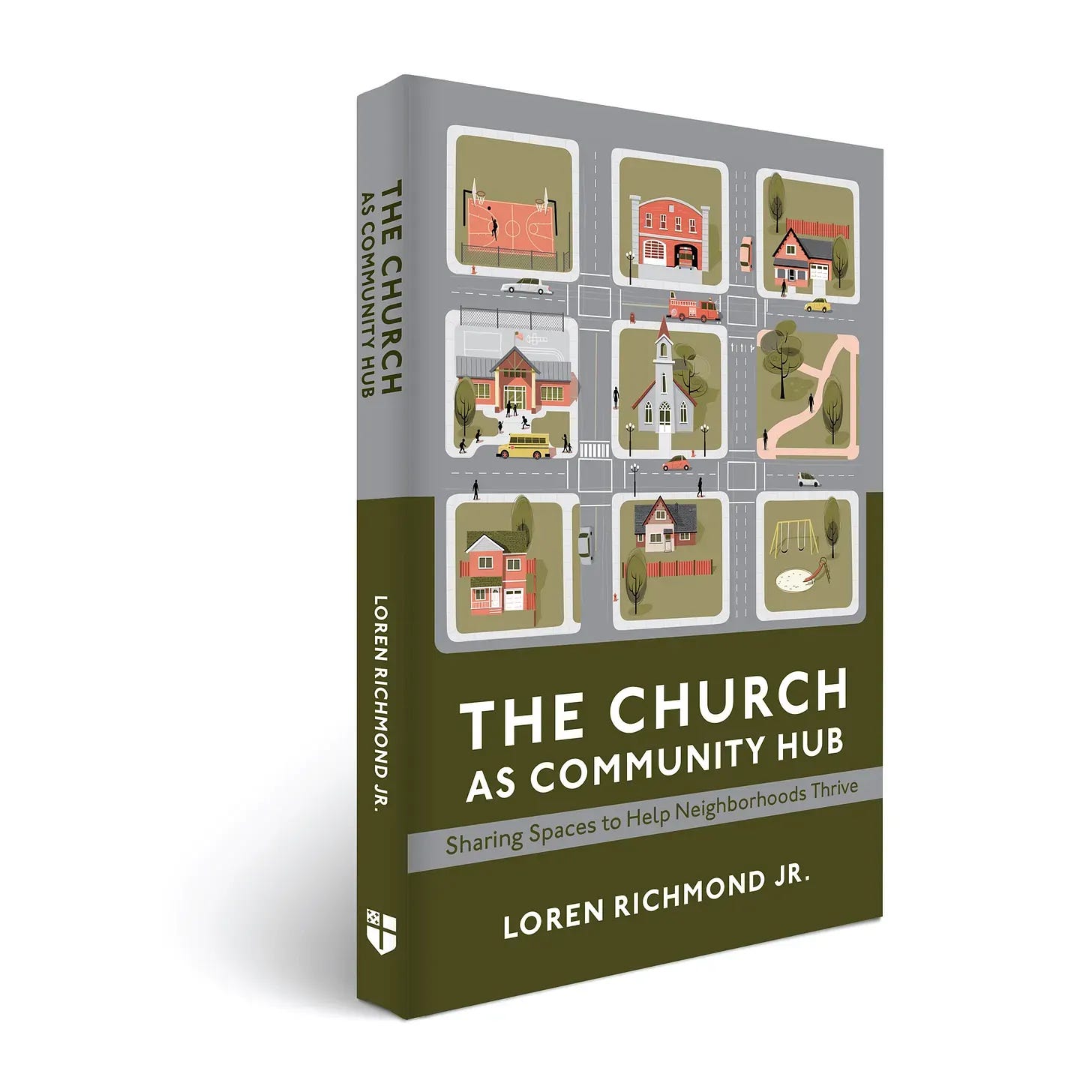
P.S. My book is available for pre-order right now!
And yes, it’s available on Amazon or wherever books are sold.
Sources:
https://www.reviewjournal.com/business/kohls-stops-accepting-amazon-returns-at-some-locations-3341853/
https://www.modernretail.co/retailers/kohls-has-stopped-accepting-amazon-returns-at-some-store-locations/
https://www.washingtonpost.com/technology/2024/07/21/amazon-prime-day-returns/