


My recent post on Progressive Christianity within the Mainline Church has gained a lot of attention, which has been interesting to watch. As expected, it has also sparked a mix of responses—some thoughtful, some critical. While negative comments on social media are never enjoyable, I deliberately kept the post itself nuanced and reflective (aside from the somewhat click-baity title) to avoid hot takes and unnecessary backlash.
Naturally, the discussion has led to questions about where I personally stand on the theological spectrum. It’s a fair question, and one I’ve addressed before. In short, I largely reject the traditional right/left theological binary. That said, if I had to place myself on that spectrum, I’d likely fall left of center, given my positions on egalitarianism, LGBTQ+ affirmation, and a broad soteriology.
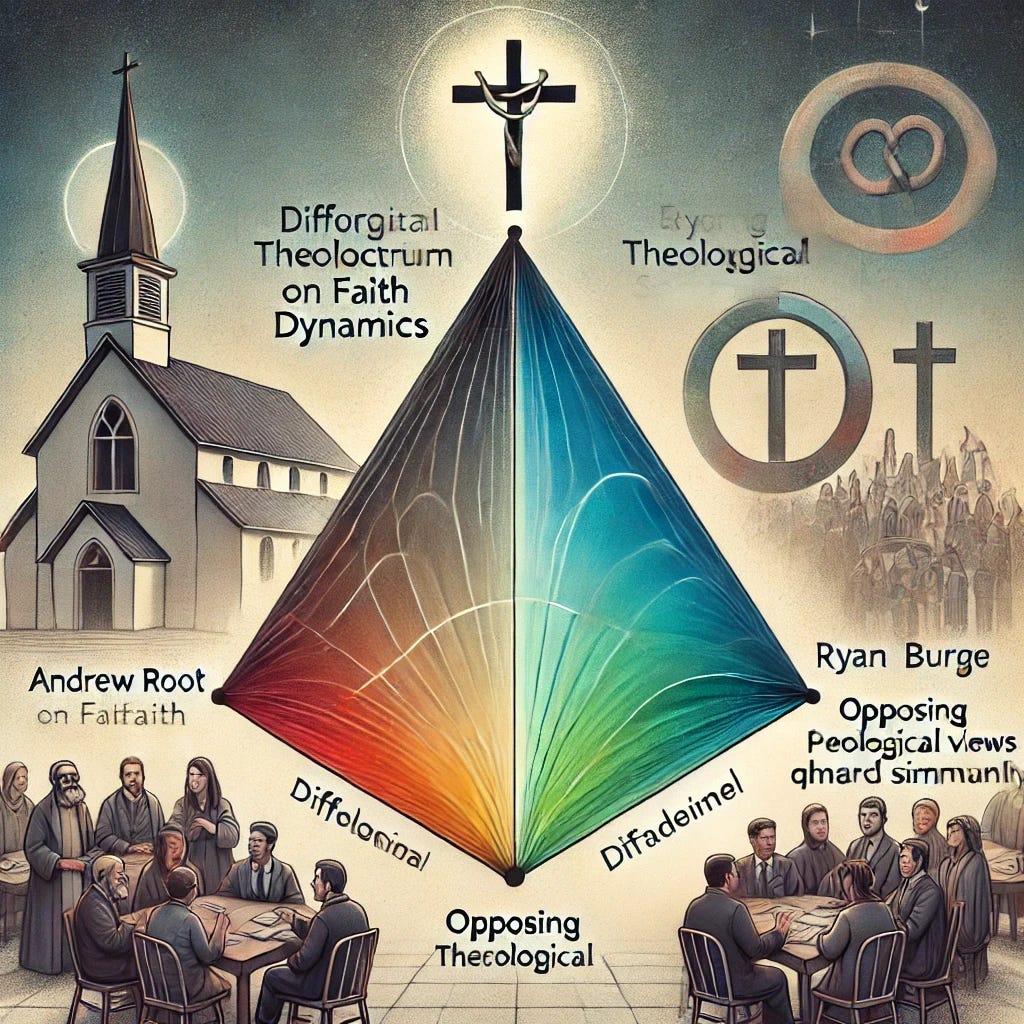
However, I believe models like Andrew Root’s theological triangle or Ryan Burge’s horseshoe theory offer a much better framework for understanding today’s cultural and theological landscape. These perspectives capture the complexity of modern faith in ways that a simple left/right divide cannot.
(See below.)

Faith, Politics, and Transformation: Burge’s Horseshoe Theory Meets Root’s Triangle

In today's political and religious landscape, the lines between faith and politics are increasingly blurred. As I listened to a recent episode of Rainer on Leadership, featuring sociologist Ryan Burge, I was struck by how deeply these dynamics influence not just the Southern Baptist Convention (SBC), but American Christianity as a whole. The September 2…


