


TL;DR: We often feel compelled to use the same tools of power, domination, and oppression that we're trying to overcome. But Jesus offers another way—one rooted in humility, service, and self-sacrificial love. Drawing on Audre Lorde's warning that “the master's tools will never dismantle the master's house,” this sermon explores how Christ has broken that vicious cycle. Even in times of political uncertainty, the promise of Christ's resurrection frees us to live differently, trusting that ultimate victory doesn't depend on our ability to seize or wield power.
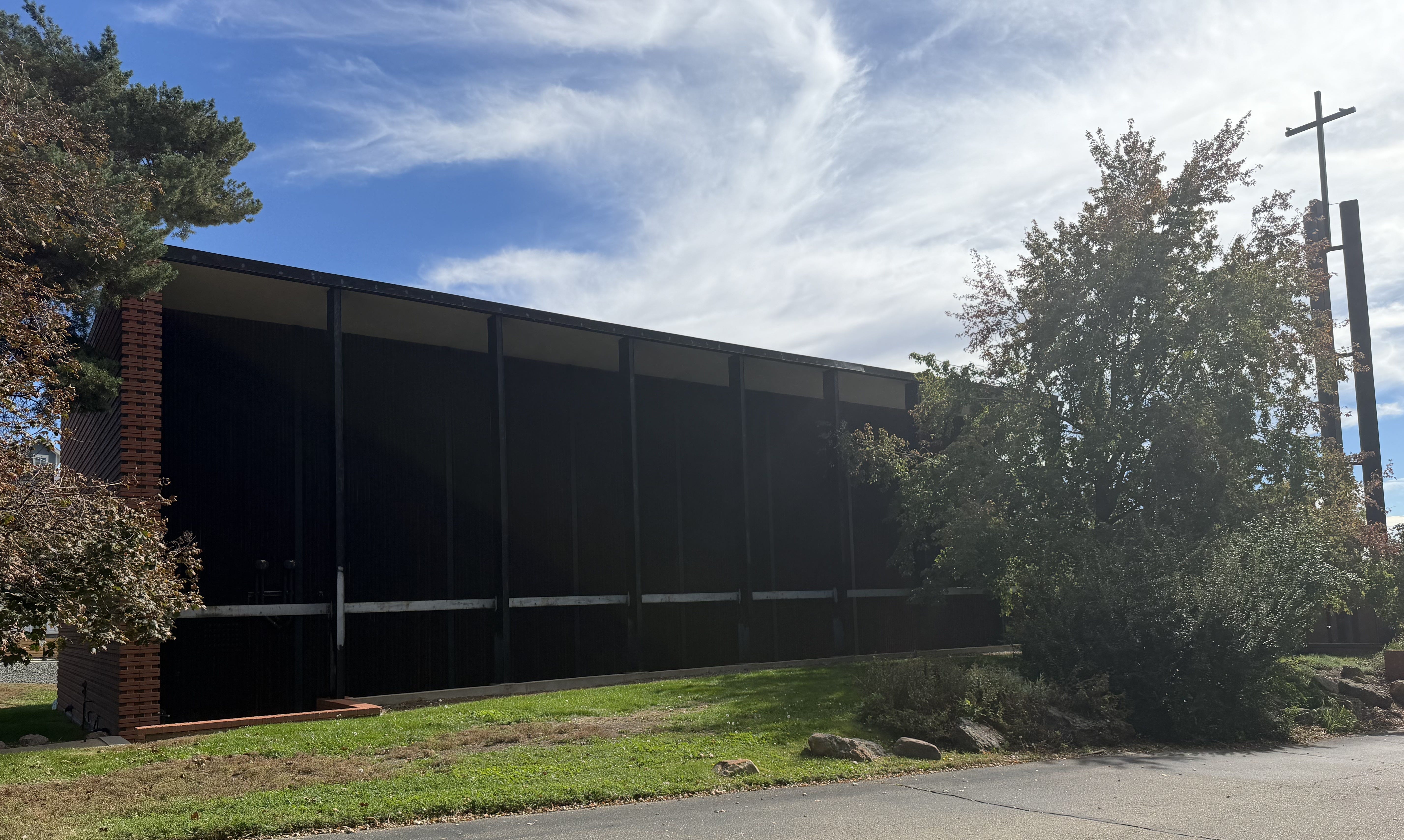
This is the transcript—formatted for Substack—of my sermon delivered Sunday, Nov 1 at Wheat Ridge Congregational Church (I’ll also update the audio when I can).
If a tree falls in the forest and no one is around to hear it, does it really make a sound?
If you go on vacation and don’t take any pictures, were you really there?
If you do a good deed and don’t post about it on social media, does it really count?
Among other things, I dabble in the nonprofit sector doing organizational and philanthropic consulting for churches and nonprofits. I have an MBA with a nonprofit emphasis and a certificate in fundraising. And recently, during a conversation with an executive director, he mentioned that he’d been told he needs to take more pictures of himself doing the good work of the organization.
In other words, if you do a good deed, but don’t post about it on social media, it doesn’t really count.
I grimaced and I begrudgingly agreed. That’s probably right, I said. And yet earlier in the book of Matthew, said quite the opposite. Be careful that you don’t let your religion to practice it in front of other people to draw their attention. Whenever you give to the poor, don’t blow your trumpet as the hypocrites do in the synagogues and in the streets so that you might get attention from other people.
Instead, when you give the poor, don’t let your left hand know what your right hand is doing.
I believe those words.
But in that fundraising conversation, I found myself wondering how practical they really are.
Because if you do a good deed and don’t post about it on social media, no one will know the good deed, the good work that your organization did. And if no one knows the good work that your organization does, they won’t financially support your organization. And if no one financially supports your organization, you won’t be able to continue doing the good work.
It’s a vicious, vicious cycle.
And it’s not just fundraising. It seems that more and more doing good requires playing the same game we’re trying to change.
Which reminds me of some words from the American writer, professor, and philosopher, Audre Lorde.
The Master’s Tools
Crafting a good sermon every week, well I guess you all are ultimately the judge, but crafting a sermon every week, good or not, is quite the task and requires for me a good bit of preparation, especially amongst my different time commitments and responsibilities. And something I’ve developed as a habit is every week to sit down after worship to look ahead at next week’s scripture and to read some commentaries. I found that even 30 or 45 minutes can get my brain spinning and later, whether it’s that day or later the week, I’ll somehow begin to work out in my head a central theme that I can organize my sermon around.
So if you see me slip into the office around 11.30 or 11.45, just know that that’s what I’m doing. This week I’m actually running off immediately after worship to go and my daughter is playing in the bell choir at her church. So I’ll be running out this morning. But last week, as I sat in the office,
Thinking about this morning’s message, Audre Lorde came to mind. Perhaps it has something to do with the Audre Lorde poster on the shelf right above the desk, the very desk or the very shelf that I had moved the desk closer to that very day.
Now in truth, I don’t actually know what the poster says. It’s rolled up with only her name showing, but it brought to mind some words that Lord shared at a conference in New York in 1979.
Speaking out about the lack of representation and diversity at the conference, Lorde offered these words that have continued to resonate some 40 years after she first shared them. The master’s tools will never dismantle the master’s house, she said. What does it mean, she asked, when the tools of racist patriarchy are used to examine the fruits of that same patriarchy?
Answering her own questions, she asserted, it means that only the most narrow perimeters of change are permissible and allowable. For the master’s tools will never dismantle the master’s house, she said.
They may allow us to temporarily beat him at his own game, but they will never enable us to bring about genuine change.
Lorde was in those words advocating on behalf of poor lesbian and black women amongst others, demanding representation and recognition. It’s certainly a challenge that continues to this very day.
We still find ourselves caught in that same vicious cycle, feeling compelled to use the tools of power, oppression and domination, yet never producing lasting change. Only as Lorde said, the narrowest perimeters of change, only temporarily beating them at their own game, only achieving short term wins that cost us soul and spirit.
Inasmuch as we might appreciate Lorde’s wisdom, it seems like we have no other options. It feels as if the only way to win in this world is to use those same tools of power and oppression and domination. It is a vicious cycle.
This morning, if I might be so bold as a straight white man speaking some 40 years after she shared those words, I’d like to connect the words of Audre Lorde, the words of our Lord and Savior, Jesus Christ.
God’s Way of Exercising Power
In first century Judaism, there were different groups who sought to influence how their faith was practiced. There were the Essenes who emphasized purity and are associated with the Dead Sea Scrolls. There were the Zealots who were obviously wanting to overthrow Rome through rebellion. There are the Sadducees who were associated with temple worship and priestly practices.
And then there are the Pharisees who emphasize right practice and interpretation of the law. Often we read about the Pharisees and the scribes in the gospels. So these, Pharisees, are the religious leaders that Jesus is most often debating in the gospels, Matthew, Mark, Luke, and John. And it’s whose actions we critique, whose actions he critiques in this morning’s passage.
Jesus challenges their prideful displays of religious piety outward displays that do not match their heart.
As one commentator notes, pious words and orthodox convictions alone do not make a faithful person. Pious words and orthodox convictions alone do not make a faithful person. It is so easy to confuse our interests with God’s purposes and our power with God’s power. We have a tendency to create
false and sinful hierarchies that replace God’s way of exercising power with our own. It is a vicious cycle.
And it feels like we have no choice but to keep using those same tools.
What then? What then is God’s way of exercising power? Jesus said, the greatest among you will be your servant and all who exalt themselves will be humbled and all who humble themselves will be exalted. This is a theme that Jesus emphasized repeatedly throughout the book of Matthew.
In chapter 18, when the disciples were asking who would be the greatest in the kingdom, Jesus places a child among them and identifies greatness with humbling oneself like that child. In chapter 20, Jesus again identifies greatness as serving others. He then presents his own mission as the example, coming to give his life to seek and to serve the lost.
And here once again, greatness means being a servant. As one commentator notes, according to Jesus, the true measure of human faithfulness is not found not in the words one speaks or the doctrines one accepts, or even if I might add this this morning, how one votes, but it is found in the orientation of one’s heart.
and orienting one’s whole life toward God requires a radical form of egalitarianism. The point is this, in God’s economy, in God’s way of doing things, greatness comes through humility and self-sacrifice.
It no longer has to be the vicious cycle. We do not have to use the master’s tools.
But These Are Not Ordinary Times
I mean sure you might say that’s all well and good, Lauren. Great ideas. But these are not ordinary times. The stakes are too high. The injustice is too great. The entrenched power is too strong. We don’t have the luxury, the privilege of doing things differently right now. We’ve got to fight and we’ve got to win.
I’m reminded of the proverbial church finance meeting where a significant budget crisis is revealed. The pastors talk about faith and trust and abundance all sound well and good, but now that the real crisis has arrived, it’s time to bring in the real experts. So we asked the pastors and the spiritual leaders to slide over a few seats and to make room for the accountants and the business executives.
You know, they have the real expertise that we really need in a time like this.
Things are desperate after all and we’ve got to do whatever it takes to survive.
But let me remind again of the promise that Jesus makes in this passage.
All who exalt themselves will be humbled and all who humble themselves will be exalted.
We do not have to use the master’s tools. And Jesus himself is proof of that promise.
Christ Has Broken the Vicious Cycle
Philippians chapter 2 in a passage that was written early to the early Christians in book of in the Philippi, the early church in Philippi, what we now know today as the book of Philippians, the Apostle Paul shares these words, which was actually in an early hymn that was shared in Christian communities. It says,
Let the same mind be in you that was in Christ Jesus, who, though he was in the form of God, did not regard equality with God as something to be exploited, but emptied himself, taking the form of a slave, being born in human likeness. And being found in human form, he humbled himself and became obedient to the point of death— even death on a cross. Therefore God also highly exalted him and gave him the name that is above every name, so that at the name of Jesus every knee should bend, in heaven and on earth and under the earth, and every tongue should confess that Jesus Christ is Lord, to the glory of God the Father.
Therefore, my beloved friends, every time we think
That won’t work.
The stakes are too high.
That story about Jesus doesn’t work in real life.
Scripture reminds us.
We don’t have to use the master’s tools. And Jesus himself is proof of that promise.
In Christ Jesus, God has broken the vicious cycle. In Christ Jesus, God has shown us we do not need to use the master’s tools. In Christ Jesus, God has shown us once and for all that the ultimate victory comes through the self-sacrificial love of Jesus rather than power and oppression.
Now, truth be told, this may not happen on our own two and four year timetables.
And this is, I think, the hardest part to trust.
That the victory will, that the victory revealed in Christ will ultimately be fulfilled.
Yet this is why we gather for worship, not simply to be encouraged and affirmed, but also to be reminded and assured, as Paul reminded and assured those early Christians, that the promise is already true and will happen. And that promise, it frees us to live another way.
A Glimpse Beyond the Vicious Cycle
A few nights ago, my middle school daughter was talking with my wife about the Estonian singing revolution. Anyone ever heard of the Estonian single sing revolution?
It caught my attention. I had just finished a war history book from the library that seemed to needlessly glorify the value and efficacy of war. The author seemed to affirm this same vicious cycle we’ve been talking about that ultimately war is the only way to accomplish anything.
So when my daughter said this story about the singing revolution, it caught my attention.
Between 1987 and 1991, mass singing and other forms of nonviolent civil resistance helped the Soviet-occupied Baltic countries of Estonia, Latvia, and Lithuania regain their independence. In Estonia, the people had endured decades of occupation and political repression.
The churches, with the help of other organizations, began organizing public singing events both as acts of protest and as a way to bring their community together. In the summer of 1988, thousands of people gathered at the song festival grounds in Tallinn, and standing together, they began to sing. They sang patriotic songs, songs that the authorities had forbidden. They raised their national flag, and as their voices joined together, their gathering became a public declaration that they were a people and that they wanted their freedom.
Singing alone could not remove an occupying army, but helped the people overcome their fear, recognize another’s courage, and organize for independence.
Together with political organizing and peaceful resistance that helped Estonia restore its independence in 1991.
The Soviet empire still possessed all the weapons. But the people gathered their voices and discovered what they could do together.
And their story offers a glimpse beyond the vicious cycle, a glimpse that perhaps we could ourselves use this very week.
What Will We Do With That Power?
In two days, perhaps somehow, you might be unaware, I don’t know how, we will have a national election. And already people are making plans, setting priorities and imagining what they’ll do with a victory.
For those of us hoping for a change of power or maybe even a continuation of power, it raises the question.
What will we do with that power?
In the weeks and months that follow, there’ll be the pressure to use those tools.
To dominate, to humiliate, even perhaps to punish. It may feel necessary, it may even feel deserved.
Friends, the good news of the Gospels is that we do not have to use the Master’s tools. Christ has shown us another way to live, and our hope rests in Christ, who has broken the vicious cycle.
Christ has shown us that ultimate victory is not bound by our two and four year timetables. But the promise of the resurrection is that it will come. And that promise, that promise frees us to live another way. Thanks be to God.