


TL:DR/ Executive Summary:
Eliza Griswold’s Circle of Hope chronicles the collapse of a once-thriving church, and this blog reflects on how its downfall stemmed less from individual failings and more from the inability to build sustainable structure. Drawing on my own church-planting experience, I highlight how personality-driven leadership, unclear systems, and unresolved tensions left the church vulnerable—especially in the chaos of the pandemic.
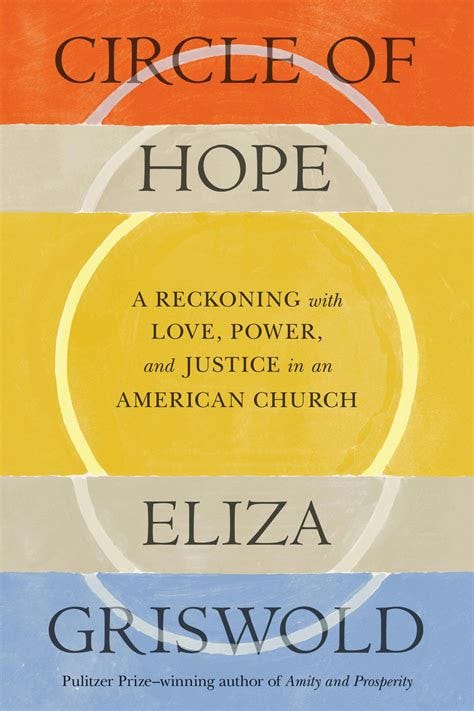
Paterfamilias. It’s a word that stood out to me from my reading of Eliza Griswold’s compelling book Circle of Hope: A Reckoning of Love, Power, and Justice in an American Church. It tells the story of a counter-cultural, Evangelical church plant in the Philadelphia area that grew to become four thriving congregations before leadership transitions, power-struggles, racial reckoning, and perhaps simply the Covid-19 pandemic blew the whole thing up. Certainly the most painful and heartbreaking book I’ve read in some time, and even still, I wonder—how much did the unrelenting stress and anxiety of a global pandemic push things over the edge? Could they have overcome their differences in less-frightening times?
Written in an honest and forthright manner, Circle of Hope is a both a compelling page-turner, and also at times, like a ghastly pileup of cars on the highway from which one simply can’t turn away—as painful as it is to look, one also can’t help but rubbernecking, while simultaneously feeling guilty about looking in on someone else’s suffering. Griswold brings strong journalistic credentials to book and clearly did her homework, which provides some anchor point or stability during the read as one inevitably reels at all the disagreement and dysfunction that roils the churches and especially pastors described within.
The story of Circle of Hope, both the church and the story, really begins with Rod and Gwen White, the husband and wife who founded the church, bringing their vision, passion, and sometimes power—both “hard” and “soft” to lead the church to over 700 committed members over four different campuses. While the label of Paterfamilias or “power/providing family” fits in many ways, my takeaway after reading the book is that what ultimately brought down Circle wasn’t so much a power-hungry family (though certainly that was an issue) but rather organizational failure. Simply put, they struggled to turn a movement into an institution. “In theory, Rod’s loose vision of teams moving together symbiotically was intended to be mutable and collective. In practice, the Amoeba of Christ obscured the reality that, despite his protests and stated desires, Circle still adhered to Rod’s vision... It could be called a tyranny of structurelessness” (38).
In their book Embracing the Mixed Ecology, writes Dwight Zscheile and Plair Pogue share that “some form of institutional life is necessary for any movement to survive and pass its life on over time.” What ultimately sunk Circle of Hope in my opinion wasn’t simply leadership transitions, power-struggles, racial reckoning, or even Covid as I lament, but I think it was the failure to transition from a movement led by personality into an institution led by a common mission or purpose. In fact, what became painfully obvious by the end of the book is that the pastors themselves couldn’t agree on what their shared mission or vision towards the future should be.
Of course, one could diagnose many issues within the church; Founder’s syndrome, lack of systems, an insistence of unity at all costs, classism, racism, etc. I don’t want to diminish any or all of these things, important as they are, but I keep coming back to the reality of a personality-driven movement having to make the transition into an institution of some sort. And, perhaps this is my own bias. For, as I write this, I’m wearing the T-shirt of my ill-fated church-plant, Missiongathering Christian Church of Thornton, CO, a church-plant I began in 2018 in partnership with my denomination, the Christian Church (Disciples of Christ), and the “Missiongathering Movement,” something that was at that point, two small churches on each side of the country, with another coming in the Washington State area, my church plant in Colorado, and eventually, another effort in California.
It was in many ways, a situation very reminiscent of the Circle of Hope situation, perhaps the only similarity being the lack of geographical proximity, which, like Circle, likely would only have only delayed the inevitable demise of any movement that depends solely on a charismatic leader. Like Circle, Missiongathering was a “new way of doing church” within an old and established tradition, it was led by a charismatic leader (in my instance, Rich McCullen, a single gay man perhaps a little younger than Rod), and a severe lack of structure. So, to use a perhaps overused word, reading this book was “triggering” at times. And perhaps I am revealing my bias.
But I can’t help but keep coming back to this; systems or processes tend to repeat themselves in organizations. The first church I served out of seminary, a small, rural UCC church tended to be run by a couple powerful families, in many ways the Paterfamilias described in the book. During my time there, leading them through some change and disruption, two of those power families left the church. Yet, because I really hadn’t done enough to change the system and the culture, the people of the church eventually just latched onto a new power family, who themselves turned against me in ways similar to the previous families, and became the de-facto “leaders” of the church.
This is the dynamic I see at play within Circle of Hope. The astute observer will note that I am italicizing the book and not the name of the church and have italicized here to name that the dynamic seen in the book may not be entirely accurate, but it’s all I have to work with. So then, to me it seems that what did in the church was ultimately that a failure to turn Circle into a more formal institution with systems and structures created a giant power-vacuum which, one pastor Jonny Rashid, seemingly being very attuned to influence and attention, looked to grasp onto. “When Ben accused Johnny of ‘brokering power',’ Jonny argued that there was nothing wrong with doing so” (170). Later, Jonny confessed that he “loved attention” (269). My hunch is that much of his conflict with the founding pastor’s son, Ben White, stemmed from an underlying assumption that Ben would/should be the strongest voice in the room and perhaps Ben not wanting to? Ben is certainly a very-complicated figure in this story, as is Jonny, to the point that I found myself resonating mostly with the two female pastors, Julie and Rachel, especially Rachel.
Ben is certainly where the Paterfamilias does come into play, as Ben seemed to be stuck in the middle at times—with his father doing him no favors—”as if he’d washed his hands and was no longer involved… in fact, his choices had helped to strand Ben” (215) and it seemed that Ben became someone Jonny and others could scapegoat or attack for the problems created by the elder-White’s inability to let go. ”Ben saw his own counterattacks as protective of the church and his family, especially his dad” (217). Conversely, Ben did himself no favors, “his outbursts and tantrums …creating a problem of his own making” (217), having adopted many of the “problematic systems… from his dad” (221) and exhibiting an embarrassingly bad temper that did certainly reek of white privilege. “Ben’s behavior in the spring and summer of 2021—swearing, shouting, hanging up, hurling insults—was not acceptable” (170).
What made my own work with Missiongathering so difficult and what seemed to really challenge the growth of Circle of Hope was that while there were “proverbs” that guided their beliefs and values, there was really no org structure, other than some amalgamous “amoebe of Christ” thing I really didn’t understand. As is always the case, “Having a policy to have no policy worked well enough” (63) until it doesn’t anymore—or in this instance 2020 . Clear systems and structures, like requiring a year away from the church by the Whites and the relinquishing of them of their church-wide reach, could have really helped. “Although in many churches, ethical professional guidelines required departing pastors to take at least a year away… Rod believed such legalistic strictures were unnecessary” (81).
More, a succession plan led by someone external really could have avoided the feeling of a giant power vacuum waiting to be filled. “Not for Ben, but for Julie, Jonny, and Rachel, it was becoming clear that Rod’s pattern of willful disruption was hurting the church and becoming an obstacle to their ability to lead together” (161). Perhaps a consultant could have called out the seeming assumption that Ben would just take over as the White’s son—and perhaps also, as a white son.
I must confess, I really found myself bristling against Jonny, perhaps because he reminded me of my past colleague, though I did wonder how much (and I hope this is a fair way of saying it) his repressed sexuality led him to act out in other ways. I was crushed reading of the shame and abuse leveled on him by certain family and friends. I can only hope he is able to live into the person God made him to be in a healthy way. Yet, like my past colleague, Circle of Hope tells the story of one who really craved the spotlight, wanted attention, and didn’t ultimately care who or what he damaged, i.e. “blow Circle up” (304), along the journey to get there, and it doesn’t seem I was alone in my suspicions, as Rachel “didn’t fully trust his motivations, …disliked his tactics,” and thought he sounded "predatory” (192) while another church leader shared “…She’d been growing suspicious of his motives. ‘Jonny wants to be a celebrity pastor,’ she’d said… But leading the wrong way out of self-interest was a sin” (288). Having dealt with such a person in my own situation, I had strong feelings.
Something that also struck me about Circle was their use of religiously-coded language to call out misbehavior, whether real or perceived. “To some, it seemed that only those who held the right views were welcome to participate; others were shut out as backward. Asking questions had become synonymous with dissent, and dissent, by definition, was anti-change and anti-progress” (224). While I certainly understand the rationale for asking people to live by their shared values, I also think using religiously-coded language all the time ups the ante, meaning not only in calling out someone are saying they are being a jerk, one is also kind of calling them a bad Christian.
And I think that can raise the emotional stakes significantly. But, it’s a hard distinction, because I do think shared values and expectations are important, as is living by them. Another observations that stood out to me is that the culture of Circle seemed to be one of “unity at all costs,” a value which seemed to trip them up at multiple times and especially as they tried to take early steps towards addressing racial bias within the church. “Vulnerability required trust... but week after week, the group for people of color expressed that they did not trust that the white group could listen to their truth ‘with an open mind and an open heart’” (139).
After all this, I wonder how Covid is discounted for the demise. The author only makes brief comments here and there to the pandemic, but I can’t help but feel it should have been a leading player in the story. Having led a church myself during the first half of the pandemic and then worked as a hospital chaplain during the second wave, I was well aware of the overriding anxiety and tension created when every-single-day, we were reading of Covid spikes, deaths, an incoherent and incompetent President, and so on. Was the anxiety so much within themselves and within the wider society that the pastors simply did not have the bandwidth to lead through it all.
Even still, there is a striking story half way through the book where Julie is swimming in a small pond when suddenly a tree collapses nearby. “It occurred to [Julie] that whatever had been decaying inside the tree had been going on for so long that only a small breeze was enough to blow it down. That felt like what was happening at Circle” (142). Personality-led structures are like the tree, they collapse with any real tension. Maybe, without the added anxiety of Covid, they could have made it through. Maybe, like in my situation, the dysfunctional system—with Covid simply being the icing on the cake—was too much to overcome.
One can only wonder.