


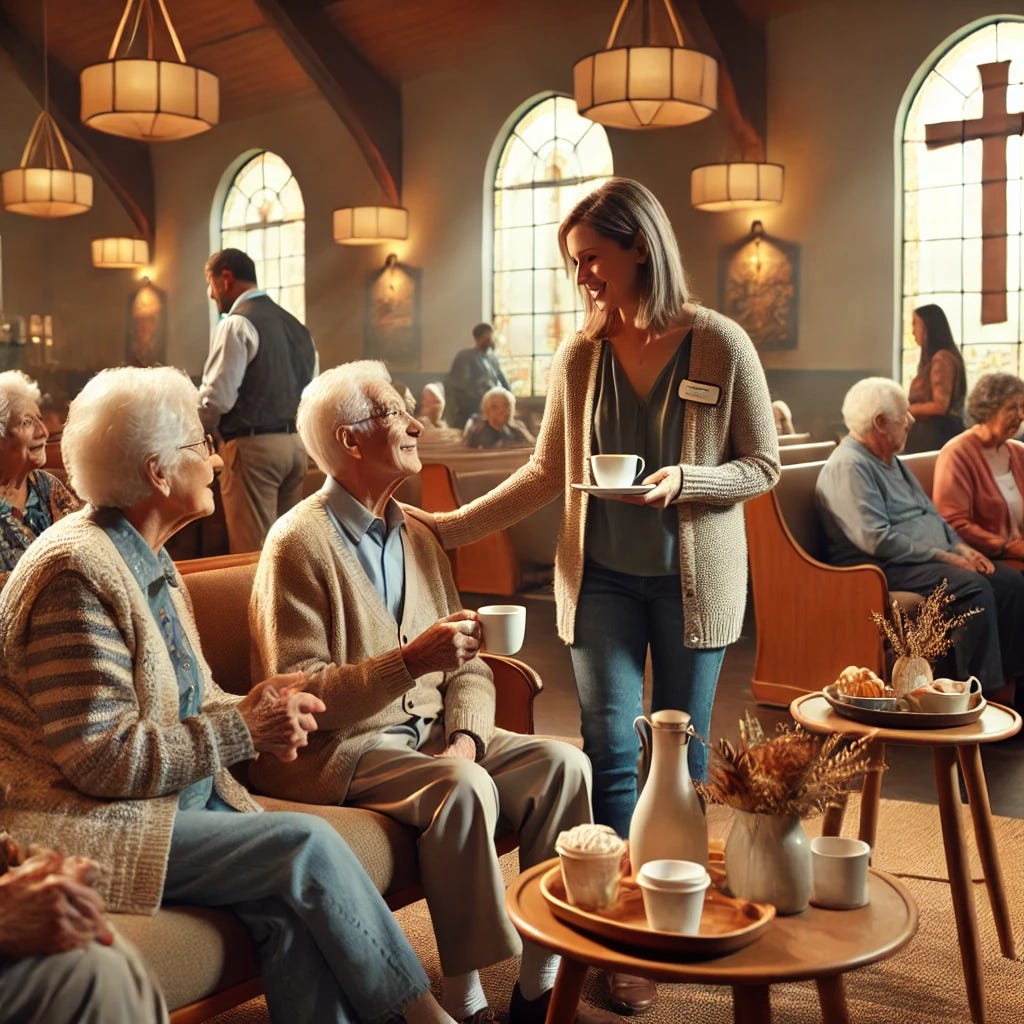
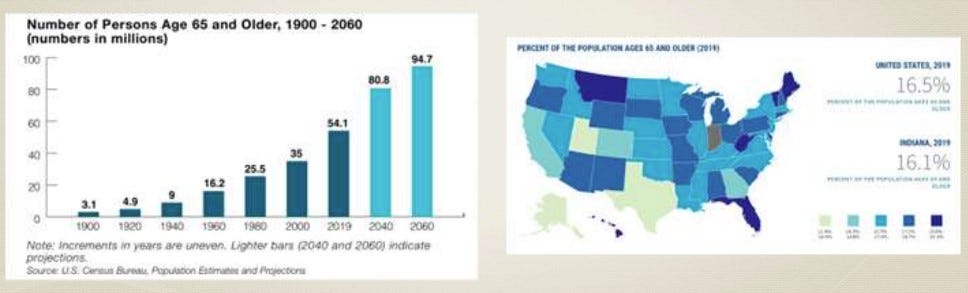
By 2040, America’s over-65 population is projected to exceed 80 million people, making up about 21.6% of the total population. This "silver tsunami" represents a profound demographic shift and a unique opportunity for churches to grow their congregations while meeting the evolving needs of their communities. For churches prepared to embrace this trend, serving older adults can be both a spiritual and strategic move, positioning them as essential hubs of connection and support in the coming decades.
Churches as an Essential “Third Space”
For older adults, churches can become more than just places of worship—they can be vital “third spaces.” Coined by sociologist Ray Oldenburg, the term “third space” refers to communal spaces outside of home (the first space) and work or school (the second space) where people can gather, connect, and experience a sense of belonging. For many older adults who are no longer part of the workforce or other traditional gathering spaces, third spaces are increasingly important for socialization, learning, and support.
Churches are ideally positioned to be that welcoming third space. Older adults have different social dynamics than younger generations, who typically engage in social interactions through work, school, or other activities. For those over 65, a church can provide a stable community, a familiar environment, and a comfortable setting for forging new friendships, rekindling faith, and finding purpose. Churches are also culturally relevant for many older adults, who grew up with more favorable views toward religion and may already feel connected to church traditions. This broad acceptance of church culture among older adults is a meaningful advantage for congregations ready to serve them.
The Growing Need: Expanding Services with a “Service Coordinator” Model
As the population ages, the needs of older adults—emotional, spiritual, and practical—will only expand. Many churches are already equipped to meet spiritual needs but could consider adopting an additional model of service: the role of a “Service Coordinator.” A Service Coordinator doesn’t directly provide care but rather acts as a bridge to resources and services that support aging adults in living healthy, connected lives.
A Service Coordinator model can offer churches a structured way to address both individual and community needs without overburdening pastoral staff or requiring direct care. By maintaining partnerships with local healthcare providers, senior centers, and social service organizations, Service Coordinators can make well-informed referrals, connecting seniors with trusted resources for everything from transportation and medical appointments to food security and wellness programs.
Implementing this model can be especially effective for churches with limited budgets or smaller congregations. Rather than recreating existing services, churches can leverage partnerships and tap into local expertise, creating a ripple effect of impact within their communities. By building a reputation as a reliable connector and supporter for older adults, a church can become a valued resource for its members and the broader community.
A Path to Growth and Vitality
Engaging the over-65 population presents a unique growth opportunity for churches, one that is both practical and missional. Many older adults, whether new to a church or returning after years, seek community, purpose, and support. By focusing on outreach to this demographic, churches can expand their membership, strengthen their mission, and bring fresh vitality to their congregations. Imagine a thriving church where older adults not only attend services but participate actively in ministry, mentorship, and volunteer programs.
Creating programming that engages older adults doesn’t need to be complex. In fact, simple initiatives such as organizing regular community luncheons, hosting small-group studies tailored to topics of interest for older adults, or offering technology workshops to help them stay connected can make a profound difference. These initiatives foster an atmosphere of warmth and inclusion, building lasting connections.
Moving Forward
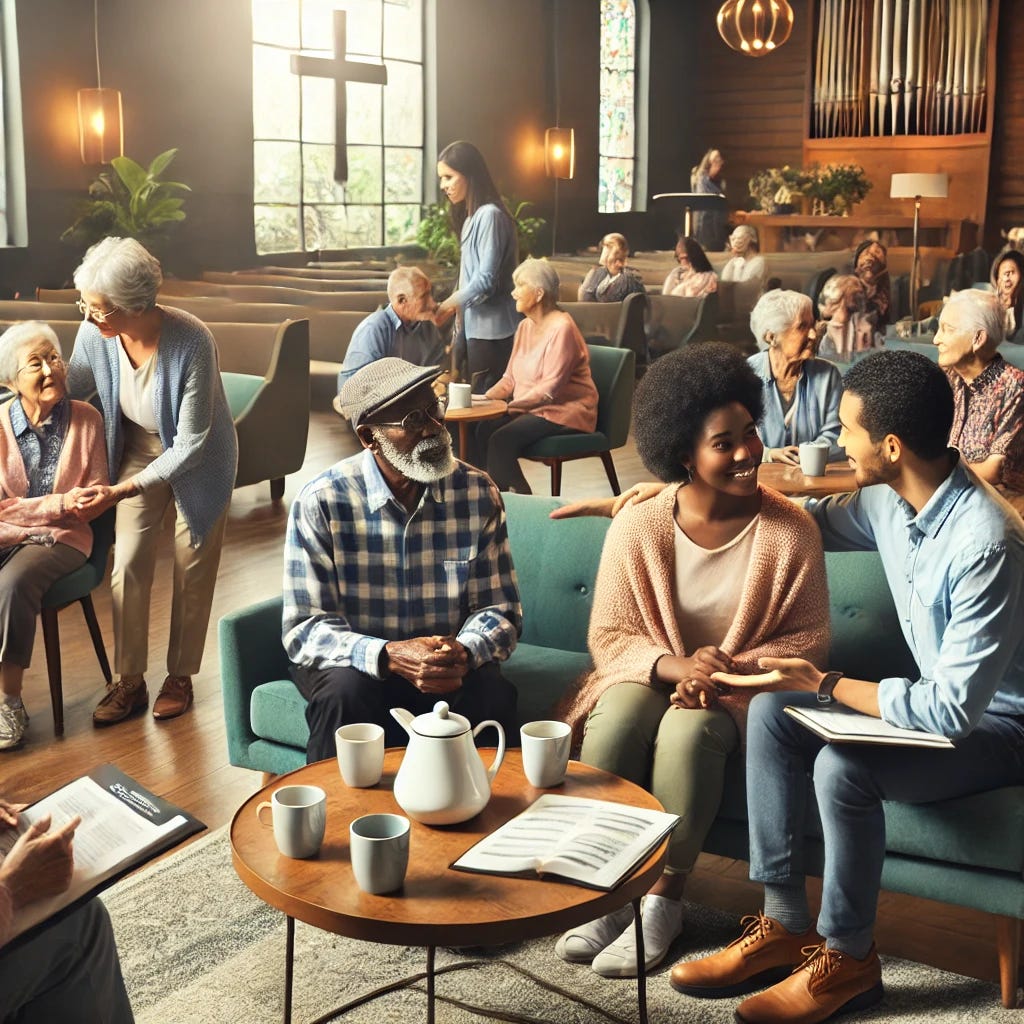
The future holds exciting possibilities for churches ready to welcome and support America’s growing population of older adults. By seeing this demographic shift as an opportunity rather than a challenge, churches can grow both in numbers and impact. Through thoughtful planning, churches can become invaluable third spaces, fostering meaningful community, purpose, and connection for generations that built and shaped the world we live in.
In a time when many older adults are at risk of isolation, churches can help them feel seen, supported, and connected. As America ages, may our churches rise to the occasion, embracing their role as vibrant spaces of hope, service, and community.
I love the idea of a Service Coordinator—and I think that could work for other populations as well. When I was in full-time ministry, I started compiling resource lists for the unhoused folks that would stop in because we weren’t able to meet all their needs.