


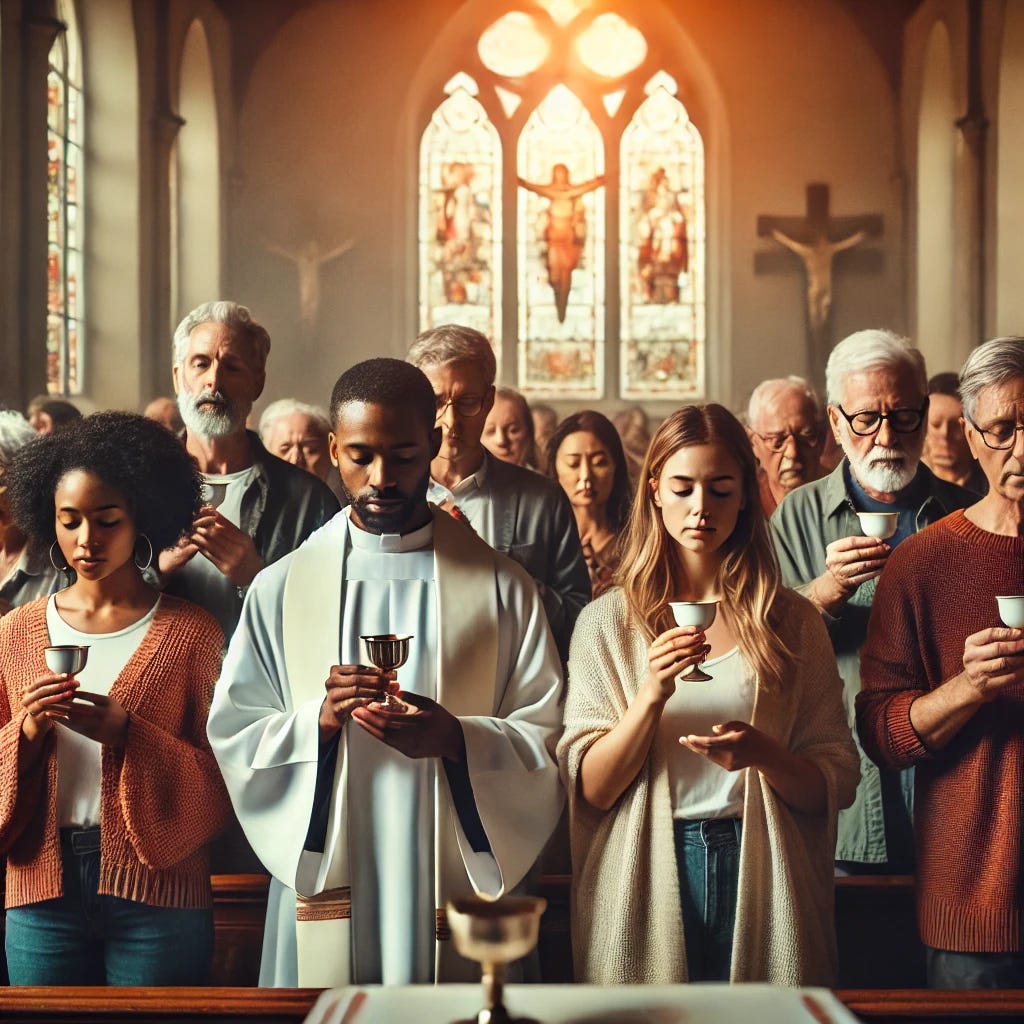
In an era where faith in youth is becoming an urgent question for many religious communities, a fundamental question arises: How do we cultivate belief? The Lilly Foundation is currently investing millions to uncover how to effectively nurture and sustain faith in children and young adults. But what if the answer is as simple as consistent participation? What if taking our children to church regularly lays the foundation for faith in ways that no program or curriculum can match?
According to a recent discussion on Hidden Brain, belief isn’t just taught—it’s embodied through participation itself. This concept suggests that faith isn’t only a matter of teaching doctrines or beliefs but is profoundly shaped by engaging in the rhythms, rituals, and practices that give those beliefs a physical and emotional home. Rituals like prayer, communal singing, and structured worship do more than just fill up an hour each week; they actively shape our inner lives.
Rituals hold a mysterious power that can alleviate anxiety, bring people together, and even make life feel a bit more controllable. For instance, we see that rituals help with grief and provide a sense of comfort when we’re living in times of uncertainty. When children and youth participate in rituals, they experience the benefits of these practices directly—they may not understand every theological nuance, but they feel the sense of security, control, and connection rituals provide.
Embracing Diverse Rituals: The Beauty of Tradition Across Cultures and Denominations
Rituals are not a one-size-fits-all approach to faith. Different church denominations, each with its own history and theological emphases, bring unique practices and traditions to their worship. From the solemnity of a high-church liturgical service to the expressive joy of charismatic worship, each tradition offers rituals that resonate deeply with its congregants. Likewise, churches from cultural or ethnic minority groups often bring practices that reflect the richness of their cultural heritage and identity. These rituals, born out of their own stories and expressions of faith, add a vital dimension to the broader faith landscape.
It’s essential to honor and preserve these ritualistic differences rather than sacrificing them to fit a broad majority’s preference. When we attempt to make worship “neutral” or universally appealing, we may inadvertently lose the distinctiveness and beauty that comes with diversity. Moreover, these unique traditions offer the majority culture a profound opportunity: to step outside of their own familiar structures and experience a sense of connection and transcendence that comes from being part of something much bigger than themselves.
For example, witnessing or participating in the vibrant worship of an African American church, the contemplative silence of a Quaker meeting, or the traditional liturgies of an Orthodox service can deepen one’s own experience of faith. These encounters remind us that faith transcends individual practices and unites people across cultural and historical lines. They invite congregants to experience the divine in new, sometimes unexpected, ways, highlighting how rituals from different traditions can stir up feelings of awe, unity, and belonging.
In preserving diverse rituals, the church not only supports minority voices but enriches the entire faith community. By respecting these practices, we cultivate a space where everyone—regardless of background—can bring their whole selves to worship, fostering a collective experience that strengthens the sense of being part of something sacred, something universal. Ultimately, diversity in ritual offers the broader church a gift: the opportunity to see the many facets of faith expressed across different cultures, weaving a tapestry of unity in diversity that enriches the faith of all.
The Importance of Repetition, Rigidity, and Redundancy
One of the core elements that make rituals so effective is their reliance on repetition, rigidity, and redundancy. These qualities aren’t always popular in our fast-paced, ever-evolving world, but they serve a deep, timeless purpose. Repetition means that certain actions are done over and over, week after week, building familiarity and a sense of comfort. Rigidity involves having specific ways of doing things—whether it’s standing for a hymn, kneeling for prayer, or reciting liturgical responses. Redundancy ensures that important messages are reinforced multiple times and in various forms, embedding them in our hearts and minds.
These three qualities may
seem old-fashioned, but they’re what give rituals their staying power. They create an environment where we don’t have to guess what comes next, which brings a sense of security and control. In church, a child who has memorized the Lord’s Prayer, knows the order of the service, or recognizes a familiar hymn is more likely to feel at home, anchored in a world that often feels chaotic and unpredictable.
Ironically, our attempts to make church “hip” and “relevant” can sometimes undermine these benefits. When worship services change frequently, when the focus is on novelty or a constant push for the “next big thing,” it’s easy to lose the grounding effect that consistent rituals provide. A highly produced, ever-changing church experience may feel exciting, but it often lacks the familiar rhythms that help faith become a steady, reliable presence in young lives.
It’s not that we shouldn’t make worship accessible or understandable for new generations; rather, we should be cautious about sacrificing the stability that rituals offer. Instead of constantly chasing relevance, we might consider that true relevance lies in the rituals or in some cases sacraments themselves that convey messages of love, grace, and hope. For instance, David Taylor writes “the act of passing the peace fundamentally signifies a gift offered and received.”
Rituals may seem “rigid,” but that’s precisely their value. They don’t just move with cultural trends; they stand apart, offering a sense of continuity and timelessness that our ever-changing world desperately needs. For children and youth, this sense of stability can provide a powerful anchor in their faith journey, creating a steady foundation that equips them to face life’s ups and downs with confidence and resilience.
Creating Space for Connection: What Makes Rituals Special
Youth ministry, at its heart, is about more than passing on doctrines or organizing fun events. As Root reminds us, “Youth ministry is about creating a space for stories and moments of sharing that opens us up to something big.” Church rituals do precisely this—they create moments of connection to something larger than ourselves, allowing stories to be shared, faith to be formed, and a sense of belonging to be nurtured.
When young people regularly participate in these moments, they experience faith not only as knowledge but as a lived experience of sharing and belonging. The weekly rituals in church, however simple, invite them to encounter the divine in ways that feel both intimate and expansive, helping them sense that they are part of a larger story that spans generations and cultures. As J. Michael Jordan writes, “there’s nothing uniquely available…that isn’t available everywhere…But he’s given us this table and font where he has promised to meet us consistently so we can develop a taste for what his presence is like. When we encounter him here, we see him clearly so we can see him clearly in the rest of life too” (my emphasis).
Rituals mark certain moments, places, and actions as special, elevating the ordinary to the extraordinary. Whether it’s the lighting of candles, the recitation of prayers, or even the sound of familiar hymns, rituals impart a sense of holiness, reminding us that these moments and actions are set apart. This framing can make worship itself feel more significant, reinforcing its importance in the eyes of young participants.
While rituals carry these benefits, it’s also important to recognize that they can be dangerous when misused. Strong emotions in ritual settings can lead to negative expressions, from binge-drinking initiations to political rallies with dangerous consequences. However, when rituals are cultivated with care and purpose, they can create safe spaces for faith, healing, and connection.
The Limits of Participation: When Church Can Harm Instead of Heal
While regular church attendance can be a powerful tool in cultivating faith, it’s not a foolproof solution. Participation alone doesn’t automatically lead to a positive faith experience, especially if the church environment is dysfunctional or led by toxic or hypocritical leaders. Children and young people are perceptive; they quickly pick up on incongruities between words and actions, and they notice when messages about love, humility, or integrity are contradicted by leaders’ behavior.
In these cases, the effects of participation can backfire, causing disillusionment or even long-term damage (something clearly evident in “exvangelical movement"). When churches foster unhealthy dynamics—whether through rigid control, toxic hierarchies, or hypocrisy—young people may associate faith with manipulation or coercion rather than compassion and authenticity. Instead of feeling safe, they might feel alienated or pressured to conform to harmful expectations.
To truly foster faith, churches must prioritize genuine, healthy leadership and cultivate a welcoming, open, and nurturing environment. Rituals and participation only work positively when they are housed in spaces that embody the values they aim to instill. Only then can participation serve as a reliable pathway to a life-giving faith.
What If Participation Is the Best Answer?
So, as the Lilly Foundation dedicates millions to studying the complexities of faith formation, it’s worth asking: What if the answer is as simple as consistent church participation? By merely showing up and engaging with the rituals and practices that have sustained generations of believers, young people can grow in faith organically. This participation forms the “muscle memory” of belief, grounding them in faith that’s felt as much as it is understood.
In a world filled with distractions and competing demands on our time, taking our children to church every week may be the simplest yet most impactful action we can take to cultivate and sustain faith. It’s a commitment, not to perfection, but to presence—and it just might be what we need most.