


TL;DR
After hearing Dr. Miguel De La Torre describe hope as a “middle-class privilege,” I found myself wrestling with that claim on a late-night hospital call. As a chaplain, I’ve seen hope not as a luxury of comfort but as a grace that finds us in grief, loss, and pain. This essay offers a respectful rebuttal—arguing that Christian hope is not naïve or domesticating, but defiant, resurrection-shaped, and rooted in God’s presence.
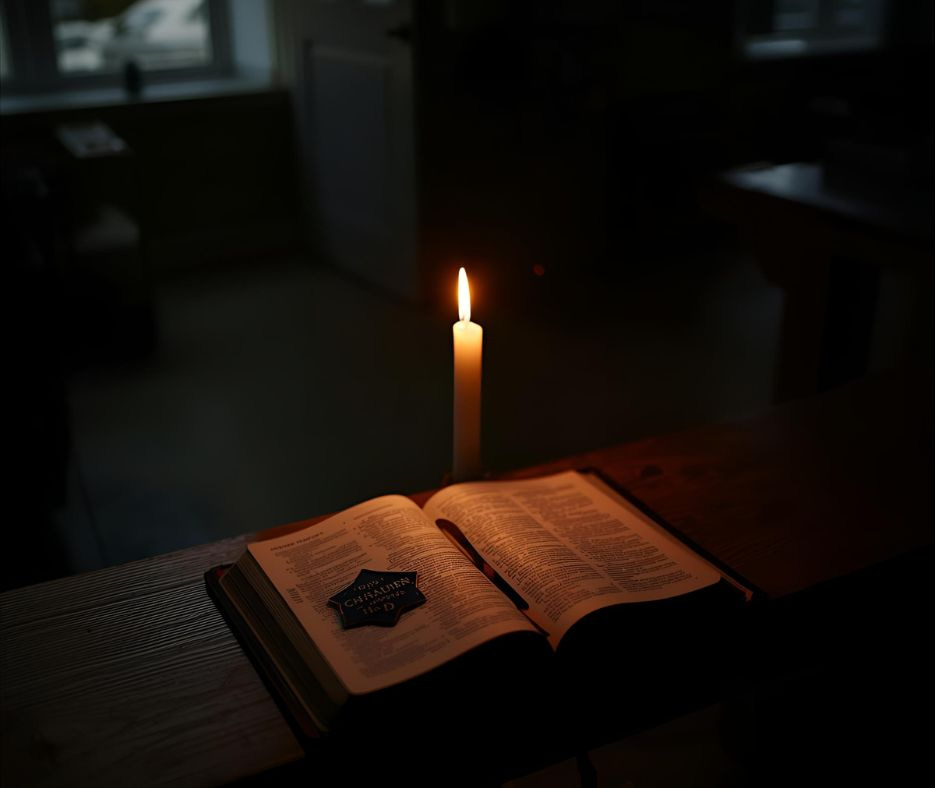
I was startled awake by a phone call.
It was about 10:30 p.m. on a Saturday evening. I had just drifted off after tossing and turning for a while, only to be jolted awake by the ring. It was the hospital where I serve as an on-call chaplain.
Rousing myself to process the message, my mind began grinding awake despite the heaviness of sleep. There had been a death, and they wanted me to come in. Stalling for a moment to get my bearings, I asked for more details: What was the situation? Had the patient passed? Was there family present—and perhaps most importantly—did they ask for a chaplain?
If you haven’t guessed yet, I’m an introvert, and walking into a stranger’s room in the middle of the night—especially when I’m not sure I’m wanted—is not my favorite thing to do. Still, I gathered what information I could, threw on some clothes, and headed to the hospital.
I’m always a bit on edge during that drive, never quite sure what I’ll walk into. This time was no different—only worse. It had been a while since I’d been called in. I was tired. I wasn’t sure the family even wanted me there. So, I prayed.
I always pray on the way in, asking God to help me center my heart and spirit—to make me sensitive to the needs of those I’ll meet and to the promptings of the Spirit. But that night, for whatever reason, I felt unprepared. “God,” I prayed, “I want to be a vessel, but I don’t know what to do. Help me share your love and grace.”
This past week, I listened to a lecture by Dr. Miguel De La Torre, a professor and ethicist at Iliff School of Theology in Denver. His keynote at the Faithful Futures Conference was titled “On Liberation and Ethics in the Age of AI: A Call to Action.” Several of his comments struck me:
“Hope is truly a middle-class privilege. As long as I have a bank account, I can hope for the future. But if I live in Gaza today, or if I’m in prison… there is no hope.”
“Hope domesticates. As long as we can give people hope, they won’t rebel. But when I have nothing to lose, that’s when I become the most dangerous.”
“Hope is a privilege that allows you not to have to do anything but rely on God’s graces to take care of everything.… I struggle not because I think I’m going to win, but because in the struggle I define the faith I claim to have and, more importantly, I define my very humanity.”
To be certain, Dr. De La Torre is far wiser than I am, but I find his comments both presumptuous and contrary to the gospel. I say that as someone who is, by most measures, middle-class. I live with more comfort and security than many in our world, and I don’t pretend to speak from the margins. Yet from where I stand—from hospital rooms and the quiet hallways of chaplaincy work—I’m convinced that hope isn’t a possession of privilege. It’s a grace from God that visits people in every circumstance.
First, the claim that hope is a “middle-class privilege” seems both historically and experientially untrue. From Viktor Frankl’s Man’s Search for Meaning to the testimonies of enslaved Americans, to the words of migrants I’ve personally met at the border—hope and faith in God have again and again sustained people in the harshest conditions imaginable.
Now, to be fair, I can understand De La Torre’s suspicion of a comfortable, sentimental kind of hope that numbs us to suffering. That kind of optimism can be cheap, detached, and complicit. But that’s not the biblical hope I see in Scripture or in history. The hope of the prophets and the saints is anything but anesthetic—it’s defiant. It grows in the soil of suffering and insists that God is not finished yet.
Second, to suggest that dependence on God’s grace is naïve—that it means assuming God will “take care of everything”—is itself a caricature. Few Christians today truly believe that faith means passivity. In fact, I’ve often argued that Christian nationalism itself arises precisely from a failure to trust God: it is the anxious need to seize control.
Dependence on grace doesn’t mean passivity; it means participation. That’s why Christians speak of inaugurated eschatology—the “now but not yet” of Advent—where Christ’s resurrection inaugurated a new reign that will only be fulfilled at His return. In the meantime, the Church and its people are called to participate in that ongoing work, partnering with God in the redemption and renewal of all things.
Third, history overflows with examples of Christians who put their bodies on the line—not because they were hopeless, but because they were profoundly hopeful. The martyrs, the reformers, the self-sacrificing servants of others—they acted not from despair but from resurrection hope.
Where De La Torre sees rebellion born of despair, the gospel sees courage born of resurrection hope. As Richard Beck notes, believers have always risked their lives precisely because they trusted in the One who conquered death.
Rather than leading me toward despair, our troubled times are making me more literal about resurrection and the hope of life after death. If you’ve read my recent posts, it should be clear that I’m under no illusions that things will get better soon. Even if they stop getting worse, I can’t imagine the world’s ills suddenly reversing on their own. That’s why I’ve become more deliberate about trusting God.
Beck writes in Hunting Magic Eels, “Hope doesn’t spring from logical, scientific, and rational deductions about the facts… Hope comes from the outside.” Hope, he’s saying, comes from God. From the prophets to the civil-rights leaders to migrants on today’s borders, what keeps them going isn’t nihilistic hopelessness but divine hope—the conviction that God is with them and for them.
To be clear, I could very well be wrong. Dr. De La Torre is far more educated and accomplished than I am. Yet I still believe his framework misunderstands both the gospel and the witness of those saints who’ve gone before us.
When I finally reached the hospital, I checked in with the nurses and eased my way into the room. The spouse and adult children were weeping over their loved one’s body. I stood silently for a while, praying and holding the space. It’s what I do when I don’t know what else to do: trust that God is doing something—that my quiet presence might somehow carry the Spirit’s peace.
Eventually the family saw me. I introduced myself, and they thanked me for coming. The spouse told me a little about what had happened.
“My heart is breaking,” she said.
I stayed with them for quite a while and eventually led a prayer for their beloved.
“Thank you for coming,” they said.
“God’s peace be with you,” I replied. “I’ll be praying for you all.”
In the midst of their brokenness and pain, I’d like to believe they found not hopelessness—but hope.
May we never confuse privilege with hope.
True hope doesn’t come from privilege or power, but from the God who meets us in hospital rooms, in grief, and in all that feels unfinished. May we keep showing up—quietly, faithfully, and courageously—trusting that even in the dark, resurrection light still finds a way through.
The Coming Dark Times: When We Can’t Save Ourselves
TL;DR: In the 90s, disaster movies like Independence Day and Armageddon reflected an America full of optimism—humanity always found a way to prevail. Today’s media tells a different story: resignation, doom, and nihilism. That shift mirrors our culture’s broader unraveling. Drawing on Roxburgh and Searle’s
If I may be so bold, I think Dr. de la Torre's view of hope is heretical. The Bible is filled with words about hope. It is godly. You really can't build a future without any hope. If all you have if just anger, yes, you're dangerous, but to what end? Will it bring peace? Hope is a belief that evil doesn't have the last word. He is just peddling despair.
I think Dr de la Torre is wrong but I think I know what he is talking about too. When I was doing church based community organizing we were organizing ideas and one of our ideas was moving from fear to hope. We talked to the new principal of the middle school.. And when we used the word hope he immediately asked us what we meant by it. Was hope kind of wishful thinking, oh I hope so? That’s what he heard. So I think the word hope can be heard differently by different people. Ultimately I agree with Dennis, but I have to challenge myself, have I ever preached an anemic hope?