


TL;DR: Listening to a yet-to-be-released episode of All Things Episcopal reminded me that the deepest faith formation isn’t taught but caught—through the resonance of liturgy, music, relationships, and community. Root & Root’s work helped me see how the Episcopal tradition has shaped the moral ecology of two college students not by instruction, but through lived experience.
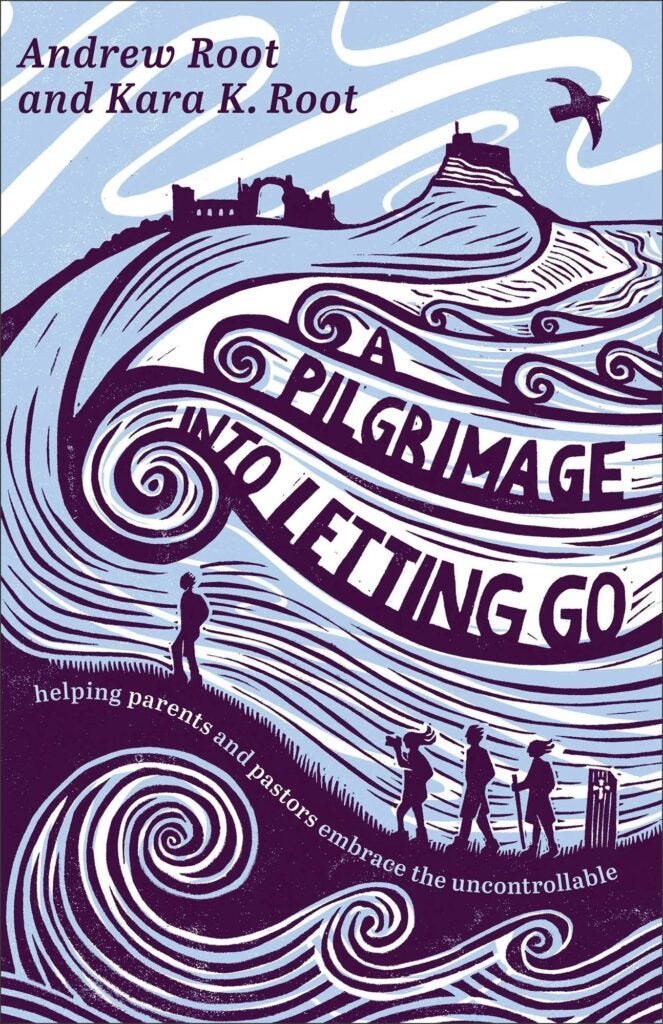
I had this brilliant idea to do a three-part series on Resonance as discussed in the new Root & Root book A Pilgrimage into Letting Go, but then I promptly forgot what I wanted to do for part three. Fortunately, while I was listening to a podcast I produce, an idea finally came to mind. If you haven’t seen my two prior posts, check them out below.


From the book, the biggest point about Resonance is that it isn’t something we can control. As Root & Root write, “this form of action that Rosa calls resonance is fundamentally uncontrollable” (14).Which is honestly something pastors and church folks tend to struggle with — myself included.
Anyway, all of that was floating in the back of my mind when I realized I’m having a bit of a “moment” with the Episcopal Church, or perhaps Anglicanism writ large…
Over the last several years I’ve made a number of Episcopal/Anglican connections, the most obvious one being my Anglican co-host Martha Tatarnic. And as she noted in a recent episode of Future Christian, guest after guest keeps mentioning how they use the Daily Office in their daily prayers.
All of that resurfaced recently as I listened to an episode of All Things Episcopal, a podcast I produce. Host and newly ordained clergyperson Clare Stern-Burbano was in conversation with two college students, Alex Buck and Kelsey Phillips, both from Kansas State University. The show is designed with young adults in mind, and I genuinely enjoy producing it—if only because it gives me an inside look into the lives and minds of young adults. The episode isn’t live yet—producer privileges—but listening to the raw audio really struck me. I get this little window into how young adults actually talk about faith before anyone else hears it, and this one had resonance written all over it. A past episode even inspired another Substack post of mine.

As I listened to their conversation, I couldn’t help but frame it through the lens of Resonance. Especially early on, as both students talked about how the worship gathering has been formative for them, I found myself thinking of Root & Root’s observation:
“The Christian life is first and foremost what you desire… What shapes your belief and moves your action?” (188)
Below are a few moments that stood out.
Liturgy
“I think the repetition is 100% grounding.”
Compline (Night Prayer) came up several times—a brief, steady liturgy at the end of the day with confession, psalms, and prayer. Repetitive. Simple. Peaceful.
What struck me is how often the students used the word grounding. In the transcript, Kelsey also said:
“My faith could be a grounding point for me… a central rock in my life.”
To which Clare responded — and this line felt straight out of A Pilgrimage into Letting Go:
“More and more people are looking for grounding because life is chaotic and it’s hard being human.”
Root & Root note that younger people often haven’t yet absorbed all the cultural messages about needing to control everything, making them more open to moments of resonance. Listening to Alex and Kelsey, you could hear that openness.
Music
The students talked a lot about the power of hymns and congregational singing:
“The hymnal music… words that are rooted in the Bible… It’s where I can feel God the most. He’s always there in it.”
And then this little gem about camp worship:
“It’s songs that everybody knows. Nobody cares if you can sing or not. Everybody’s singing loudly. It’s just true joy and love in that moment.”
Joy. Love. Participation.
That’s resonance in practice.
Preaching
Alex remembered a Christmas Eve sermon from earlier in his life:
“It was one of the first times I really started to feel God’s presence in my life.”
Not because the sermon was especially clever or persuasive — but because it resonated. Root & Root put it this way:
“The habits we cultivate—intentionally or not—are what shape our loves.” (188)
Sometimes all a sermon needs to do is land at the right moment.
Relationships
This part probably resonated with me the most (yes, I said it). Kelsey said:
“We as college students are looking for mentors… someone with more life experience… a guiding hand.”
That’s relational resonance.
And then:
“This is a real thing. The Way of Love is real.”
“I hope more people find the connection I found.”
You can’t manufacture that kind of sincerity.
Worldview, or what others call “a way of life”
As I thought more about it, what really stood out is how the Episcopal Church — especially the liturgy—has shaped the worldview of these students.
Kelsey put it plainly:
“Faith helps us understand the world around us.”
Mainliners wouldn’t typically use the word “worldview,” but I found myself thinking of the idea of moral ecology, which I’ve encountered through Richard Beck and the late Tim Keller.
In his book How to Reach the West, Keller writes that character isn’t taught in a classroom but lived in community. He breaks down a moral ecology like this, explaining that it answers these five questions:1
Why be good?
What specifically is good?
What is not good?
Who is good (imagination)?
How can we be good in daily life?
Even though these students probably haven’t read Keller (and understandably might not care for him if they did), my point is this:
The Episcopal Church has given them a deep and abiding moral ecology.
And this is where Resonance fits in. As Root & Root put it:
“Desire is shaped through compelling stories… The habits we cultivate are what shape our loves.” (188)
These students weren’t taught to pursue justice.
They caught it through repetition, liturgy, song, and community.
My ongoing critique of Progressive Christianity
One thing that has stuck with me is how Progressive and Mainline Christianity often try to teach social justice. But teaching alone doesn’t form people—not deeply. And especially not in communities where there is often an inability or unwillingness to name what specifically is good or not good, and where saying such things are often seen as “black and white” or “binary” thinking.2
Root & Root warn:
“As soon as our desires lead us to grasp for control… we close ourselves off from resonant experiences of participation in God’s redemption.” (194)
If justice becomes a project we manage, it loses its formative power.
These young adults didn’t receive a lecture on justice.
They received a way of life.
Evangelical spaces (and the formation gap)
I don’t think high liturgy is the only place resonance happens. It can—and does— happen in Evangelical contexts. But sometimes those spaces are so “me and Jesus” focused that they don’t fully answer the Keller question:
“How can we be good in daily life?”
Or they are TOO obsessed with controlling the answer to that same question.
Root & Root make a sharp observation:
“If things are conceptually controllable, they are experientially impossible.” (177)
As the title of the Root & Root book does say, there is great amount of “letting go” necessary in parenting and pastoring, and if we have grounded our children and our parishioners in a firm moral ecology, there will be some amount of having to admit “that’s not how I would do it, but their heart is in the right place.”
To close this out
Here’s what I’m learning from all of this:
Church is one of the few—if only—places we actually learn how to be good, not through lectures, but through resonance.3
Through practices and relationships that shape us in ways we can’t fully articulate.
Root & Root end their book by describing Resonance as:
“not a metaphor or a feeling—it can be best understood as a relationful conversation” (134).
These young adults are already living into that.
Not because someone taught them a lesson, but because their church formed them — slowly, steadily, resonantly.
Caught, not taught.
My Short Answers to Keller’s Five Questions
Why be good? Because God is good—a foundational claim of Christian faith. And in Jesus, who is God, we see that goodness lived out. Christlikeness is the shape of true goodness.
What specifically is good? Whatever aligns with the character of Jesus: love, justice, mercy, truth, humility, and care for our neighbor
What is not good? Whatever contradicts Christ’s character—whatever harms or dehumanizes. And selfishness isn’t good either, which runs against our “you do you” culture and its rugged individualism.
Who is good (imagination)? Again, God is good and Jesus embodies that goodness in human form. Those who model Christ—saints, mentors, elders, friends, even young adults figuring out faith—give us a living picture of what goodness looks like.
How can we be good in daily life? Through acts of love, mercy, kindness, and justice—the ordinary ways Christlikeness takes shape in us. And we’re reminded, recentered, and strengthened for these daily acts through devotional practices like prayer, Scripture, and confession which quietly form goodness in us over time.
Of course, there are inherent challenges and dangers of “binary” or “black and white” thinking. The point I’m trying to make is that there are also dangers when we are unable to clearly articulate right and wrong—or more—why something is right or wrong.
Art can also teach us about good, but I’m not sure art can answer all five questions. So maybe a better way of saying the above sentence would be that church is the only place that can answer all five questions.
love this.
And I always suspected you were a closet Episcopalian :)
or at least an Orthodox Christian (praying shapes believing...)