


TL;DR:
As the Patriots–Seahawks Super Bowl rematch revives reflection on Super Bowl XLIX, former players’ responses reveal a deeper truth: how we handle loss shapes what comes next. Some stayed trapped in blame; Russell Wilson chose grief and growth. That choice matters—in sports, leadership, and faith.
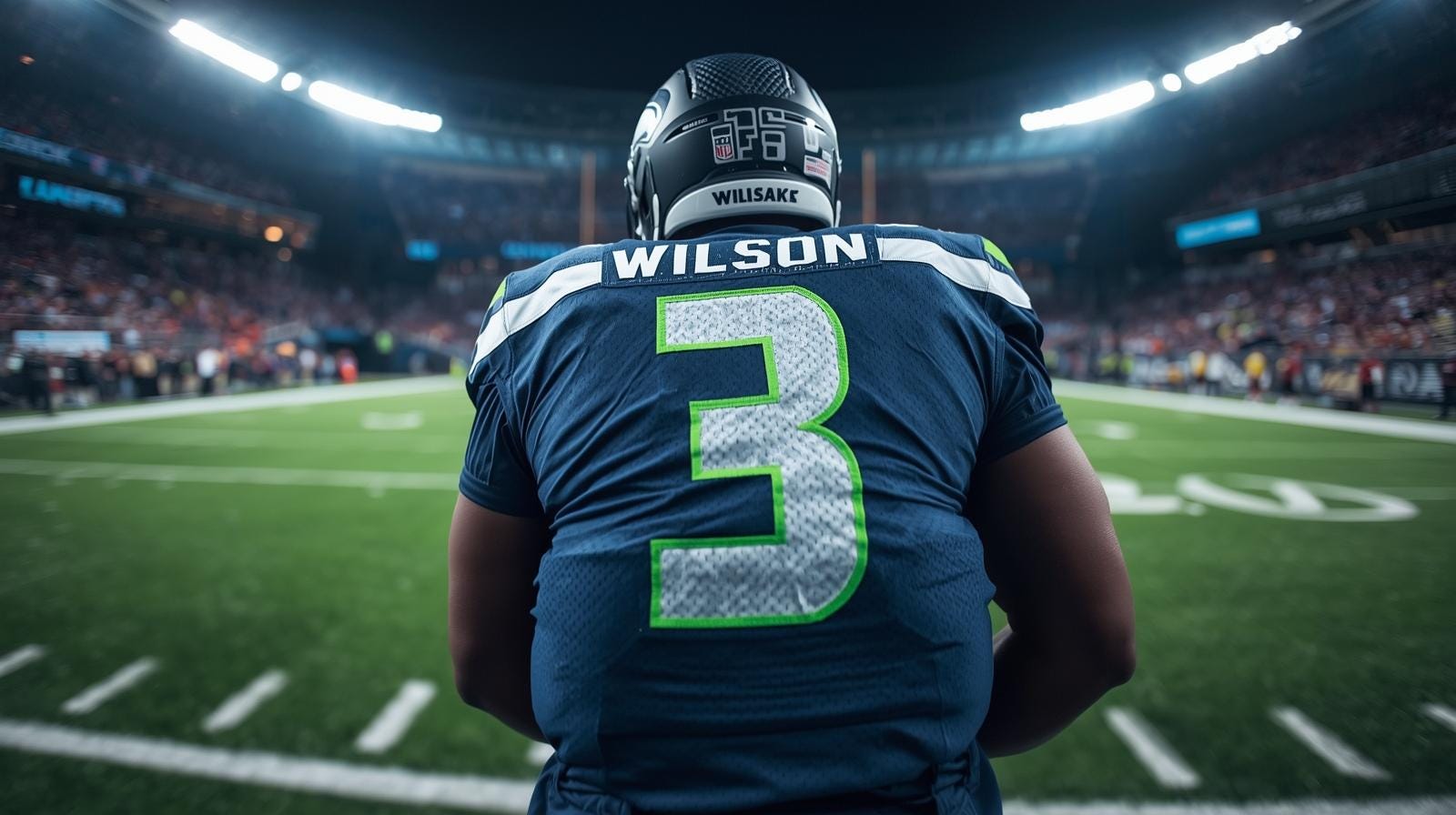
How we respond to adversity doesn’t just reveal our character—it shapes our future.
This year’s Super Bowl matchup of the New England Patriots and the Seattle Seahawks has brought with it a wave of reflection on one of the most unforgettable games in recent NFL history—Super Bowl XLIX, when the Patriots edged the Seahawks 28–24 in a last-second thriller that has lingered in football lore. As former players and pundits revisit that moment there’s a fascinating contrast emerging not just in sound bites, but in how individuals talk about that loss and how they have lived with it ever since.
I was scrolling social media recently and came across clips from interviews with former Seahawks players reflecting on Super Bowl XLIX. Two interviews in particular stood out to me: one from former tight end Luke Willson, and another from longtime cornerback Richard Sherman.
Both acknowledged the absolute devastation of the loss—shock, confusion, disbelief. But what really caught my ear was something Luke Willson said about the aftermath, and how it continued to affect the team long after the game ended.
Willson described the locker room following the Super Bowl as “the worst atmosphere I’ve ever been in.”
He walked through the many factors that contributed to the loss. The Seahawks were up ten points in the fourth quarter. They had a historically great defense. Kam Chancellor was playing hurt. Jeremy Lane was injured and out. That defense then gave up back-to-back long scoring drives. Willson’s point was clear: it didn’t really come down to a single play.
What was especially striking was when Willson said, “Looking back on it, it doesn’t get any better because of what happened after.” He went on to describe how the locker room essentially imploded. Most of the same players returned the following season—and even the year after—but they were never able to get back. They lost to the eventual NFC champions the next two seasons. But beyond the playoff losses, it’s no secret that the team was marked by deep internal tension.
Much of that tension centered on Russell Wilson—the quarterback who threw the ill-fated interception at the goal line.
That blame has been kept alive most publicly by Richard Sherman, now an analyst for Amazon’s Thursday Night Football. Sherman has always been loud and brash—his post-game interview with Erin Andrews after the NFC Championship in 2013 still comes to mind—but he also seems unable to fully let go of the Super Bowl loss or to accept responsibility for the blown leads. In recent interviews, he points to coaching decisions, specifically blames the quarterback for “throwing an interception,” and even declares that coaching missteps led to Kam Chancellor’s injury.
An aside worth naming:
Especially in our current moment, one can seem smart—even prophetic—by being bold and brash.
Saying the economy may continue to sputter barely registers. Predicting an imminent Great Depression draws clicks. “We need to adjust some things” sounds weak. “Burn it all down” sounds courageous.
I think this reveals something about our anxiety. When we’re uneasy, we gravitate toward shock over sobriety, toward heat over wisdom. That’s part of why figures like Richard Sherman’s still-raw anger resonate more than Russell Wilson’s quieter resolve.
There is a place for prophetic boldness. Scripture is full of it. But not everyone who is loud is a prophet—and I’m not convinced we need nearly as many as our media ecosystem rewards.
No doubt, the ball was caught by the wrong person.
But no intellectually honest person can argue that the interception was simply Russell Wilson’s fault. Video has circulated for years showing how the Patriots practiced defending that exact play. The margin was inches. Another receiver could have driven his defender just slightly differently. Malcolm Butler made the play by a matter of feet and fractions of seconds.
And this is where the contrast becomes stark.
Russell Wilson—the person most visibly associated with the loss—has consistently refused to let that moment define him.
In a recent interview, Wilson reflected on the play and his mindset afterward:
“I look at all the collection of great moments and tough moments along the way. But I’ve had a lot of great moments,” Wilson said. “I always look forward to the next moment. I think that’s always been my mentality—being able to look forward to the next play, the next moment… I think it’s the baseball in me. Every pitch is a new pitch, a new day.”1
Wilson has been repeatedly mocked for that optimism, especially by former teammates. And to be fair, that mindset plays a lot better when you’re winning—something his time in Denver made painfully clear. But I’ve never understood the anger and vitriol directed at him.
After Super Bowl XLIX, many Seahawks players stayed stuck in blame—wanting to fault coaches, play calls, or Russell Wilson himself.
Russell Wilson, the one who threw the pass, grieved, learned, and moved forward.
He never returned to that peak. But he built a strong, meaningful career.
Many others are still living in the loss.
Wilson once said, reflecting on his career:
“They’ve asked me a lot about my experiences—the highs and all the amazing moments, and really our work habits daily.”
And about the play itself:
“I had no doubt in the play call. It looked open enough… When I threw it, it was, ‘Touchdown. Second Super Bowl ring. Here we go.’”
I know this dynamic because I lived it.
I stayed stuck for years after a painful loss. Go back and read some of my writing from the aftermath of the church I helped plant, which closed after COVID. It wasn’t pretty. I grovelled in the pain, anger, and disappointment far longer than I needed to.
I’d much rather be like Russ than Sherm.
You can grieve and grow.
Or you can grieve and get stuck.
The choice matters.
Starting a Church in Denver: Misunderstandings, Challenges, and Misplaced Blame

Starting a Church in Denver: Misunderstandings, Challenges, and Misplaced Blame
Church Planting Exit Report

In the summer of 2021, following the conclusion of Missiongathering Christian Church of Thornton, CO, I was asked by the Central Rocky Mountain Region of the Christian Church (Disciples of Christ) to write an exit report detailing my takeaways and reflections as a new-church starter.
https://www.foxnews.com/sports/russell-wilson-reflects-infamous-goal-line-interception-seahawks-patriots-ready-super-bowl-rematch