


TL;DR: After spending a year listening to people in pews, hospital rooms, and everyday conversations, I’ve become convinced that many people are asking two basic questions: Is God real? And if God is real, does any of this actually matter? Drawing on Andrew Root, Ryan Burge, and Paul’s words to the Corinthians, this reflection suggests that the church’s challenge is not merely convincing people that Christianity is true, but showing that it offers real life in a world shaped by loneliness, anxiety, consumerism, and the endless pursuit of “more.” The gospel is not simply about life after death—it is about life before death. And in a culture convinced that fulfillment comes through status, success, and acquisition, the good news of Jesus remains a surprising and much-needed alternative.
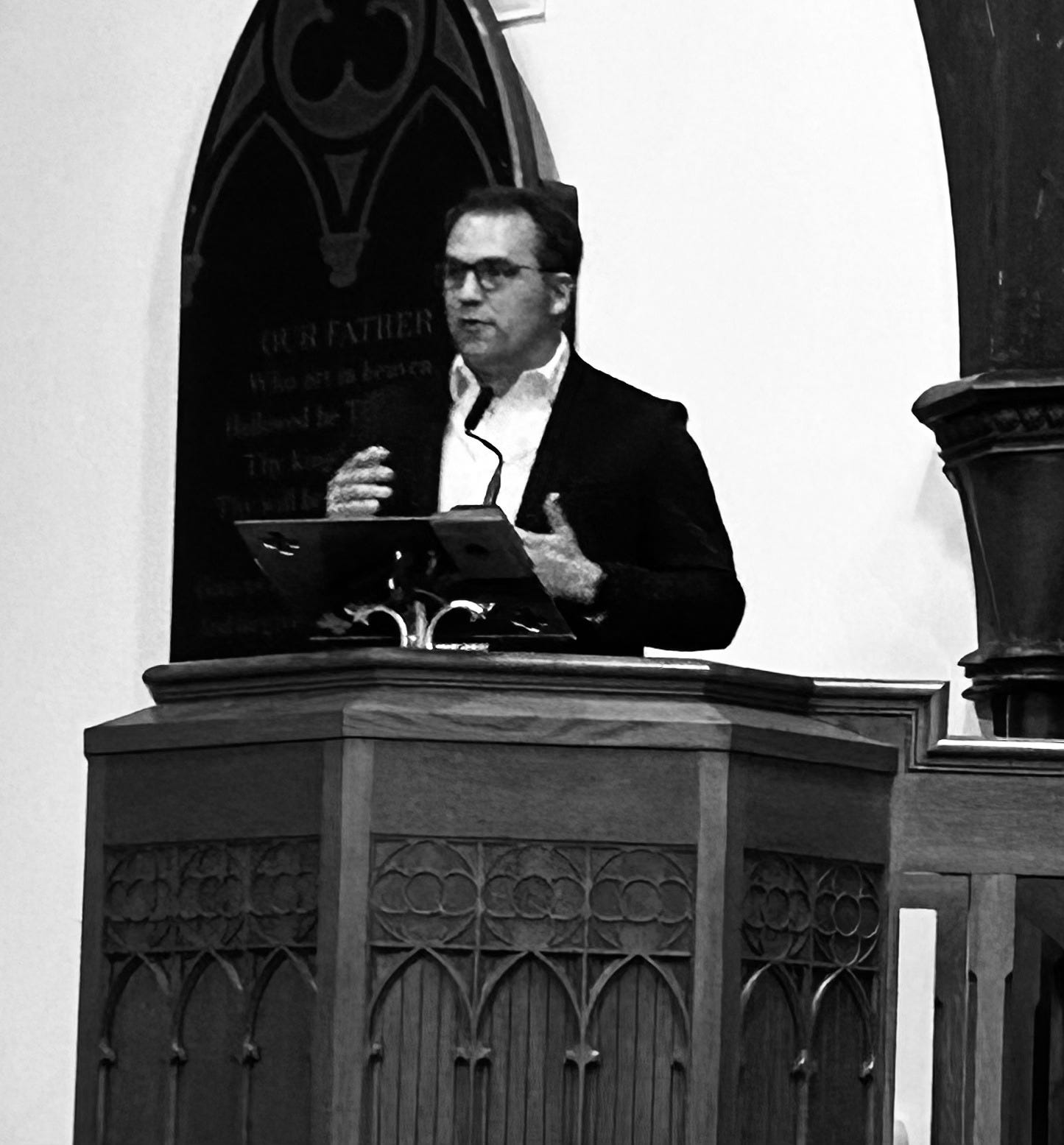
This sermon was delivered June 9 in Charlottesville, VA as part of the Iowa Preachers Project preaching slam.
What follows is the actual transcript of my sermon, with a few uhs removed, formatted for substack. Audio is available at the bottom.
Conversations in the Car
A few years ago, I started noticing something whenever my kids and I were in the car together: they were far more open to a real conversation than when I was sitting directly across from them.
They would say things that I might never hear face to face.
I’m, um, already seeing some nodding heads in the congregation.
There’s something about standing shoulder to shoulder, moving in the same direction that makes it easier to be honest.
I encounter this dynamic often as a chaplain.
People will tell me things as I sit aside their hospital bed, that I might never hear sitting face to face with them in an office setting or some other context.
For the last year, I have not been preparing messages.
I’ve been listening to the people they were meant for.
Sunday May 31st was the first time I had preached in a church in over a year.
And in that time, I’ve been sitting in the pews like a regular person, listening, talking, interacting, listening with people and their stories.
And from what I’ve gathered from their conversations, there seem to be two overarching questions that people seem to be asking.
First of all, is this God thing even real?
And if this God thing is real, does it even matter beyond Sunday morning?
Because they’re not entirely sure that it does.
And the more I listened to people and their stories, the more I began to wonder if the real challenge facing the church is simpler than we make it to be.
We spend a lot of time talking about doctrine, formation, even compelling preaching.
But I think the more basic question that people actually wrestle with is:
Does any of this actually matter?
Life Works Pretty Well Without God
Throughout his Ministry in a Secular Age series, Andrew Root argues that people have become convinced that life works pretty well without God.
Ryan Burge, a sociologist, has noted that church has increasingly become a luxury good, something nice, but something we don’t really need, much like a country club membership.
People have become convinced that if church disappeared tomorrow, they’d probably be fine.
I mean, remember, that’s what literally happened right during COVID.
It’s not that people reject or are, uh, hostile to faith, but rather they’ve learned that they don’t really need God.
Religion has become obsolete, says sociologist Christian Smith.
And in its place, they’ve made religions of work, sports, especially politics.
And for many, that seems to work.
Until, that is, they find themselves or a loved one in a hospital bed.
The Corinthians Thought They Had Arrived
That’s why I find Paul’s words to the Corinthians so compelling, because Paul seems to be speaking to people who had similarly bought into an alternative religion, perhaps we might say a gospel of acquisition.
And while written to people two millennia ago, I swear, Paul could have written these words to the average American churchgoer today.
You can practically hear the sarcasm dripping from his voice:
Already you have what you want.
Already you have become rich.
Quite apart from us, you have become kings.
In other words:
You’ve made it.
You’ve arrived.
You have everything you need.
Paul keeps laying it on thick:
You are strong, but we are weak.
You are held in high honor, but we are in disrepute.
You are well fed, but we are hungry and thirsty.
At first hearing, it sounds absurd.
Who in their right mind would want to trade places with that?
And yet, by the end of the passage, something really interesting happens.
Paul and his crew, the self-described rubbish of the world, dregs of all things, seem to have something going for them.
After all:
When reviled, they bless.
When persecuted, they endure.
When slandered, they speak kindly.
It’s as bizarre now as it was then.
Maybe more so.
Why Are We Still Searching?
And I think this is Paul’s brilliance.
Because beneath all the sarcasm, Paul is asking a question.
If you’ve arrived, why are you still searching?
If you’ve become kings, why are you still so restless?
If more really delivers, why are you still looking for something else?
Paul never comes straight out and says it, but he lays out the contrast so clearly that his hearers, both then and now, can’t help but wonder:
Maybe these morons know something that the kings don’t.
And maybe I should listen.
Life Before Death
Now, friends, I know we’re preachers.
We care about doctrine.
We should.
We care about theology.
We should.
We care about compelling preaching.
We should.
These things matter.
But if I may be so bold, if this stuff doesn’t have real life implications, then what good is it?
And after a year of sitting in the pews and alongside hospital beds in the ministry of presence, I’m increasingly convinced that what keeps people awake at night isn’t orthodox theology.
Maybe I’m wrong.
But what I think keeps people awake at night is their loneliness, their broken relationships, their seeming inability to stop scrolling and buying and drinking as much as they know they need to stop, but they can’t.
And if our preaching, if our presence doesn’t speak to these things, then what good is it?
The good news can’t just be about life to come, but this life now.
It’s got to offer not just life after death, but life before death.
And you know what the good news is?
It does.
It absolutely does.
The gods of More
The foolishness of the cross is that when we stop chasing salvation through status, through stuff, through success, we discover God meets us precisely where those things fail.
And man, that is good news.
As Andrew Root writes, the gods of more demand that humans do better, be better, acquire more.
But our God...
Our God comes to the brokenhearted, loves the lost, gives rest to God’s children.
And man...
If that’s true, let’s preach that.
Let’s come alongside people and show them not just good theology, but how to live this life now.
The Secret Hope
See, here’s the thing.
While the folks in the pews, I do think, are questioning whether this stuff really matters, whether it’s actually true, I think they’re secretly hoping it really is true.
Like they really want it to be true.
And I think it’s a bit like Paul is doing with the Corinthians.
Calling them rich.
Calling them kings.
Buttering them up in such a way that deep down they know it’s not true.
Like the Corinthians and many of our hearers today, they’re drowning in debt, their relationships are in tatters, their kids won’t return their calls.
And eventually they start wondering:
Maybe I’m not really a king after all.
And that’s where the gospel becomes good news.
Because beneath all this status, all this stuff, all the success, there remains this longing:
I want some good news.
I need some good news.
And Paul says, not that you can have your best life now, but rather:
Even when your life doesn’t look that grand,
Even when you’re quite clearly not a king,
You may in fact be experiencing a bit of the life to come right now.
How foolish.
How moronic.
But when the voices around us insist that fulfillment is found through acquiring more, the gospel says otherwise.
And to borrow from our host, David Zahl:
What a relief.
Because people don’t need more information.
They need good news.
Thanks be to God, we have some.
Amen.
Actually there is another question. In the event that God is real, what kind of God do we have?
"If you’ve arrived, why are you still searching?" - That'll preach.
I encountered some guys in a comment section (I know, I know...) who were arguing that churches should be taxed on all of their assets that aren't being used for charity, in the Matthew 25 sense. As if our poverty of spirit isn't also a crisis. As if charity only comes in the form of a blanket and a soup ladle.
Come and see.