


Author’s Note:
I receive a fair number of books for potential review—some of which don’t quite fit the format of the Future Christian Podcast. Still, I like to share occasional reflections on what I’m reading, especially when a book sparks something worth engaging, whether it resonates deeply or raises honest questions.
Another Deconstruction Memoir?
I have to confess—I’m pretty worn out on what I’d call the “deconstruction memoir.” It’s not that I don’t appreciate honest stories of wrestling with faith. I do. I’ve lived that myself. But the concept of “deconstruction” feels overused, and frankly, the market is oversaturated. I find myself wondering: who, at this point, still needs another book telling them it’s okay to question their beliefs?
More than that, I know I’m not the intended audience for this book. It’s the usual recipe: part memoir, part theological musings, part irreverent critique of Christian tradition. I didn’t find it particularly compelling—but I can imagine others might resonate more with the author’s experience and tone.
What I Liked
“If we can’t be sure, I’d rather risk my life on the belief that God is love... Not because of heaven or hell. But because the love Jesus espouses is worth the gamble of being wrong.” — p. 209
This quote grabbed me. Years ago, early in my own (then unnamed) deconstruction journey, a Bible college friend asked something along the lines of, “Wouldn’t you rather take the safer bet? Stick with the traditional view of God, just in case hell is real?”
That logic never worked for me. Still doesn’t. And I appreciate Moon’s willingness to gamble on love. Coming from a conservative Baptist background, I just couldn’t believe anymore that 90% of the world was doomed. I wanted to believe in a more inclusive God.
And honestly—who’s inspired to devote their life to a “safe bet”? Jesus didn’t call people to hedge their bets. He called them to die to self, to follow him. So yes, faith is a gamble—but it’s one worth making, especially if love is the banner we’re flying.
“May I posit that many of us truly have not understood the implications of our belovedness?... Until we open ourselves to the possibility of God loving us, yes, and liking us, we will not be able to believe it’s true for anyone else.” — p. 205
This hits on something that doesn’t get talked about nearly enough. I’m reading David Zahl’s The Big Relief right now, and he makes a similar point about grace. We’re all swimming in messaging about how awesome and special we are. Progressive Christianity has largely adopted that cultural narrative. But here's the thing: people want to be told they’re amazing again and again because they don’t really believe it deep down.
And that’s where Moon lands something important. What we really need isn’t more affirmation of how great we supposedly are. What we need is to know we are loved—even when we’re not all that great. That’s the kind of love that heals and transforms. Not flattery, but grace.
What I Didn’t
The book’s description includes this line: “Your openhearted path to reclaiming what you love about your faith—and lighting a match to the rest.”
That, right there, gets at my biggest issue. There’s a growing assumption in deconstructionist/exvangelical circles that faith is a buffet: take what nourishes you, torch the rest. But Christianity was never meant to be curated like a Spotify playlist.
There are plenty of things I don’t love about my faith. I don’t love that Jesus calls me to be self-sacrificial, generous, and kind when I’d rather be grumpy, selfish, and indifferent. I don’t love that I have to forgive when I’d rather hold a grudge. But that doesn’t make the call invalid. If anything, that tension is where transformation begins.
Yes, I get it—there’s a lot in cultural Christianity that deserves to be questioned or rejected. But this mindset that we can just “keep the parts of Christianity we like” and toss the rest doesn’t strike me as discipleship. It strikes me as spiritual consumerism.
There are biblical texts that challenge and disturb me—some that make me wrestle with who God is, or confront my own shortcomings. But I don’t think faith is about avoiding discomfort. Faith is forged in the wrestling. It’s in the dying to self. And yes, it’s in the gamble.
Final Thoughts
In the end, while this book wasn’t written for someone like me—and didn’t offer much I haven’t already wrestled with—I can still appreciate the author's effort to speak honestly about faith, doubt, and the long, winding road in between. For those just beginning to question the frameworks they were handed, this might be a welcome companion. But for the rest of us, perhaps the more pressing need is not permission to tear things down, but the courage to rebuild. To take the risk that love is still worth betting on—even when we’re not sure what comes next.
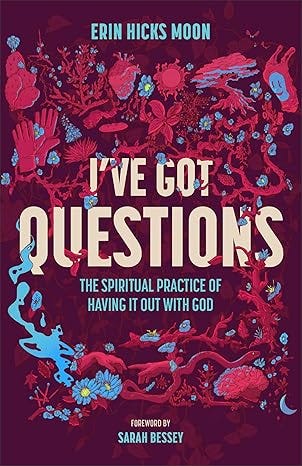
Moon’s book I've Got Questions: The Spiritual Practice of Having It Out with God is available now from Baker Books.
https://bakerpublishinggroup.com/books/i-ve-got-questions/419612
There’s another view to the take what works and throw away the rest in that so many are simply throwing it all out. Well it does still have that feeling of a spiritual buffet approach, I would also argue that’s what most of us do anyway.