


TL;DR: American churches increasingly attract educated, financially stable people who can “look the part” of successful, upwardly mobile Christianity. Reading Andrew Root alongside Ryan Burge makes me wonder if that’s more than coincidence. The theology of the cross offers something radically different: God meets us not in our ability to appear successful and put together, but precisely in our brokenness, impossibility, and need.
For a long time, I think, American Christianity has implicitly taught people how to look the part.
Get a good education, have a stable family, raise well-behaved kids, give some money away, and most importantly—Be respectable. Or, more said differently—Be upwardly mobile.
Obviously, there’s nothing wrong with these things. But increasingly, the people showing up in American churches actually do look the part. They are disproportionately educated, financially stable, and doing reasonably well.
Which raises a question I’ve been thinking about:
What if that isn’t merely a demographic coincidence? What if we’ve inadvertently created churches for people who are good at looking the part?
That question came back to me recently while reading a nearly fifteen-year-old book by Andrew Root.
The “middle-class bias” of youth ministry.
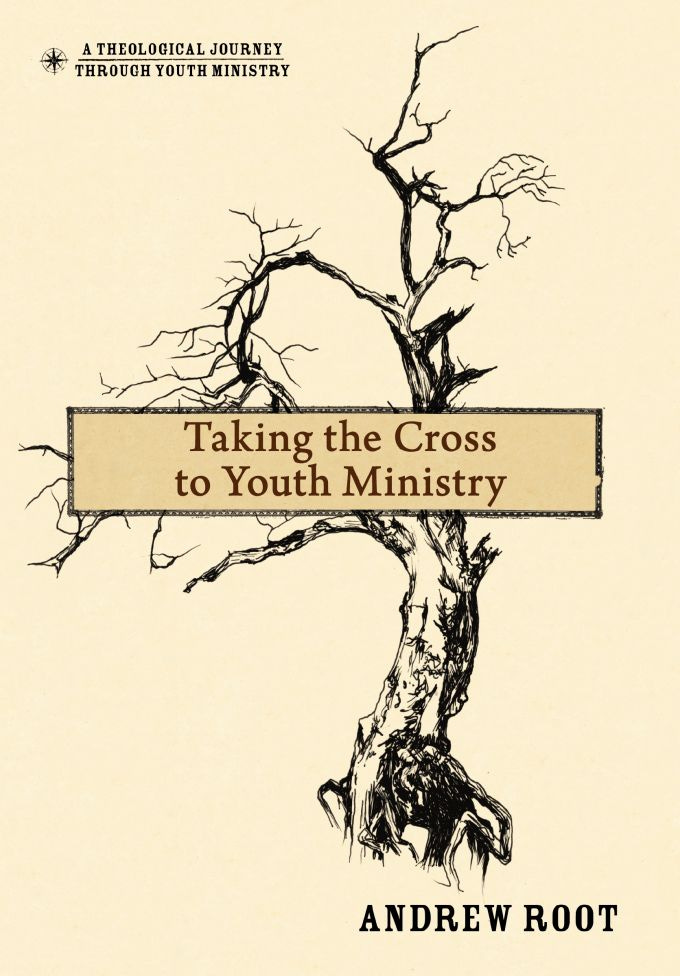
As a self-described Andrew Root scholar, I’ve now read thirteen of his books—most recently one from his earlier work, Taking the Cross to Youth Ministry, part of his four-part A Theological Journey Through Youth Ministry series published in 2012.
I think one of the most provocative things Root says in all of them comes in this book, when he speaks of “the middle-class bias” of youth ministry.
Root talks about youth ministry being seen “through the lens of modernity,” with its “view of growth, advancement, and preparation as steps on the escalator to strength and power” (47). To that end, youth ministry, as Root describes through his narrative about the “Fab Four,” becomes about helping teenagers “look the part”—my words, not his.
And this is where I think his point about the middle-class bias of youth ministry becomes especially perceptive.
One of the reasons I keep reading Root is his ability to both perceive and name the broader dynamics within our culture and their theological impacts. What I find especially intriguing about this book, even though it is nearly fifteen years old, is how relevant it still is, needing only a few ancillary parts updated.
For instance, I might edit Root’s “middle-class bias” to more accurately describe the idea of being “upwardly mobile,” which both tracks with his latest book, Baal and the Gods of More, and also with the data we continue to see from folks like Ryan Burge suggesting that church has essentially become a luxury good.
And this is where I think Root’s book, even though it is nearly fifteen years old, is powerfully relevant for today: the teenagers Root describes, both real and imagined, are now well into adulthood.
And I wonder if what Burge is now documenting about American Christianity is, in part, the maturation of the very problem Root diagnosed fifteen years ago.
Church has become, quite literally in some cases, about looking the part—about being perceived as upwardly mobile.
In some ways, this is a societal and economic problem, as Burge would assert, and in many ways I’d agree. Yet this is where, as Root suggests elsewhere, we need to look to theologians first, not sociologists, for the reasons why—and I think this Root book explains exactly why.
The Opposite of Upward Mobility
Root’s essential argument in this book is that (youth) ministry is about “encountering God at the cross, where God takes on nothingness, and from nothingness brings forth new life, new possibility, and an all-new reality” (56).
Faith, then he says, “is to see and admit our impossibility, our stuckness, and through it to trust that God in the cross of Christ is acting to bring forth a new creation in you and in all that is” (57).
This is where I want to come back to the idea of “looking the part” or being “upwardly mobile.”
Admitting our impossibility, our stuckness, our nothingness is quite obviously the opposite of the upwardly mobile ethos. “Looking the part” within the broader American and church context has increasingly meant trying to promote our possibility, worthiness, and ability—as if church were a Tony Robbins motivational conference.
And let me add an aside here: for far too long in the American church, “looking the part” has also meant looking or being white. The image of respectable, successful, upwardly mobile Christianity has never been purely economic. It has also often been racialized.
So, is it any wonder that church in America has increasingly become demographically filled with upper-income and highly educated people?
While in 2012 the middle class could still be perceived as “upwardly mobile”—or at least imagine ourselves to be—now, with the shrinking of the middle class, it’s increasingly the upper class and well-educated who can most convincingly “look the part” and present themselves as upwardly mobile and basically good.
Today, struggling lower- and middle-class people often cannot look the part so easily. They cannot necessarily imagine themselves to be upwardly mobile. Too often, they are actually struggling with addiction, debt, broken relationships, and more—much as we all are.
I don’t mean to insult or diminish those economically vulnerable. The difference, I think, is that economic precarity makes brokenness harder to disguise.
As another aside, this might help explain why megachurches can be attractive to lower- and middle-income people: they offer an aspirational identity. You may not “look the part” yet, but the promise is that you can.
It’s not that upper-income people are somehow less broken. Rather, money and education can provide resources that make it easier to wallpaper over that brokenness—to maintain the appearance of stability, competence, and upward mobility even when everything underneath isn’t nearly so put together.
Those without those resources often cannot even presume to pretend. Their brokenness and nothingness may simply be too obvious and overwhelming to hide.
And what if we have constructed churches in which that makes it harder, rather than easier, for them to belong?
When Youth Ministry Grows Up
What I’m trying to say is that what Root diagnosed in 2012 has increasingly become true. The models of youth ministry have simply been transferred into adult ministry.
Those who, as Root notes, could “look the part” have stuck around so long as church attendance helped them look the part—upwardly mobile, respectable, successful, good.
Whereas those who found church no longer necessary to help them look the part no longer needed church. As Root writes, “They have no problem being good” (95).
Last aside: There’s another side to this coin. In making church and Christianity about being “good,” a reasonable conclusion is that churches that are not LGBT-affirming or social-justice-oriented are simply not good.
To be clear, this is not meant to be a judgment on whether LGBT affirmation or social justice are “good.” I happen to think they are. Rather, my point is that “being good” or “being just” is not the point of Christianity.
And this actually fits Root’s critique quite well. Just as the teenagers Root describes eventually discover that they can be “good” without church, one can be LGBT-affirming, advocate for social justice, and generally be a good person without church too.
If those things become the point of Christianity, then we shouldn’t be surprised when people discover they don’t need church to accomplish them.
All the while, those who are actually dealing with visible brokenness and nothingness increasingly find themselves alienated from church. They cannot even presume to pretend.
And yet, the cross says that the inability to look the part isn’t a barrier to encountering God. It may be precisely where God meets us.
This is why admitting to one’s brokenness and nothingness within church today can be so powerfully transformative.
“I Can’t Look the Part Today”
A few weeks ago, one of the pastors at my church shared a simple confession before giving the announcements. Her eldest son was away at college, and this was her first Sunday in YEARS without him. She was feeling quite emotional.
As I’ve reflected on it, I’ve been struck by how simple and profound it was: a moment of brokenness and nothingness.
She was admitting: I don’t have it all together. I can’t look the part today. I need help.
And this is why I use the word confession.
Root notes that “to be forgiven we must be where God is found, and the cross reveals that God can be found in suffering, weakness, and death” (73).
To be clear, Pastor Betty was not needing forgiveness. But I do believe she was needing God’s loving presence—and she found it.
And not just for her. For everyone who heard her confessing her own brokenness and nothingness, we too, in some small way, could confront our own feelings of brokenness and nothingness.
This brokenness and nothingness is what Root connects to sin and death, and what Christ overcame through his death and resurrection. Our “sins,” then, can be the things we try to do to solve that brokenness and nothingness on our own.
Say, for instance, that Pastor Betty—who has shared her enjoyment of IKEA—had instead responded by going on a spending spree, seeking to drown out the brokenness and nothingness of missing her son away at college.
It’s not that shopping at IKEA is “sinning.” It’s that seeking to solve our brokenness and nothingness entirely on our own is not so much wrong as, frankly, ineffective—and, as Root says, a way of “seeking to live outside God’s action” (96).
Think, then, about what a powerful move Pastor Betty actually made.
Confronted with her own brokenness and nothingness, she confessed it within the community of Christ, trusting that God was and is present in that brokenness and nothingness. And in doing so, she was met with the love and grace of God.
The contrast matters.
Looking the part says: I can handle this. I am capable. I am progressing.
Confession says: I cannot fix this. I need God, and I need you.
What If Church Looked Like This?
Root notes that “only suffering love can redeem another without using force and threat to do so” (98).
Pastor Betty exhibited suffering love.
Imagine how different church and church attendance might be if, rather than being about “looking the part” of being upwardly mobile, we instead confessed and shared with one another our brokenness and nothingness, trusting that God is with us in the midst of such—and reminding one another of that truth.
Think about all the pain, addiction, debt, broken relationships—the brokenness and nothingness carried by so many in our world.
They may not be interested in “looking the part” or being “upwardly mobile.” Some know perfectly well that they cannot pull off such an appearance.
But what if, through our own confessions of brokenness and nothingness, we bore witness to the love, grace, and presence of God?
Wouldn’t that be quite something?
As Root writes:
“We are forgiven because God is found acting for us by suffering with and for us. God encounters us in our own deaths through God’s own death. Therefore, justification is deep, because it is bound to a God that reveals Godself in the cross, next to our impossibility, besides our longing, suffering, and fear” (72).
That Sunday, Pastor Betty was grieving a loss.
And in confessing her loss, we found God. For as Root notes:
“When we are honest enough to admit and struggle with our yearnings and brokenness, the action of God transforms us into the new creation, the new humanity” (117).
That'll preach.