


TL;DR:
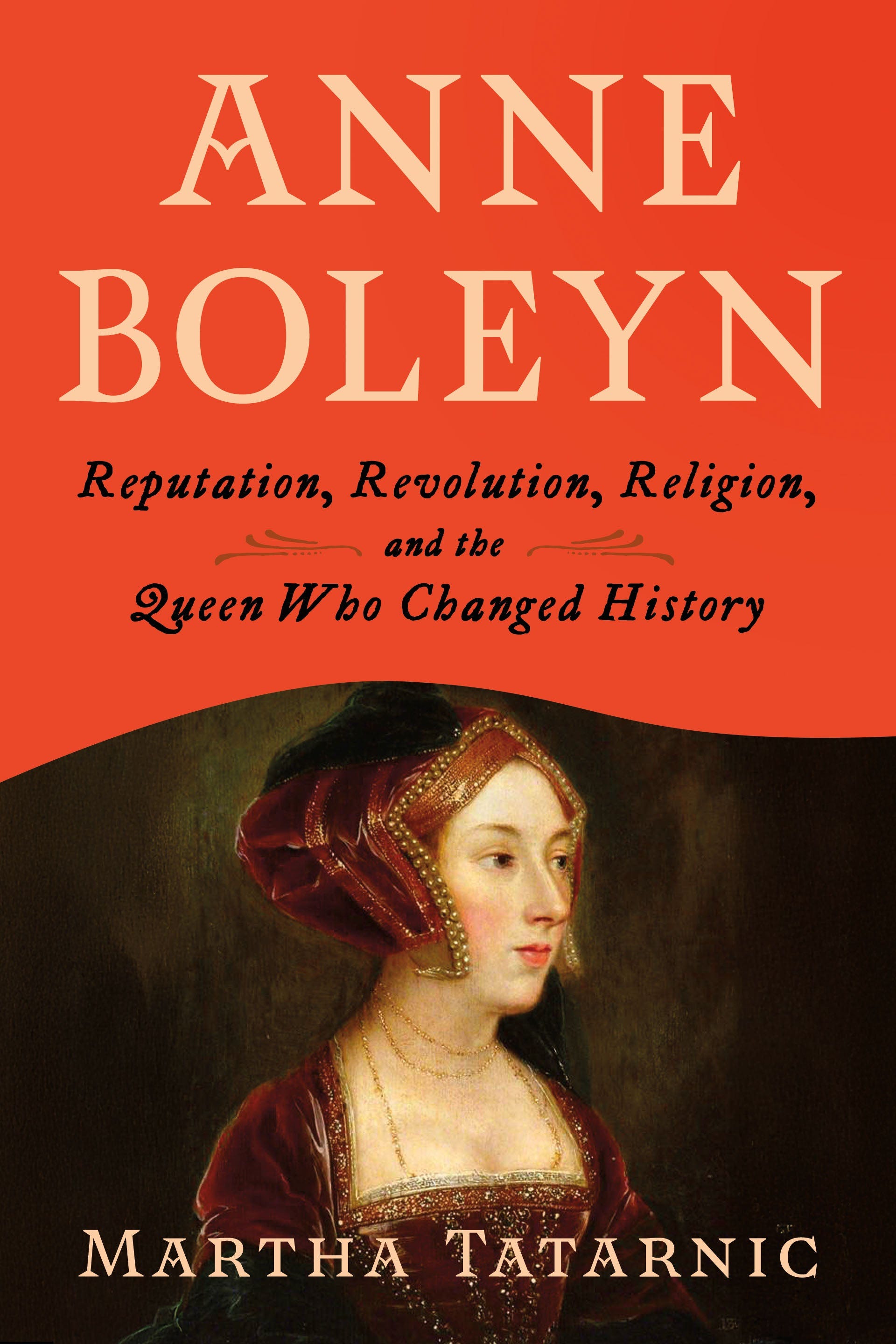
In her new book Anne Boleyn: Reputation, Revolution, Religion, and the Queen Who Changed History, Martha Tatarnic argues that Anne Boleyn was far more than Henry VIII’s second wife or the catalyst for a royal divorce. She was a serious religious reformer whose intellect, convictions, and influence helped shape the English Reformation itself. The book challenges familiar historical narratives, recovers the overlooked influence of women in church history, and even dares to ask whether God’s providence was at work through Anne’s life and legacy.
I like big, bold, brave ideas.
And wow, Martha Tatarnic sure comes out swinging in her new book Anne Boleyn: Reputation, Revolution, Religion, and the Queen Who Changed History.
Right from the jump, Martha boldly makes her case:
“Anne commands our attention. She confronts us with a character that refuses to conform to expectations. She demands we do a double take on how we got to where we are today and who made it happen. She compels us to examine our talk about her to see what it says about us. Anne Boleyn is a woman who changed history. She has the power to keep changing history, if we’re willing to let her story speak.”
Those are bold words: a woman who changed history.
If you’re like me, you probably learned the familiar version of the story, perhaps best summarized by Wikipedia:
“Henry VIII was King of England from 22 April 1509 until his death in 1547. After the Pope refused to annul his marriage to Catherine of Aragon, Henry passed legislation that severed England and Ireland from the Roman Catholic Church and established the monarch as Supreme Head of the Church of England, initiating the English Reformation.”
In the common telling, Henry simply wanted a divorce and started his own church to get one.
And notably, on Wikipedia’s page for the English Reformation, Anne Boleyn receives only a single mention—and even that is regarding Henry’s desire to marry her.
But Martha argues Anne was not merely a romantic subplot in a king’s story.
She was a reformer.
More than that, she was an intellectually serious reformer whose convictions helped shape the future of the English church itself.
As Martha writes:
“The Anglican church was created not because the king wanted a divorce but because Anne became the object of the king’s attention, and Anne was a reformer. She wasn’t just a reformer, she was a smart, witty, articulate, and well-read reformer” (32).
That is a radically different framing of history.
And honestly, a far more interesting one.
Throughout the book, Martha repeatedly highlights how women’s influence on Christianity has often been ignored, minimized, or hidden behind the actions of famous men.
She writes:
“The beginning of England’s reformation was significantly shaped by Anne’s vision and convictions” (132).
And later:
“The idea that the church is the creation of male ideas, male leadership, male voices, has been largely fanciful…failing to see the influence and hear the voice of women shaping our Christian faith” (163).
What I found especially compelling, though, was Martha’s willingness to see Providence at work in all this.
She writes:
“The accident of her long life and the early deaths of her siblings meant that the bloodline of Anne Boleyn, and something of her religious agenda, would rise again and leave a mark that has been more lasting than any of the opposing factions and violent men who tried to bring her down. As a person of faith, and particularly an Anglican person of faith, I would be tempted to call that Providence rather than accident” (142).
That line struck me.
Because so often modern history is flattened into power struggles, politics, sex, and sociology. And certainly, those things matter. But Martha is willing to ask the deeper and riskier theological question:
What if God was at work through Anne Boleyn?
Not because Anne was perfect.
Not because history is simple.
But because God has always worked through flawed, unlikely, and often overlooked people.
By the end of the book, Martha leaves little doubt about her conclusion:
“She changed history and revolutionized the church” (238).
Big claim.
But after reading the book, I’m increasingly convinced Martha may be right.
Go buy the book and decide for yourself!
https://churchpublishing.org/products/9781640658592-anne-boleyn
We should also remember the highly educated Catherine Parr who was a step mother to the Protestant Elizabeth, who was simply concerned to have freedom of worship to enable her country to thrive, rather than be riven by factions.
I recently ran an Anglican history introduction for my church, and made the same point.