


I know nothing has been wasted No failure or mistake
You’re an artist and a potter I’m the canvas and the clay
“I can tell by your voice that it didn’t go how you hoped.”
A few months ago, I met with a denominational leader. I wasn’t overly hopeful going in, but I allowed myself to believe the meeting might be a step in the right direction.
It wasn’t terrible—it just wasn’t anything. More of the same: polite words, vague encouragement, no opportunity.
A good friend in ministry told me to call him afterward to let him know how it went. As soon as I spoke, he could tell everything he needed to know—just from the sound of my voice.
That night, when I told my wife about the meeting, she said, “Let them.” She had been reading a book by Mel Robbins and, channeling a less fatalistic version of Job’s wife, asked me, “Why are you interested in something that clearly isn’t interested in you?”
I didn’t have a good answer.
At that moment, I felt like my career was over. And strangely, I think that moment of death—of surrender—was exactly what I needed.
Surrender and Fragility
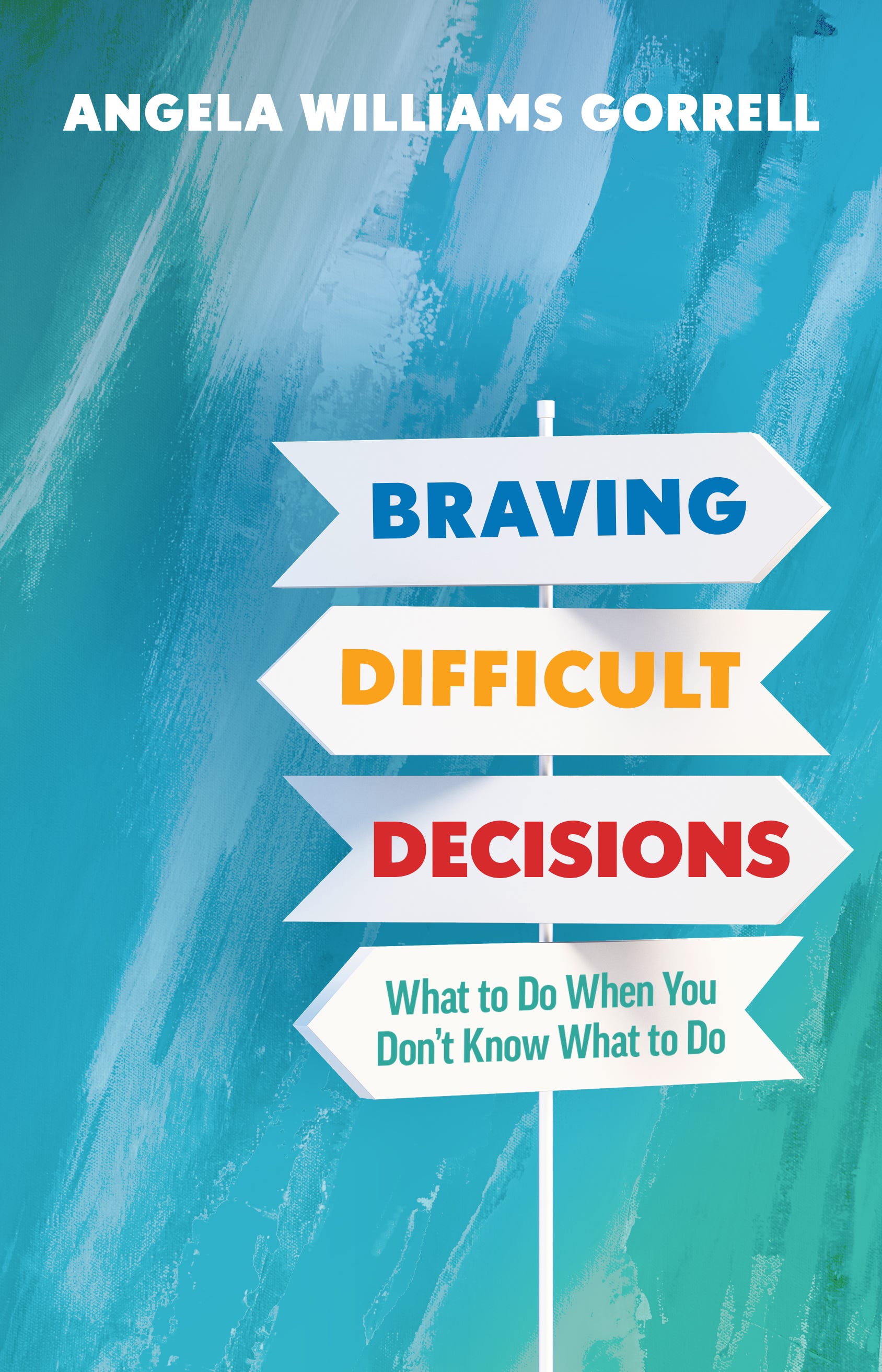
Angela Williams Gorrell writes in Braving Difficult Decisions:
“If we are to settle the stirring within, each of us, in our own way, needs to surrender. Here's what you will discover: your fragility is a form of power” (p. 21).
But I was doing the opposite. For years, I had been bearing down, muscling through, clinging to what I thought I deserved.
“One way of going through life is to bear our way through it and frantically cling to our ways of knowing, being, acting, and wanting,” Williams Gorrell writes.
Each time a job came and went, I got more jealous. More resentful. More convinced I was invisible.
But then she offers another path:
“The other way of going through life is to move with it and continuously surrender” (p. 26).
And slowly, surrender began to take root.
Another pastor friend texted me to check in: “How’s your career?”
I replied, “It’s basically over.”
I didn’t mean it bitterly. Just truthfully. And strangely, as I hit send, I felt a calm detachment. No performance. No striving. Just honesty.
Williams Gorrell writes:
“When you notice the same things again and again, God might be trying to give you a sign of some sort. Perhaps God is showing you that it's the right time, or God is showing you a truth again and again until you confront it or accept it.”
Finally, I was.
Done with the Disappearing
Disappearing manages shame, I’ve been told. And over the last few years, I’ve done my best to shrink as far out of sight as possible—at least in some regard. For about six months after the new church start closed, I even changed my Twitter handle to “failed church planter.” Everyone was thinking it, so I figured I might as well own it. Not in a self-loathing way, but just to name the elephant in the room.
But as the career frustration and resentment built, disappearing started to feel like the easiest option. Especially post-2020, in the midst of growing social justice movements, it felt like the last person anyone wanted to hear from was a straight white guy. As one person put it, my best course of action seemed to be to “shut the f@ck up.”
Shame can cause us to hide…Perhaps most significantly, shame completely disorients us from what is true. Shame convinces us to continue down a bad road because we literally feel beyond repair. Shame blocks us from seeing any possible sign of hope, redemption, or possible change from the current torment by which we feel consumed.
- Arianna Malloy, Healthy Calling: From Toxic Burnout to Sustainable Work
A ministry friend had been encouraging me to write about the shame of ministry “failure,” and some version of that effort has been sitting in my Substack drafts for months. I wanted to be able to say, “Oh, I’m over it,” or “Here’s how I came through it.” But instead, it was easier to stay invisible and pretend—stuck in my own noxious stew.
Still, another good friend kept nudging me to write. “You’ll probably make mistakes or missteps,” he said, “but you’ve got to do it.”
Ironically, it was after that aforementioned meeting that I finally felt like I had nothing left to lose. It was over, after all.

Preaching Someone Else’s Funeral
I remember singing these lyrics in church:
“I know nothing has been wasted / No failure or mistake…”
I sang them through clenched teeth. Another rejection letter. Another closed door.
I told the friend sitting next to us, “I needed to hear and sing those words today.”
It’s easier to preach someone else’s funeral than your own.
Literally and metaphorically.
Back in early 2018, as I was prepping for a fall launch of the new church start, I was asked to provide pulpit support for a congregation nearing its end.
I preached to six or seven people in a small borrowed room.
Eventually, that church closed. I was asked to preach at their final service.
I remember quoting 1 Corinthians 15:58:
“Your labor is not in vain.”
I told them:
“Nothing you do for God is a waste of time or effort.
Because of the resurrection, what’s dead doesn’t stay dead.” Energy isn’t destroyed. Love doesn’t vanish. Faithfulness lives on.
I said:
“If you take nothing else from this day, please remember:
Your labor is not in vain.”
Three and a half years later, I found myself writing a similar liturgy.
Only this time, it was for my church.
And the words didn’t come as easily.
Encouragement along the way
While the last few years have been trying, I’m thankful for the relationships that have sustained me.
Text thread with ministry friends has been huge blessing. Being able to be in on some “inside” conversations has made me feel like I do actually matter.
A pastor friend who occasionally sends me ministry job listings. I sort of chuckled every time I’d receive another forwarded job from this person. They must believe in me more than I believe in myself.
The aforementioned friendships. My podcast co-host and guests. Others.
Each of you has helped me carry this story.
You’ve been lifelines.
Thank you.
God's Not Finished With Me Yet
Something’s shifting.
I don’t fully trust it yet. Part of me is still waiting for the other shoe to drop.
But I’m trying to believe these words:
“Even as we live with the possibility of making mistakes, miraculously we are caught up in the goodness of God and the universe… It all miraculously comes together—the broken relationships, the gut-wrenching career choices, the beautiful intimate moments, the life-changing revelations, the challenging conversations, the hard-won wisdom, the crucible experiences—this thing and that thing and, yes, somehow even that thing—at the end, it all meets in God's ultimate good.” (Braving Difficult Decisions, p. 153)
Nothing is wasted.
Not because God wants heartbreak—
But because God redeems it.
Because grace transforms, resurrects, and heals.
“You and me, we are also a part of the Great Story being told.
We participate in this story.
This is the story that mysteriously says:
God loves everything and made it all good.
Everyone belongs.
All is being restored.
And resurrection—not death—gets the last word.” (p. 76)
“In my mother’s womb
You formed me with Your hands
Known and loved by You
Before I took a breath…”“You make all things work together
For my future and for my good
You make all things work together
For Your glory and for Your name…”
Lord, I believe.
Help my unbelief.
Loren, thank you for your astonishing vulnerability. And honesty. I don’t know where God is taking you — and those of us following you — but I want to see.