


TL;DR
Josh Packard’s Faithful Futures offers important sociological wisdom about youth ministry, listening, boundaries, and community. But his theological conclusions—especially around attendance and narrative—are less convincing. Worth reading, but read it for the sociology, not the theology.
I have several stacks of books all over my office—well, not as many lately, as I’ve been trying hard to de-clutter at my wife’s suggestion and because the piles were becoming unmanageable.
Generally, my book stacks fall into two categories: “read” and “to be read,” with the TBR pile more or less ordered by whichever publisher sends something over—unless a book jumps the line. Christian Smith’s Why Religion Went Obsolete definitely jumped the line, and I ended up writing a three-part series putting it in conversation with Malcolm Gladwell’s The Tipping Point.
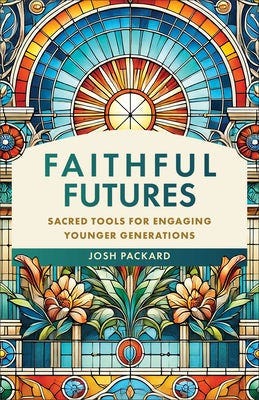
Next on my pile was another book by a sociologist: Josh Packard’s Faithful Futures: Sacred Tools for Engaging Younger Generations. A fellow Coloradoan, I’ve been following Packard’s work for some time—Church Refugees (2015), his research with Springtide, and I had his colleague Megan Bissell on the Future Christian Podcast about a year ago.
I’ve never been great at the standard book-review format. Instead, I like holding a book in conversation with my own experience. And on that basis, I found myself with mixed reactions to Faithful Futures. Some insights felt genuinely important, while others left me uneasy.
Let’s start with what I think Packard gets right.
1. Moving Beyond “Mountaintop Experiences”
Packard describes how much of Evangelical youth ministry was built around emotional “highs”—camp, retreats, big worship moments—with the assumption that if a young person had a powerful enough experience, it would sustain their faith for life.
He writes:
“Rather than filling up their bucket, I should have been showing them how to go to the well when they needed it… What young people need are the skills to enter into the ‘conversation’ of faith that can last them a lifetime.” (p. 60)
As someone who also worked in youth ministry and camping, I resonate with this. Passion without direction doesn’t get people very far. Helping young people cultivate practices rather than chase emotional moments feels right.
2. Faith Formation Isn’t About “Content”
Packard argues that youth ministry shouldn’t focus primarily on delivering the “right answers,” but on helping young people articulate their own developing beliefs:
“We should be far more concerned about whether young people can offer age-appropriate explanations of their beliefs… than about ‘right’ answers.” (p. 65)
I’m just now reading Andrew Root’s 2012 book Unpacking Scripture in Youth Ministry, and Root makes a very similar point—that the Bible is not something we memorize and master, but the place where we encounter the living God:
“We need the Bible to encounter God’s act… the Bible reveals the one in whom [to believe].” (Root, 56)
Formation is less about information and more about encounter, which I think is exactly right.
3. Listening Really Matters
Packard emphasizes the importance of listening:
“Listening is probably the single most important thing an adult can do to gain trust with a young person.” (p. 94)
But he also notes that listening alone isn’t sufficient:
“You also need to bring some insight, perspective, experience, or information to the table.” (p. 93)
This clarification struck me as important. As someone who works part-time as a hospital chaplain, I can vouch that deep listening matters—but ministry isn’t just nodding along.
Tanita Maddox makes a similar point in her book What Gen Z Really Wants to Know About God—that young people aren’t only looking for someone to hear them; they want adults who can help them make sense of what they’re feeling and seeing. I have an upcoming podcast conversation scheduled with her where I hope to explore this point further.
4. Christianity Is Communal
Packard writes:
“Religion is fundamentally a communal exercise, and we need one another to sustain encounters with the divine.” (p. 121)
I think this is an important reminder. Packard’s book touched on the loneliness epidemic, and rightly so. But beyond that, Christianity has always been something practiced together. Even when I’m not personally “feeling” my faith, there’s something grounding about praying and worshiping alongside others; sometimes the community’s faith carries ours.
5. Sacred Space and Boundaries Matter
Packard writes:
“In a religious context, the boundary represents the distinction between those who are members… and those who are not… There should be clear definitions for what it means to be in the group.” (p. 127)
And:
“Creating and maintaining physical or spiritual spaces for communal activities is crucial.” (p. 128)
This resonated with me. Earlier today I saw a well-intended social media post saying something like, “The kingdom of heaven has no immigration policies.” It was meant as a political statement about the mistreatment of immigrants. I understand that. But theologically speaking, it doesn’t hold up.
Both Matthew 25 and 1 Corinthians 6 include clear boundary language about who belongs to the kingdom.
This is part of why Progressive Christianity’s instinct to avoid boundaries entirely hasn’t worked well. A community with no definition can’t form people. Packard is right: boundaries and sacred spaces matter.
Where I Think Packard Overreaches
Now for the other side.
Packard is a sociologist, and when he writes from that perspective, he’s insightful. But when he pivots into theological territory, I find myself wanting to push back.
1. Reducing Church Attendance to Institutional Affiliation
Packard writes:
“The old metrics have lost their utility because they are primarily markers of institutional connection… Attendance is about participating in gatherings designated by the institution, not about how often you interact with the divine.” (p. 86)
Here’s where I think he drifts out of his lane.
As a pastor (by training and vocation, if not currently serving in a professional capacity), attendance is not merely institutional. It is participation in the life of the Body of Christ. We gather to encounter Christ together, around Word and Table. Something real happens in that gathering that cannot happen alone.
I don’t attend worship because I want to identify with an institution. I attend because I believe God meets us in community.
2. “Micronarratives” and Centering the Self
Packard writes:
“This is not the death of the metanarrative. It’s the rise of micronarrative… the centering of self in an integrated life.” (p. 190)
I struggled with this.
Christianity is not about centering the self. In fact, it’s the opposite. It is about the de-centering of self in response to Jesus Christ.
Karl Barth’s dialectic came to mind here—essentially that all human attempts to know God are inadequate unless God reveals Himself in Christ. In other words, the authority for our narrative doesn’t come from us—or even from the institution—but from Jesus.
This is where I think Packard’s theological instincts collide with the sociological framework he’s working from.
Final Thoughts
Packard is a thoughtful and practical sociologist. His insights on listening, community, formation, sacred space, and boundaries are genuinely valuable. But when he leans into theology, I find myself more cautious.
I’m interviewing Packard in January 2026 and look forward to asking him about these tensions. Until then, I would still recommend the book—just mainly for its sociological insights, not its theological claims.