


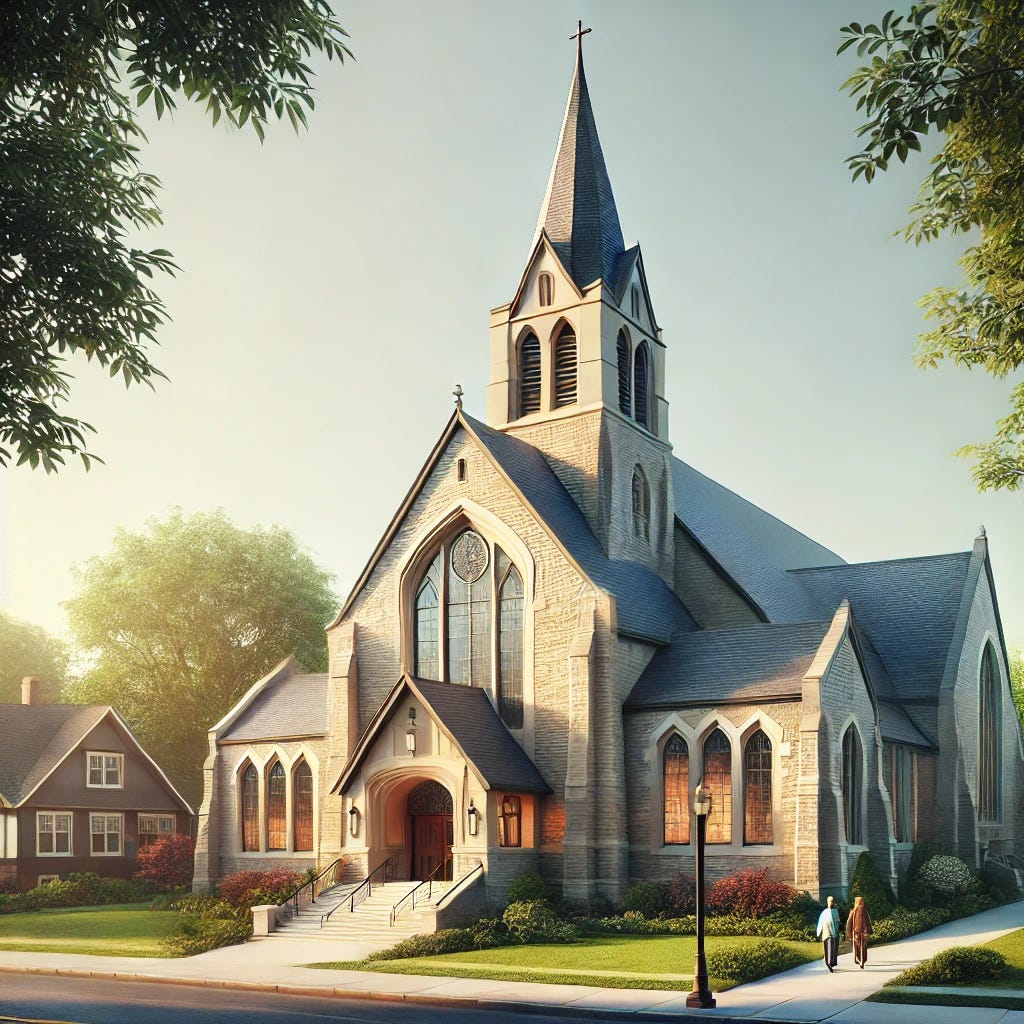
The Growing Trend of Mainline Churches Selling Their Buildings
In recent years, Mainline Protestant churches have increasingly sold their buildings as a way to cut costs, adapt to shifting attendance norms, and focus more resources on external ministry efforts. However, this shift often reflects an underlying assumption that church buildings are either neutral or burdensome. By examining examples from the corporate world—such as Nike’s distribution strategy—and insights from experts like Stewart Hicks, Mainline Protestant churches should reconsider these assumptions. In American society, physical locations still hold significance, shaping people's actions, attitudes, and sense of community. Where possible, Mainline churches should strive to retain and rehabilitate their buildings, recognizing the ongoing importance of sacred spaces.
Nike's Strategic Misstep: A Lesson in the Value of Physical Presence
Nike, one of the most iconic brands in the world, recently found itself in a slump. The company, founded by Phil Knight in 1964, has long dominated the sportswear industry, yet recent years have shown "sluggish growth" as Nike faces increasing competition, a pullback from consumers in key markets, and strategic missteps. Though still a global leader, Nike’s sales grew only 1% last year, and the company projected a 10% drop in sales for the third quarter. Much of this stagnation stems from Nike’s decision to slash its traditional retail partnerships and emphasize direct-to-consumer channels, especially online. The company believed it could make more profit by selling through its own website and stores rather than through wholesale partners. However, this shift backfired, as Nike underestimated the role that third-party retailers played in maintaining its market presence. According to analyst Neil Saunders, Nike "took it too far," opening the door for retailers to collaborate with competing brands. Nike has since reversed some of these decisions and reinstated relationships with several retailers.
The Impact of Physical Spaces on Behavior: Insights from Stewart Hicks
Similarly, architecture professor Stewart Hicks highlights the importance of physical environments in shaping behavior. In his analysis of polling places, Hicks demonstrates how context priming—where physical surroundings activate subconscious associations—can influence voting behavior. Studies show that voting in a school can increase support for education funding initiatives by 2%, while voting in a church can cause a 9% swing toward conservative candidates. As Hicks points out, although 2% may seem insignificant, in close elections, such margins can be decisive. Moreover, a 9% shift is enormous by any standard. Hicks' findings suggest that the physical space where voting occurs matters, affecting everything from the usability of voting systems to how voters perceive policies and candidates.
The Role of Church Buildings in Shaping Faith: Lessons from Winston Churchill and David Taylor
This principle can be applied to church buildings. In the Secular Age, Mainline Protestant church leaders are increasingly dismissing the importance of their physical spaces, opting instead to invest more heavily in online ministry. Yet, as Winston Churchill once said, "We shape our buildings; thereafter, they shape us." Physical spaces are not neutral. Author and professor David Taylor argues that "no building is neutral, no design is neutral, and no seating arrangement in a worship space is ever neutral" (105). The architecture of a church plays a critical role in shaping how people experience the divine and relate to one another in worship.

Reviving the Sacredness of Church Spaces: J. Michael Jordan and Andrew Root’s Perspectives
J. Michael Jordan echoes this sentiment, explaining that "Christians have always recognized that spaces shape emotions. One only has to read about soaring church architecture evoking a sense of the transcendent so many times before realizing that guiding and shaping people’s feelings before God and about God is an essential part of the role of the liturgical space" (111). However, in recent years, the secularization of church spaces has diminished their sacredness. Andrew Root writes that churches no longer evoke a "sense of sacred time or space," instead functioning like "secular and utilitarian" office complexes. Rather than inviting people into a sacred reality, these spaces have become places for individuals to seek personal flourishing (Root, 21).
The Mistake of Moving Online: Jay Kim's Critique and the Need for Physical Church Spaces
The importance of physical space is something corporations like Nike, and indeed churches, cannot afford to ignore. Evangelical writer Jay Kim critiques the trend of pushing people into online spaces while calling it "community." He argues that churches are making a similar mistake as Nike by abandoning physical spaces in favor of digital alternatives (Kim, 95). Andrew Root concurs, acknowledging that "churches don’t need a building" because "God is never stuck in a building," but emphasizing that "church communities, because they are the body of Christ, can’t be without a space. Congregations inhabit space as the sure sign of life" (Root, 2).

Church Buildings as Places of Refuge and Spiritual Inquiry
A friend of mine, who serves at a downtown church with a large, majestic building, once told me, "A lot of people just walk in off the street, looking for something." His experience speaks to the reality that church buildings can serve as places of refuge and spiritual inquiry, offering something that digital platforms cannot. And more, in this Imminent Frame, when we are increasingly alienated from an awareness or recognition of the Divine, we need places and spaces that remind us of God’s presence.
The Future of Mainline Protestant Churches: Retaining and Rehabilitating Physical Spaces
Given these insights, Mainline Protestant churches should reconsider the value of their physical buildings. Instead of viewing them as burdensome relics of the past, these spaces should be revitalized and seen as powerful tools for ministry, community engagement, and spiritual formation. As society becomes increasingly digital, the church’s physical presence becomes even more critical—a tangible reminder that faith is embodied, lived, and deeply connected to sacred spaces. By retaining and rehabilitating their buildings, churches can offer not only a place for worship but also a refuge for those seeking meaning, connection, and the sacred in their lives.
Sources:
Andrew Root, Churches and the Crisis of Decline
Andrew Root, The Pastor in a Secular Age
Eugene Kim, Analog Church
J. Michael Jordan, Worship in an Age of Anxiety
W. David Taylor, A Body of Praise
https://www.cnn.com/2024/06/27/business/nike-sales-stock/index.html
More like this:
The physicality of faith formation

In our physical participation in Christian worship, we are quite literally being formed in the faith.
The Contradiction in Church Architecture

Can you imagine giving a presentation on healthy eating in the middle of a candy shop?
That was really interesting to think on and learn about!