


What does it mean to be successful?
As much as Progressive Christianity claims to be counter-cultural (and frankly this is also true of most all American Christianity) it still largely uses the broadly cultural metrics of success—growth, visibility, followers equals success.
Progressive Christian voices will rant against Capitalism in one breath, then turn around and celebrate their new book deal. My point is that publishers are for-profit institutions looking to sell books. They’re signing authors to book deals not necessarily because their content is so grand but because they think they’ll be able to sell books. And more, the authors they sign tend to already be voices with a big following.
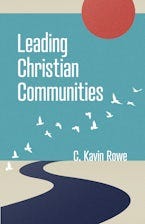
But, the point of this post isn’t to complain about book deals. Rather, it’s to examine an intriguing chapter in C. Kavin Rowe’s book Leading in Christian Communities. In his chapter on “Christian Success,” Rowe makes some compelling points on how success should be re-imagined in Christian spaces.
The first and most paradoxical point he makes is this:
“The first lesson of Christian success: it can, on first glance or to the world, look like failure.”1
Rowe also has in this book a very interesting section on failure, which I hope to explore more in future writings, and also adds context to this quote. But, for starters, Rowe’s statement that “failure is at the heart of what Christian leaders have to offer the world”2 should give further evidence to the paradoxical thinking of Rowe around success and failure. Rowe adds that Jesus’ ministry ended in failure.3 And this is something I don’t think we make enough of—especially as Progressive Christian voices constantly emphasize that Jesus was a victim of colonialist oppression and injustice (which is true) but also sort of de-emphasizes the power of the cross itself and reduces it to a historical tragedy.
But, the miracle and mystery of Christianity is that from this “failure” or crucifixion of Jesus, God raised him up again in glory and through this action, Jesus has redeemed the world (and exactly how that redemption happened might be different depending on one’s soteriology). So then, what looks like failure to the world was actually a success. Again, that’s why the Apostle Paul talks about the “foolishness of the cross” (1 Corinthians 1:27).
A second point about success that Rowe notes is that Christian success “may, in fact, be very slow and painful.”4
I was thinking about this quote in context of another Substack by Eric Hoke. In this post he writes, “church planting, something that I love so deeply and have committed much of my life to is sadly, dead.” Hoke gives three good reasons why he thinks that to be the case; basically saying that the money and models no longer work. But, for the purposes of this post, it’s his closing that resonates. Thinking about what future efforts might look like, he writes, “If I were to guess, I would say church plants for the next 20 years will be smaller in number, leadership will be structurally flat, congregations will be nimble and by God’s grace.” From that, two words come to mind, Rowe’s “slow” and “painful.”
There’s much more that could be talked about regarding Rowe’s book and Hoke’s post, but I think both exemplify the shifts needing to happen when we think about “success” from a Christian context. For so long, the only “successful” church plants were ones that grew fantastically numerically or became financially self-sustainable. More, church-planting (and really more broadly many Christian efforts) used the capitalistic metrics of venture capitalism and business start-ups to define what would and would not work. This will no longer work, as Hoke asserts, and more importantly, such metrics aren’t even aligned with Christian values, as Rowe points out.
To Hoke’s point, I believe that Christian churches and Christian pastors will need to embrace the “slow” and “painful” version of success that Rowe emphasizes. Leading a church will be a slow and arduous slog as salaries will be low if existent at all and participation and attendance will be spotty and inconsistent at best. With these realities in mind, both to Hoke’s practical and Rowe’s theological, we will need to reimagine and reframe what a “successful” church and “successful” pastor look like in the coming years.
Churches and pastors, I believe, will need be graded not on external metrics of attendance and giving, but rather on faithfulness and commitment. Very practically speaking, whereas in recent years, “struggling” churches were seen as unviable and needing to be closed and shut down, moving forward these same churches will need to stay open, even if at a financial “loss” to the denomination or congregation itself. The key determinant being whether or not the pastor and congregation are still willing to be a faithful witness to Jesus in embodied Sunday morning word and worship. If a pastor is willing to keep preaching and the people are willing to keep gathering, then we need to keep these churches, trusting that the “slow” and “painful” process will take time and also that what is perceived as “failure” is also success.
Quite clearly, the era of “Christendom” in America is dead, and while some celebrate its demise (Progressive Christians) and other seek to bring it back from the dead (Christian Nationalism), a more nuanced perspective is that it brought with it some good and some bad. Regardless of one’s opinion, we as individual Christians and churches must figure out how to move forward in a post-Christian society.
70.
56.
56.
71.