


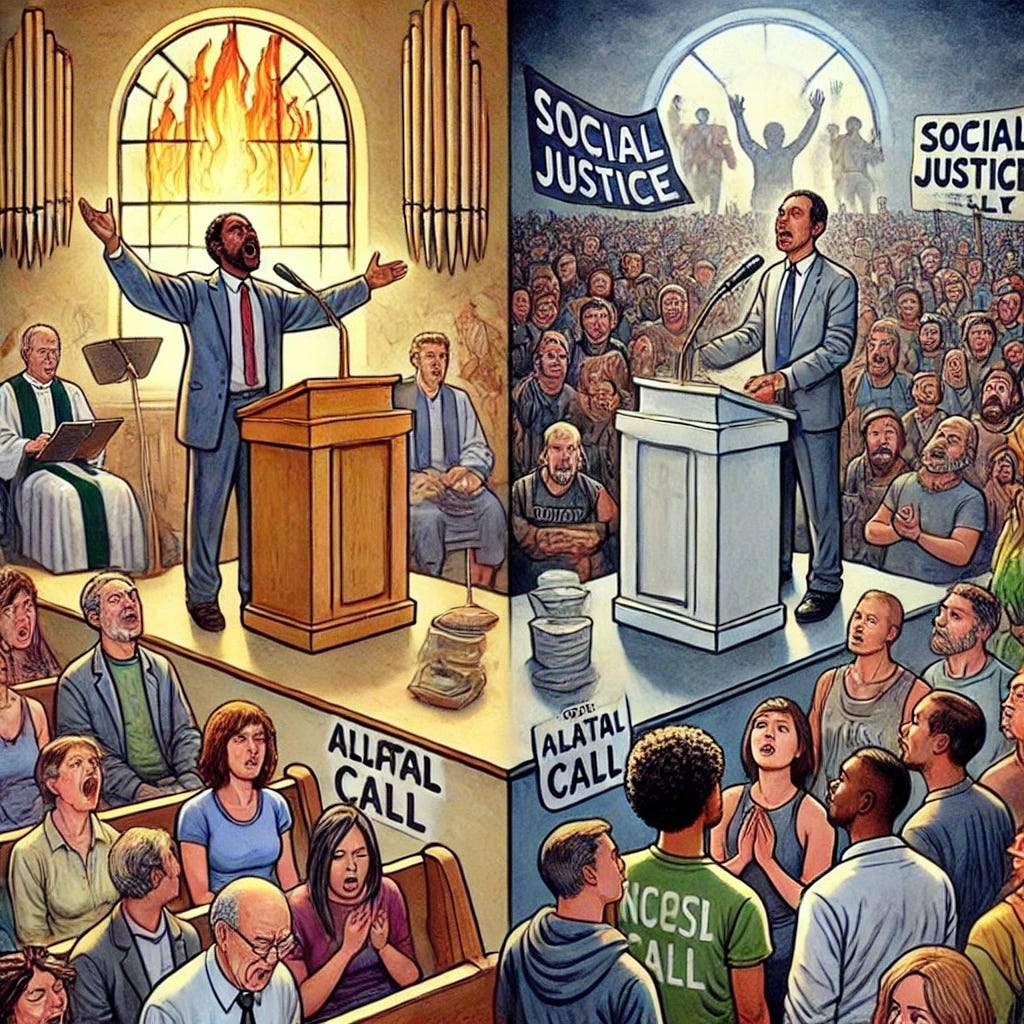
Recently I’ve begun the book Worship in an Age of Anxiety by J. Michael Jordan. In an early chapter, Jordan discusses what he calls the “anxiety-repentance-relief” model commonly used by Evangelical churches in America. Jordan ties model back to famous evangelists like Charles Finney, D.L. Moody, and Billy Graham, who each utilized a similar methodology Jordan describes as “anxiety-repentance-relief.” Basically, what the preacher does is highlight/create some anxiety within the listener, invite the listener to repent of that anxiety (implicitly or even explicitly tying those feelings of anxiety to unrepented sin), and then promising internal and external relief for the listener.
What I found particularly interesting about Jordan’s discussion of this “model” is how he discusses the weaknesses of it. In short, he asserts that utilizing such a model or formula fails in that people who are by nature anxious or sensitive are constantly on alert, ready to repent of any feelings of discomfort or disquiet within themselves, whereas others are unwilling to even examine or discern within, unwilling to put themselves at risk of feeling that anxiety once again. Jordan says it this way:
Centralizing the anxiety-repentance-relief cycle in Christian worship has negative emotional consequences. Put simply, it means that some are constantly on alert while some never are. It keeps tender-hearted Christians emotionally homeless because they are so desperate to know God that they will hate themselves for no reason. For other Christians, it sears their conscience: they will not imagine they have anything to repent for because repentance would mean another exhausting and untenable journey through anxiety.
Anyone who has grown up in a more conservative Christian tradition can likely think back and see this pattern within themselves or others. I for one was always susceptible to an anxiety-ridden altar call. Jordan notes that rather than simply keep some Christians “on their toes” so to speak, such a formula really teaches Christians to interpret any kind of anxiety as sin. Feeling uncertain? Sin. Teenager feeling unsure about changes in their body/sexuality? Sin. One can easily see where this ends up. And if not, let me tell you, as one who was constantly feeling this anxiety formula used on myself—you’re either always responding to the altar call or racked by guilt that you should have. As problematic as this angle is, Jordan seems equally troubled by the other side, basically that people steel themselves against any feelings of anxiety to the point that they are immune to legitimate feelings of guilt or shame regarding something for which they really should be repentant.
I was reminded of a past podcast conversation I had with Dr. JJ Peterson from the StoryBrand marketing company. In the episode, I asked him about calls to action, which is essentially what an altar call or call to repentance is—an evangelist or preacher is asking someone to make a change in their life, not so unlike a salesperson. Peterson noted that a call to action rooted in the threat of disaster or doom eventually wears thin—people tune it out (think Jordan’s point about the searing of the conscience in some). Again, think about a really conservative church. Many people leave just because they’ve grown weary of the repeated threats, while I am sure they are many who continue to be susceptible to such (Jordan’s “emotionally homeless”) while certainly there are many who have grown numb to such—how else could so much child abuse be simply overlooked and ignored in Catholic and Southern Baptist spaces for instance?
This all got me thinking about how this same anxiety-repentance-relief formula is used within some anti-racism spaces. Now, I want to be clear that, like an attendee at a revival, many listeners of anti-racist speakers likely do have some element of racism or prejudice of which to repent—Jordan essentially acknowledges this. Yet, I think we’ve all seen plenty of white people who are either constantly repenting, or worse, others who have seared their own conscience and are immune to feelings of remorse or repentance. Whether in response to a conservative Christian revival speaker or a progressive anti-racism advocate, I don’t think incessant self-flagellation is helpful or productive. Andrew Root calls this “bad religion.”1
I’ve yet to get much further in the book, but I’m looking forward to what Jordan proposes, which I imagine to be a more thoughtful, nuanced approach. I can imagine times where pushing the listener’s anxiety button can be helpful—certainly after George Floyd and Breonna Taylor, many people did need to feel that anxiety of “this is not okay, this can’t keep happening to people of color. etc.” But, I do wonder if some of the pushback that has been so heavy against the “DEI” approach is that some DEI leaders have similarly leaned to heavy on the anxiety-repentance-relief formula. As any evangelist knows, it’s a great way to get some results, but as Jordan notes, there are downsides as well.
I do want to be clear that I am not against “DEI” or anti-racism. The United States has a deep, dark legacy of personal and institutional racism and prejudge against people of color, often implicitly or explicitly furthered by Americans of European heritage. Even still, I do wonder about messaging and approach. Like a good pastor,2 what I want is not simply results or one-time decisions3—I want life change. And more, I want people are willing to be attentive within themselves for where they need to repent of their bias and prejudice.
I’m certainly not so wise as to say I know what the approach should be, but I do think that offering people a vision of a better future, much like MLK did, is prudent. I’m reminded that my colleague Dennis Sanders has a podcast episode to this point that I’d recommend for further insights on the way forward.
Root, The Church in an Age of Secular Mysticism, 203.
Even in my days as an Independent Baptist, I felt some revivalists were simply seeking respondents, rather than life-change.
Ryan Burge notes in his book 20 Myths about Religion and Politics in America that a salvation decision moment is actually NOT predictive of church attendance or behavior (76).