


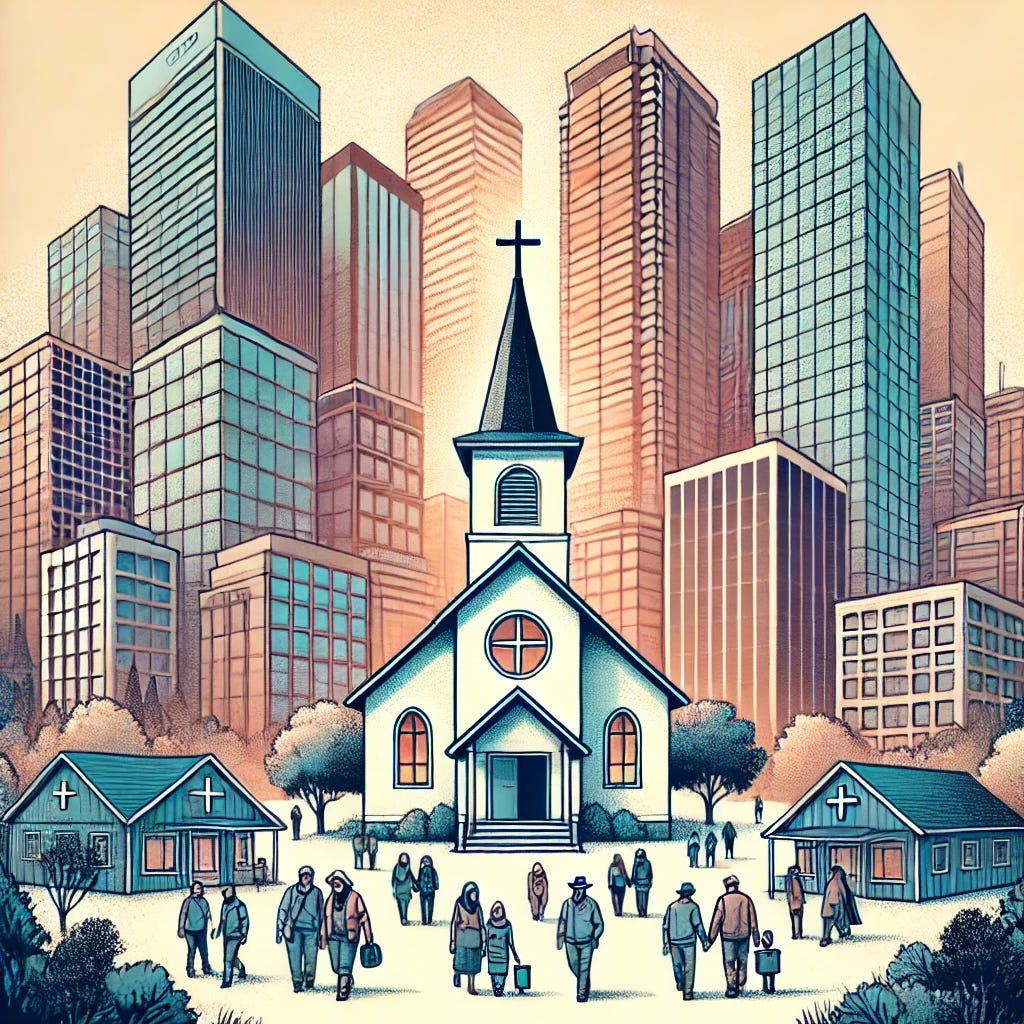
Starting a Church in Denver: Misunderstandings, Challenges, and Misplaced Blame
Starting a church is never easy, but starting one in the Denver metro area presents unique challenges that even the most seasoned leaders may not fully understand. Denver has long been considered a “spiritual but not religious” hub, with high rates of religious disaffiliation and a culture that often prioritizes individualism over traditional faith communities. According to data from the Public Religion Research Institute (PRRI), Colorado ranks among the highest in the nation for religiously unaffiliated individuals, with nearly 40% of the population identifying as “nones.” The area between Denver and Boulder is known for its economic affluence and liberal politics, with approximately 94% of the population unchurched. In this environment, creating a sustainable church requires more than enthusiasm—it demands strategy, adaptability, and deep contextual knowledge.
This reality makes it all the more frustrating when I reflect on my own church-starting journey and the misplaced blame I’ve shouldered for its eventual closure. While COVID-19 was likely the leading factor in the church’s closure—upending not only church plants but countless established congregations—there were certainly many other factors involved, such as lack of funding, organizational challenges, and leadership missteps, including my own. To be clear, I was the one on the ground, leading the effort, and I take responsibility for the outcomes. However, what I found particularly frustrating—both during the effort and in the years since—is the broader misunderstanding and lack of awareness among some denominational leaders about the realities of starting a church in a place like Denver.
The Complex Realities of Church Starting in Denver
Financial Challenges
Church planting is an expensive endeavor, and it almost always takes longer and costs more than planned. Many planters using the missional community model think it’s a cheaper alternative to the traditional “launch large” strategy. While they avoid large equipment purchases, they often underestimate how little financial support a small group can provide. These planters frequently burn out before the church can thrive. Even the traditional launch large model has significant challenges. Beyond the upfront costs, ongoing overhead like payroll and rent quickly drain resources. As one source put it, "The ‘Overhead Monster’ needs to be fed every day, even if attendance drops due to something as simple as a snowstorm or a Broncos game."
Cultural Dynamics
Starting a church in the Denver metro area requires more than just a vision. It requires an understanding of the local culture, a robust strategy for community engagement, and the ability to adapt to a fast-changing landscape. Denver is home to a transient population, with people moving in and out frequently. Housing costs are skyrocketing, and younger generations—the demographic many church plants aim to attract—are more likely to question the relevance of organized religion altogether.
Leadership Complexities
As many have noted, the Denver area is also oversaturated with church plants. Research from organizations like Stadia Church Planting and the Aspen Group highlights the challenges of starting a church in "boom towns" like Denver, where new churches pop up frequently but often struggle to gain traction. This makes it difficult for any one church to establish a strong foothold in a crowded market, especially without significant resources. Even then, nothing is guaranteed. For example, a church plant in Northwest Washington, D.C., despite having a significant launch budget and committed team, ultimately closed due to a mismatch between leadership’s approach and the needs of the local community.
Misplaced Blame and Misunderstanding: Context Matters
Church planting in the Denver metro area is, quite simply, one of the most challenging contexts imaginable. With such high barriers to success, it’s no wonder that even well-resourced and well-intentioned efforts often fail. The purpose of outlining these financial realities and examples isn’t to assign blame but to provide necessary context. Starting a church here requires overcoming significant cultural, economic, and logistical hurdles—factors that many leaders removed from the process don’t fully grasp.
Personal Experience: A Frustrating Disconnect
In my own experience, the frustration often came from knowing how complex the situation was, yet feeling that the nuance of these challenges was overlooked or misunderstood. For example, the $500,000 launch budget for Missiongathering Denver/Thornton might sound substantial on the surface, but when broken down, it becomes clear how quickly those resources were stretched thin. Of that $500,000, $100,000 was allocated in the first year alone for start team stipends, training, travel, and lodging for site visits. My own annual salary was $50,000, which was notably less than what other church planters in similar contexts received. Additionally, $1,000 per month was set aside for a 'coach,' whose organization later struggled with financial mismanagement, leaving me without critical resources to pay church bills until I fought for more direct control of the remaining funds. From staff stipends to operational overhead, every dollar had to work overtime, and systemic inefficiencies only compounded the challenges.
The only church plant to survive in 27 years
These misunderstandings make it all too easy to assign blame, often without considering the broader context. And this is what I found most disheartening—not just during my church-planting years, but also in the years since. The narrative that emerges when leaders lack a full picture is one that unfairly places responsibility on individuals rather than acknowledging the systemic and environmental challenges at play.
The truth is, church planting in Denver isn’t just difficult—it’s often a gamble with the odds stacked against you. Many other efforts have failed, even with sizable launch teams and budgets. The area between Denver and Boulder been called a “church planting graveyard” with sustaining starts few and far between. For instance, The Living Stone Church, a church launched around the time of my own also in the north metro of Denver, is the only Southern Baptist church plant to survive in the area over the last 27 years. To be clear, lasting “success” is quite rare in these contexts, which must lead to greater understanding and compassion for the work of church planters—not just in Denver, but in any context where the path forward is steep and fraught with obstacles.
Understanding Leadership Dynamics
In my case, the difficulty of starting a church in Denver was amplified by the broader systemic challenges within denominational structures. Church planting often requires local insight and adaptive leadership, but the decision-making processes in my situation sometimes reflected a disconnect between those realities and the structures supporting them. To be fair, church planting is a complicated endeavor, and few leaders have firsthand experience with what it takes to start a church, particularly in a metro area like Denver. But this lack of experience often led to a skewed dynamic where I—someone deeply familiar with the Denver context—was seen as having the least amount of wisdom to offer in decision-making processes, while outsider leaders with little local knowledge had the loudest voices.
This isn’t to say their lack of understanding caused the church to close. That’s not fair, nor is it true. As I’ve said before, the pandemic was a significant factor, and church planting is always an uphill battle. However, this disconnect led to a dynamic where I was blamed for things outside my control—both by those in authority and, at times, by myself. It’s exhausting to constantly feel like you have to defend your efforts or your expertise, especially when you know the odds were stacked against you from the start. And yet, I can’t help but feel that this blame isn’t just misplaced—it’s a symptom of a larger misunderstanding about the realities of church planting.
Conclusion: A Fuller Picture of Church Planting
Church planting is not for the faint of heart, and nowhere is that more evident than in the Denver metro area. The unique cultural, economic, and spiritual challenges of this region make it a crucible for even the most dedicated leaders. While individual efforts may falter, these challenges underscore the need for a collective reimagining of what successful church planting looks like. It’s about more than resources—it’s about understanding, support, and a willingness to engage deeply with the realities on the ground.
As I reflect on my own experience, I hope this post provides a more nuanced view of the complexities involved. My story is not one of failure; it is a testament to the resilience and dedication required in this work. By fostering greater awareness and compassion, we can ensure that future church planters are equipped not only with the resources they need but with the understanding and support necessary to navigate the journey ahead.
Works Cited:
Exponential. "Church Planting Research: Launch Team Size and Budgets." Exponential.
NAMB Send Network. "Church Planting in Hard Places Requires Resiliency, Focus on Fundamentals." NAMB.
PRRI. "America’s Changing Religious Identity." Public Religion Research Institute.
VisionRoom. "7 Reasons a Church Planting Effort Fails." VisionRoom.
I’ve supervised dozens of church planters and you have identified many of the complications. Your personal account underscores the cost planters often pay. Thanks for publishing this.
I'm so grateful to come across your writing and thoughts and look forward to engaging. We began a church about to hit its ten year anniversary-- and did it entirely as lay-led, with no outside funding (though we later benefitted from a national grant, significantly less than the numbers you mention). (methowepiscopal.com) It has also been exhausting-- and incredibly fulfilling. We rent space in another church. My husband and I are entrepreneurs and so can manage aspects of digital work etc (we began Zooming in COVID and have continued). This is a very important conversation-- happy to be a part of it.