


TL;DR:
Using a futures-thinking exercise, I sketch ten ways church might look very different in the next decade—from fewer buildings and more volunteer pastors to VR worship and shifting institutions.
Ten Ways Church Will Be Different in Ten Years
What if most churches didn’t own buildings?
What if pastors were mostly volunteers?
What if people paid to attend church—or attended entirely in virtual reality?
Those ideas sound far-fetched. But ten years ago, so did a lot of what we now take for granted.
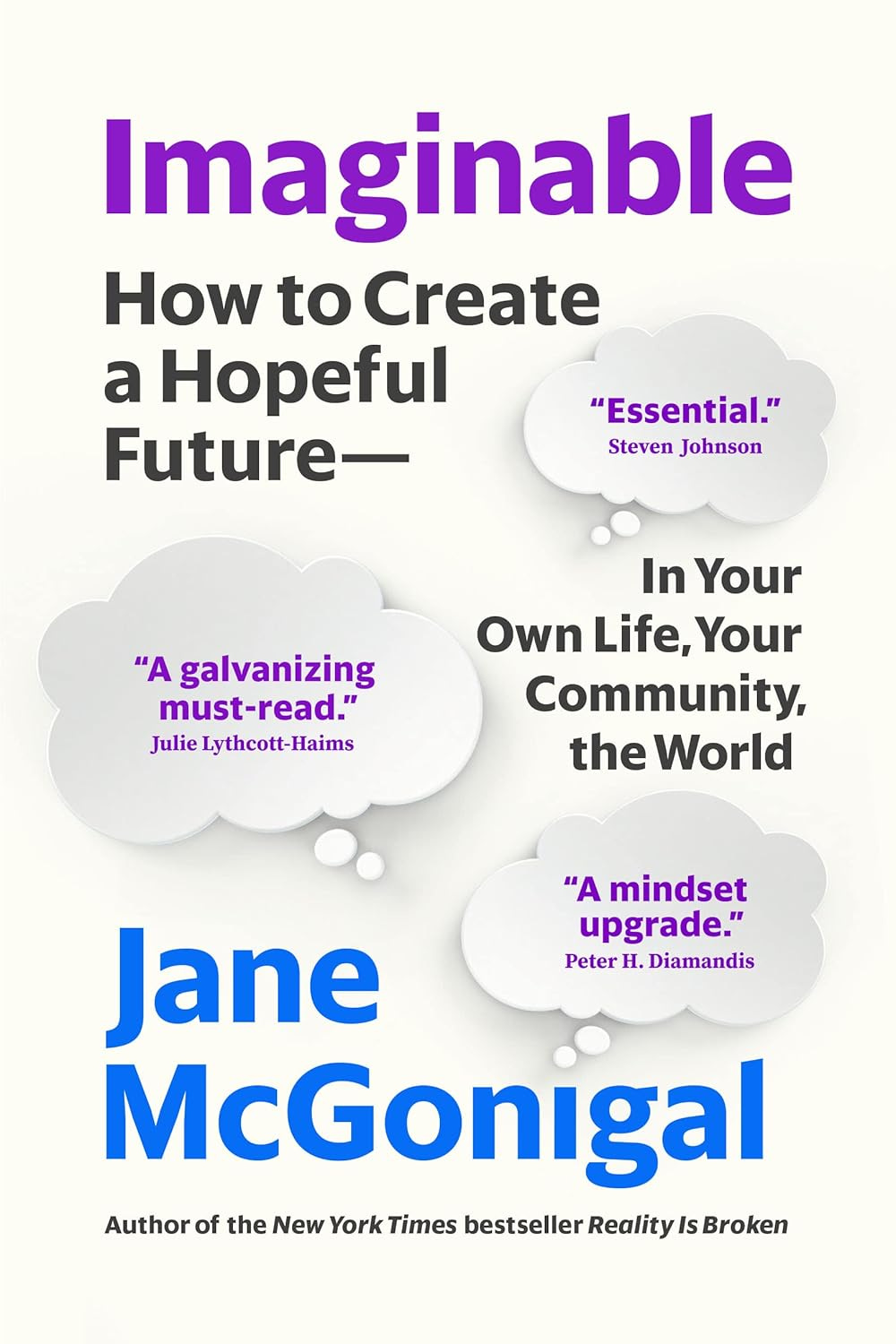
I’ve started reading the book Imaginable: How to Create a Hopeful Future by Jane McGonigal, which is largely about thinking creatively and imaginatively about the future as a way to shape desired outcomes.
In the book, she lists several different mental games and activities. One is called “One Hundred Ways Anything Can Be Different in the Future.” Here’s how it works:
“First, you pick a topic… Then you list one hundred things that are true about it today… Next, you rewrite each fact so that ten years from now the opposite is true, no matter how ridiculous the new ideas sound. Finally, you look for clues, or evidence of change already happening today, that these ideas are plausible and realistic” (88).
So, with that in mind, I decided to try: Ten ways church will be different in ten years.
For expediency, I’ve skipped the “things that are true today” step and jumped straight to rewriting the (unnamed) current realities. And for brevity, the “clues” are simply drawn from my own observations.
1. People will pay to come to church
There will be an entry fee—or at least a suggested donation. This sounds insane. But is it really? In so many other contexts, people pay for an experience or performance. People seeking to be generous could pay for extra tickets so more people could attend. I can imagine churches being more upfront: this is what it costs per person to make this happen.
2. Most congregations will not own a building
They will rent space somewhere (hence #1). Deferred maintenance, declining giving, and rising utility and insurance costs will make buildings unaffordable for churches that haven’t planned far ahead.
3. Most congregations will be volunteer-led
In a previous post, I talked about the coming pastor shortage. With the cost of theological education and the inability of most churches to pay a full-time salary, many pastors will be volunteer or mostly volunteer—perhaps functioning more like LDS congregations, where leaders serve for a season before stepping down.
4. Denominations will (mostly) cease to exist
At least in their current form. Being a “United Methodist” or “Presbyterian” church will function more like being an independent Baptist church today—signals of theology and polity rather than strong institutional identity. Loosely affiliated networks will remain. See the current trend lines of nearly all Mainline denominations and this becomes my surest bet.
5. Seminaries will (mostly) cease to exist
For many of the same reasons: declining enrollment, shrinking job prospects, and rising operational costs. A few with large endowments will remain, but many will shift toward certificate-based models or platforms like Coursera (have you noticed Duke Divinity there?). Some may look more like four-year Bible colleges again—offering marketable degrees alongside pastoral training.
I’d also add, the recent student loan changes making theological higher-ed one of the remaining areas of education eligible for graduate loans will exacerbate this trend. Ed Stetzer recently shared data that conservative seminaries are growing (related to prediction 10). Nothing can control costs and keep tuition affordable and low more than a growing student body.
6. Mega-churches will (mostly) cease to exist
This sounds unlikely, especially since megachurches now represent a growing share of attendance. But many are already shifting toward multi-site models. Over time, they may function more like mini-denominations—especially as they grapple with the long-term costs of maintaining large, often cheaply constructed facilities.
Plus, say there is a state-sanctioned church (again, prediction 10); there will certainly be SOME who will want to attend, but many more not.
7. A significant number of people will attend church via virtual reality
Entire churches will exist where people put on VR headsets to worship without leaving home. These will become the fastest-growing churches in the next decade.
8. Most churches will rely on video sermons
Life.Church has already demonstrated that this model can work. Add in VR and multi-site realities, and the trend accelerates. As more pastors are bi-vocational or volunteer, preparing high-quality weekly sermons becomes harder. Video allows consistency and scale. Like the current multi-site models, teaching and preaching is farmed out and “campus” pastors focus on pastoral care and leading the sacraments.
9. Highly produced worship music will become rare in most churches
Think Bethel, Hillsong, Elevation. Those models will still exist—especially in large or digital spaces—but for most churches, especially those without buildings, simpler expressions will dominate. Limited resources and volunteer musicians will shape what’s possible. Someone brings a guitar or a keyboard. Hymnals or songbooks come back, again, for simplicity.
10. Churches will become more entangled with government
This was actually my daughter’s idea as I initially struggled to come up with a tenth. I grimaced—but she may be right. Some conservative Christian movements are already pushing in this direction. If progressive Christianity has a future, it’s unlikely to simply disengage. As much as progressive Christianity seems to begrudge Christianity or the church at times, they’re going to recognize that institutional power is hard to let go of.
This is probably the most ominous possibility. It’s not impossible to imagine deeper entanglement—local or national—even constitutional change. A state-sanctioned church is hardly unprecedented in history. If that happens, some churches would be funded, while others would be left to fend for themselves (hence the above predictions).
Bonus: AI preachers?
This may not be as far-fetched as it sounds. Imagine training an LLM on Spurgeon, Luther, Craddock, or Wesley and asking it to generate a sermon—then preach it.
There are obvious theological implications. But one could argue that God is not dependent on human speech alone—Moses and the burning bush, Balaam’s donkey, the heavens declaring God’s glory, even the rocks crying out (Luke 19:40).
I don’t know that all of these will happen.
Some of them probably won’t. But enough of them feel plausible—and in some cases already visible—that they’re worth paying attention to.
This is the kind of thing I think about a lot: where the church is headed, what’s already changing beneath the surface, and how we might respond before those changes fully arrive. If that’s interesting to you, feel free to follow along—I’ll be exploring more of these ideas in future posts.
Let me know what you think.
What feels plausible? What feels ridiculous? What do you think is certainly coming?
it's funny how much I agree with some of these things (seminaries and denominations mostly ceasing to exist) and disagree with others (I think strategically using our buildings will help us to survive as the church, and that 'volunteer' is not a word that should be associated with religious practice).
very interested to see how it plays out!
This out of box thinking is interesting! I will say that in our small congregation we have no musician so just sing. We've found it amazingly easy to buy cheap hymnals and use them. Seems so novel but turns out it is so nice. I do think about breaking down our costs to let people know what it means to show up. It's shockingly expensive (just insurance alone is crazy!). I love renting a space, but wonder if it lends us a kind of fly by night vibe...? The future is thrilling indeed!