


TL;DR:
While reflecting on photos from my children’s baptism, I was struck not just by the moment itself, but by the unmistakable joy of the pastor officiating it. That joy didn’t seem rooted in success, ease, or optimism, but in grace forged through hardship and surrender. The post reflects on baptism, ministry, grace, suffering, and why deep Christian joy may come less from self-affirmation and more from recognizing our need for God’s grace in the wilderness.
Unmistakable Joy
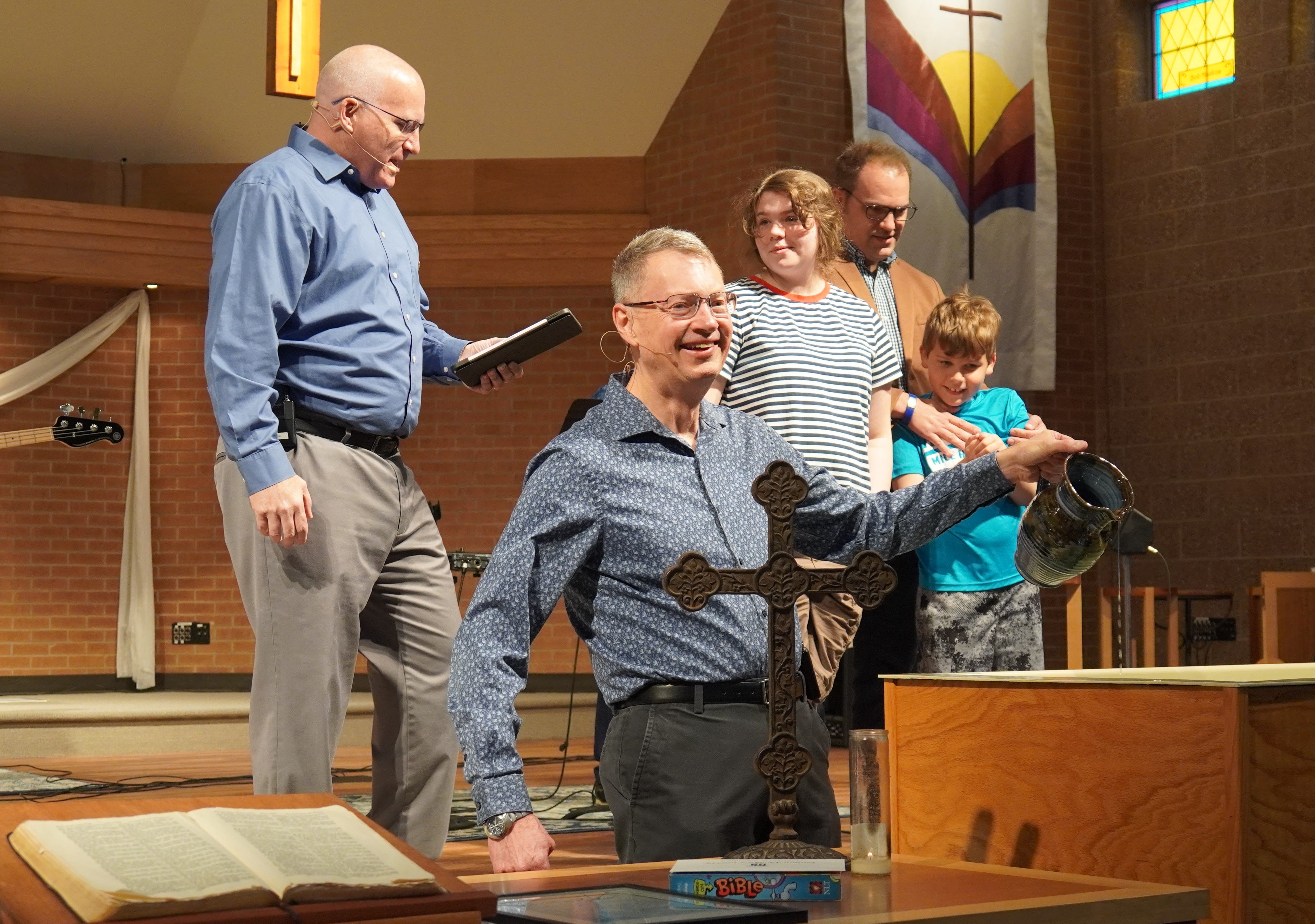
A few weeks ago, while looking through photos from my children’s baptism, I noticed something unexpected.
It wasn’t my kids who first caught my attention. It was the pastor.
More specifically, the unmistakable joy on Pastor Thomas’ face as he poured the baptismal water.
And the more I sat with that image, the more I realized I was seeing something increasingly rare: a pastor leading not from exhaustion, cynicism, or performance—but from joy.
A grateful day
Ever since my own faith “deconstruction,” and especially after having kids, I’ve wrestled with what it looks like to pass on the faith without either repeating the rigid, prescribed faith of my youth or continuing another trend I’ve noticed in some Mainline spaces—the assumption that kids may or may not make the faith their own, and that it’s fine either way.
So I was grateful when the opportunity came for my daughter to participate in confirmation at our church. And because she had not yet been baptized, baptism became an important part of that process.
And since we already had family coming in to celebrate her baptism and confirmation—all on the same day!—we encouraged our son to be baptized as well. Being as we both grew up Baptist, my wife preferred baptism by immersion, hence the tank that Pastor Thomas is enthusiastically pouring into.1
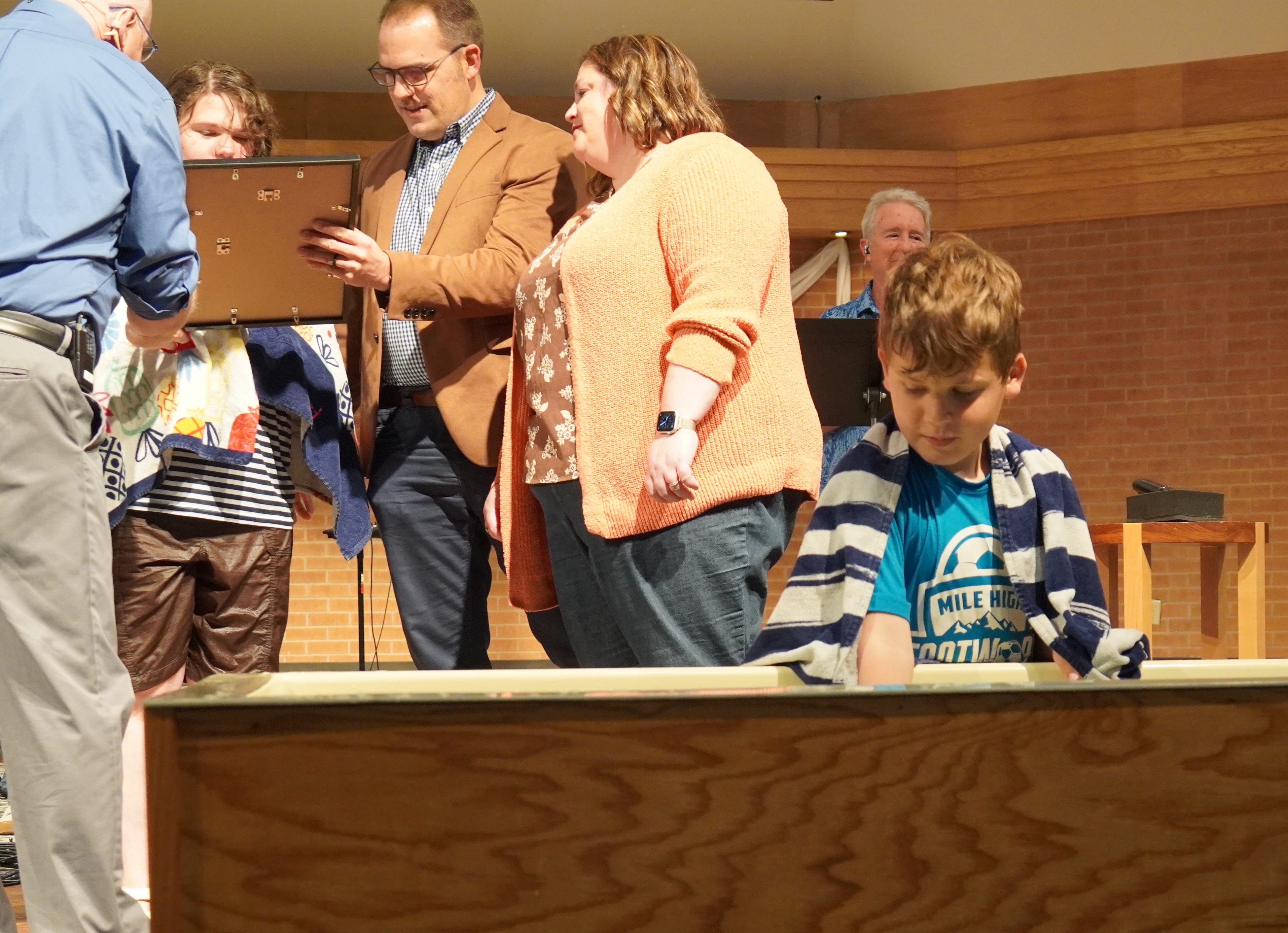
Thankfully, the church had someone there taking pictures,2 because amidst all the logistics of coordinating family, changes of clothes, and lunch plans afterward, we completely forgot.
An Epic Pour
Looking through the photos later, what struck me most was this image above of Pastor Thomas gleefully pouring the water. He is an epic pourer after all—a running joke I have with another friend at the church. Anytime there’s a baptism and he misses it, I’m always texting him, “You missed an epic pour today!”3
The point isn’t to make fun of Pastor Thomas. Rather, it’s to highlight his joy in ministry.
It’s local church pastors like Pastor Thomas whom I so admire, so much so that I dedicate my forthcoming book to them and their leadership.
Maybe it’s because I don’t think I was ever a particularly good pastor myself. Maybe it’s because I know how hard the job really is. Maybe I’m just jealous.
But one thing is certain: Pastor Thomas exemplifies so much of what I admire in faithful local church ministry.
Joy Forged in the Wilderness
There is a joy that seems to overflow from Pastor Thomas. When he pours that water—like so much else he does in ministry—it comes from a place of deep gratitude, faith, and trust in God.
And notably, not from obvious success or church growth, but from wilderness seasons.
Pastor Thomas has shared openly in sermons about difficult chapters in life and ministry: divorce, diagnoses, disruptions, and hard seasons of leadership.
Nor is he untouched by the pain and injustice of the world around him. I’ve heard him regularly pray peace in places of war, for residents being priced out of local mobile home communities by greedy developers, and for victims of school shootings.
What I mean to say is:
His joy is not cheap.
Joy and Grace
The other day, while listening to Pastor Betty4 preach on joy, I noticed again in my Greek New Testament that the word for joy is closely tied to the word for grace.
In the Greek New Testament, the word for joy is chara (χαρά), the word for grace is charis (χάρις), and the verb “to rejoice” is chairō (χαίρω).5
That struck me as exactly right.
Joy is not mere happiness, optimism, or good vibes. Joy is living from a deep awareness that we have received abundantly from God’s grace.
That’s what strikes me about Pastor Thomas. His joy seems rooted in grateful recognition of God’s grace overflowing toward him. That’s why he can, as James writes, “count it all joy” amid trials and hardships.6
To be sure, Pastor Thomas did not feel joy immediately in many of those moments.7 But afterward, through them, it’s clear that joy was formed in him because he recognized God’s grace even in the wilderness.
And it makes me wonder:
How might churches and pastors be different if more ministry flowed from this kind of deep joy and gratitude? How much more compelling would churches become if pastors embodied this sort of rooted joy?8
Where Joy Comes From
This isn’t to say we ignore pain, injustice, or suffering. I don’t think Pastor Thomas does that at all.
But I do think that when we are deeply rooted in God’s grace, even amid difficulty, some measure of joy begins to emerge.
I think this is part of what James was trying to say, and why Corrie ten Boom’s sister Betsie comes to mind for me. Even amid the suffering of a Nazi concentration camp, Betsie insisted on seeing God’s grace at work.
In Boom’s recounting of the story in her book, she shares how Betsie thanked God for lice, realizing it kept the guards out of their barracks and therefore safe from abuse and harm.
Above all else, though, joy is not something we manufacture. It comes through surrender—through recognizing our own limitations, weakness, and need for grace. I know Pastor Thomas had to learn that in the wilderness.
And honestly, I think this may be part of why joy can sometimes feel elusive in progressive Mainline spaces.
We are often so focused on affirming our own uniqueness and enoughness that grace can subtly become little more than divine validation rather than God meeting us in our sin, frailty, and brokenness.
Meaning, we tend to act like grace is something we deserve.9
But I wonder if the opposite is true.
What if joy begins precisely when we become deeply aware of our limitations and need—and discover that God’s grace still meets us there?
That, I think, is where joy begins to overflow.
I’m told the Methodists practice baptism by way of sprinkling, pouring, and immersion!
Shout-out to Mindy H.
Today, as I began writing this on a Sunday, was also a baptism with another great pour!
I have purposely chosen to refer to the pastors at my church as “Pastor name,” and them not to refer to me as the same, in an effort to remind myself of their spiritual authority in my life and the life of the church. And, more simply, I’m not on staff there. So, I’ve suggested they can refer to me as “Rev. Loren” when seeking to highlight my clergy credentials.
What’s fascinating is that all three words come from the same linguistic root. I’m not a Greek scholar, but joy, grace, and rejoicing seem deeply connected concepts in the New Testament.
James 1:2 - in the KJV of course.
I remember asking Pastor Thomas off-hand one Sunday nearly this very same question. Having preached about wilderness times, I asked him if he had recognized the benefits of the wilderness in the moment. “After,” he said.
Every Sunday, I’m drawn to say hello to Pastor Thomas. And, I try to share that same joy with those around me at church.
This sounds great in theory, but if grace is something we deserve, then at some point we might become undeserving?
Appreciated this piece, and love the title. It is indeed so joyful to preside over baptism! I also love serving communion. I am struck each time anew by how precious these dear folks are as they come forward to receive the elements, and there is deep joy (gratitude) in this for me.