


TL;DR
The pastor shortage isn’t just a pipeline problem—it’s a systems problem. Qualified, willing pastors (like me) are being sidelined by slow processes, geographic assumptions, and outdated models. We don’t need to reinvent ministry formation—we need faster, supervised on-ramps that deploy pastors in real time.
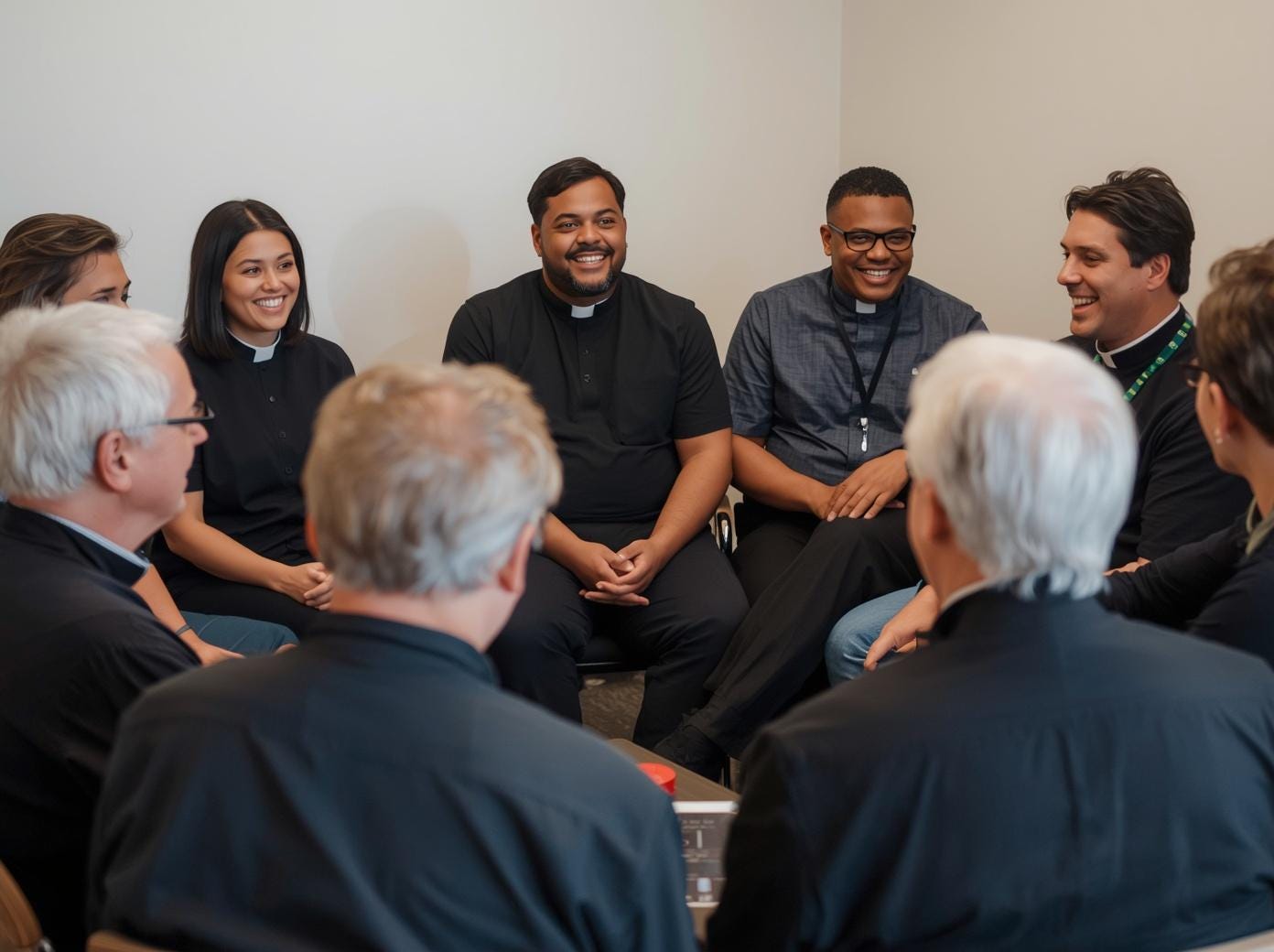
There’s a growing consensus in the mainline church: we don’t have enough pastors.
I’m not convinced that’s the whole problem.
I live in the Denver metro, close to family. Both my wife and my parents are within about 45 minutes. That proximity isn’t incidental—it’s part of how our life is structured. Support, relationships, shared time—it all matters.
I’m an ordained pastor in the Christian Church (Disciples of Christ) with an MDiv, over a decade of ministry experience, CPE training, and hospital chaplaincy experience. I’ve served across UMC, UCC, and DOC contexts, and I know how to step into a congregation and begin leading.
In other words, I’m not a new or untested candidate. I’m the kind of pastor many churches say they’re looking for.
And yet—I’m effectively unavailable.
Not because I’m unwilling. Because I’m rooted.
More, my wife is the primary breadwinner in our family. So, relocating wouldn’t just be a vocational decision—it would be a financial one. And in a place like Denver, with home prices what they are, leaving isn’t just leaving—it’s potentially closing the door on ever coming back.
So when I look at church job boards, I’m not just asking, “Who needs a pastor?” I’m asking, “Who needs a pastor within a realistic distance of where I already live?”
That significantly narrows the field.
And I don’t think I’m unique in that.
I suspect there are many pastors like me—trained, experienced, and willing—but geographically anchored in ways our current systems don’t account for.
The Bench Isn’t the Whole Story
The Mainline Church Is Running Out of Pastors

TL;DR: Many Mainline churches may think their biggest challenges are declining attendance and aging buildings. But a deeper crisis is emerging: there simply aren’t enough pastors coming through the pipeline. Falling ordination numbers, aging clergy, seminary formation questions, and the lack of a leadership “farm system” are creating a shrinking pastoral…
A few weeks ago, I wrote about what I called the pastoral bench problem in the mainline church—the growing gap between the number of churches that need pastors and the number of pastors actually coming through the pipeline.
The data is hard to ignore. Ordinations are declining, clergy are aging, and many of the “new” pastors entering ministry are doing so later in life, often without the runway for long-term leadership. At the same time, the systems that once developed younger leaders—associate roles, apprenticeship models, informal farm systems—have largely disappeared.
In short, the bench is getting thinner.
But that’s only part of the story.
The System Problem
We often hear about a “pastor shortage,” yet the systems designed to connect pastors and churches can be slow, opaque, and difficult to navigate.
Recently, I reached out to an area church after seeing what appeared to be a job listing. It turns out—they aren’t actually hiring yet. They’re still forming a Pastor Nominating Committee and must complete a lengthy denominational process before the role can even be officially posted. Even though the job was listed on the denominational website with instructions to contact the church for more information.
In other words, what looked like an open position was really just an early signal that a search might begin months down the line.
That experience highlights a broader tension.
After my first article, I heard from others who described similarly tedious processes. Friends shared stories of candidates navigating years-long ordination pipelines—sometimes 5–10 years.
FIVE TO TEN YEARS
How can denominations be serious about a pastor shortage with timelines like that? How many churches will simply cease to exist in that window?
I understand that there is wisdom in these processes. They encourage discernment, shared leadership, and better long-term fit. A bad pastoral leader can do a lot of damage.
But processes also create a bottleneck—one where willing pastors and searching churches struggle to connect in any meaningful timeframe.
Are healthy, mature leaders really going to wait FIVE TO TEN YEARS to be able to lead a church!? More likely, most who are staying are the types you DO NOT wanting to lead a church.
The result is a gap between the narrative of scarcity and the lived experience of trying to engage the system.
A Connection Problem
Which means the “pastor shortage” isn’t just about supply.
It’s about connection.
We have churches that need pastors.
We have pastors and candidates who are willing to serve.
But the system designed to bring them together is slow, rigid, and often misaligned with the realities of modern life.
Search processes take months—sometimes years.1 Ordination pipelines stretch even longer. Geographic flexibility is often assumed. And in the meantime, both sides wait.
Or move on.
That’s the inefficiency.
It’s not just that we don’t have enough pastors.
It’s that we don’t have enough on-ramps for the pastors we already have.
A Different Model
This is where I think the Clinical Pastoral Education (CPE) model offers a compelling alternative.
CPE operates on a simple rhythm: action → reflection → action. Chaplain interns begin doing the work almost immediately—visiting patients, offering care—while being supervised and guided in real time.2
It’s not reckless.
It’s structured risk.
And it creates something our current church systems lack:
speed with accountability.
Imagine if churches functioned more like this.
Instead of waiting months to form committees and years to complete processes, a church could bring in a candidate quickly—on a defined, supervised, short-term basis. Call it an apprenticeship. Call it a residency. Call it a trial pastorate.
Evangelical churches are doing this ALREADY. I know, readers are not shocked to learn the mainline is decades behind…
Of course, there would be clear expectations, regular reflection, and an obvious off-ramp if it’s not a good fit.
But there would also be something else:
A pastor. Right away.
Formation wouldn’t just happen before ministry—it would happen in ministry.
Imagine This
Imagine a different pathway.
A pastoral intern is paired with a seasoned pastor—learning not just theology, but the lived realities of ministry, unpaid, for a few months. If that season goes well, they step into a paid, one-year residency at a church that needs leadership. Not alone, but supported. Weekly check-ins—with a denominational leader or cohort—offer accountability, feedback, and pastoral wisdom in real time.
This matters because the first five years of ministry are decisive. Many pastors don’t make it past that window. In a moment of shortage, we cannot afford to lose leaders who have already done the hard work of formation.
At the end of that year, the pathway doesn’t close—it stabilizes. They may remain in that church or transition to another role, continuing through ordination while already functioning in ministry.
And here’s the key insight: we don’t need to invent something entirely new to make this work.
The infrastructure already exists. Most denominations recognize licensed or provisional pastors. The IRS already recognizes these roles for clergy tax purposes. Denominations like the UMC already have annual evaluation systems in place.
We have the tools.
What we lack is the imagination—and the will—to connect them.
Why This Matters
And for someone like me, that changes everything.
Instead of being functionally sidelined by geography and process, I could step into a real role, in a real church, with real responsibility—while still honoring the constraints of my life.
Multiply that across dozens—hundreds—of pastors in similar situations, and suddenly the “bench problem” starts to look very different.
Not solved.
But far more workable.
Final Thought
We don’t just need more pastors.
We need better ways to deploy the ones we already have.
If you’re a denominational leader, pastor, or lay leader—start asking: Where are we unnecessarily slowing this down? And if you’re seeing this same gap in your context, I want to hear from you.
This is frankly the most egregious aspect and might inspire another blog post. I was recently contacted about filling for a church after their pastor left. The church is planning on 18-24 months to find a new pastor. Again, eighteen to twenty-four months!?
Nonprofits, which are also regularly staffed by volunteer boards, DO NOT take nearly this long to find new executive directors, yet churches act like such a length of time is normal.
I remember my first day of residency (it’s been too long since my internship), but we were visiting patients THAT SAME DAY. Yes, it felt a little insane to me too in the moment. But, that’s the program.
1. I was the beneficiary of a Transition into Ministry program funded through the Lilly endowment. It placed me in a church with a stable leader for the first two years of my ministry, and is probably the reason I've stayed with ministry for so long. They stopped funding those positions, and nothing has come to fill in the gap.
2. Churches are run by volunteers; your CPE residency was filled by salaried professionals. Of course the church runs slower.
3. One of the reasons church's take long periods between pastors is to work on the health of the congregation. I don't think it helps anyone to throw a newer pastor into a congregation that isn't healthy, and a lot of our congregations are in that place. Todd Ferguson and Josh Packard actually recommend closing dying churches as a way of helping young pastors not get stuck in a bad situation.
I'm not saying there aren't problems. The mainline desperately needs to get better at reallocating resources- churches at the end of their life cycle need to be encouraged to transfer their money to new initiatives, rather than hold on to some hope that things will eventually turn around. I've known way too many pastors in the first ten years of their ministry that have jumped into positions with churches that are essentially sinking ships, and then left ministry altogether because no one wants to do that.
Many parishes in my mainline church are looking for part-time pastors, as they cannot afford a full-time one, yet a pastor who has gone through all the formal education and training is looking for a full-time pastorate. We are exploring how to raise up & train pastors from the congregations themselves, or someone in the diocese who lives close enough to be raised up for those smaller, vibrant communities that need a part-time past.