


TL;DR: Too often the progressive left has “over-spiritualized” the moment, treating systems of power as invincible. That despair feels like the hoarder Bishop Jeffrey Dudley described in our podcast conversation — overwhelmed and paralyzed. But Christians are called to resist nihilism, practice faith, and take small acts of hope that point us back to God’s faithfulness, presence, and guidance.
My friend Dennis Sanders and I have noticed something about Substack. The posts that rise to the top, at least in the political space, almost all share a tone of gloom and doom.
They assume the worst, often describing political opponents or social systems as if they were irresistible forces, unstoppable tides. It’s not that the critiques are always wrong—it’s the mood of despair that feels inescapable.
And it feels in sharp contrast to the Substack vibe of just last summer, when so many were still writing with a kind of restless energy—not exactly optimism, but at least curiosity about what might yet be possible.
I should note that I wrote these reflections before the shocking murder of Charlie Kirk and yet another school shooting in my state. The weight of such tragedies only intensifies the temptation to despair. Even still, I feel compelled to say that we must not throw up our hands as if nothing can be done, or surrender to the fear that all is lost. I’m praying for the Kirk family and for the students and community of Evergreen, CO.
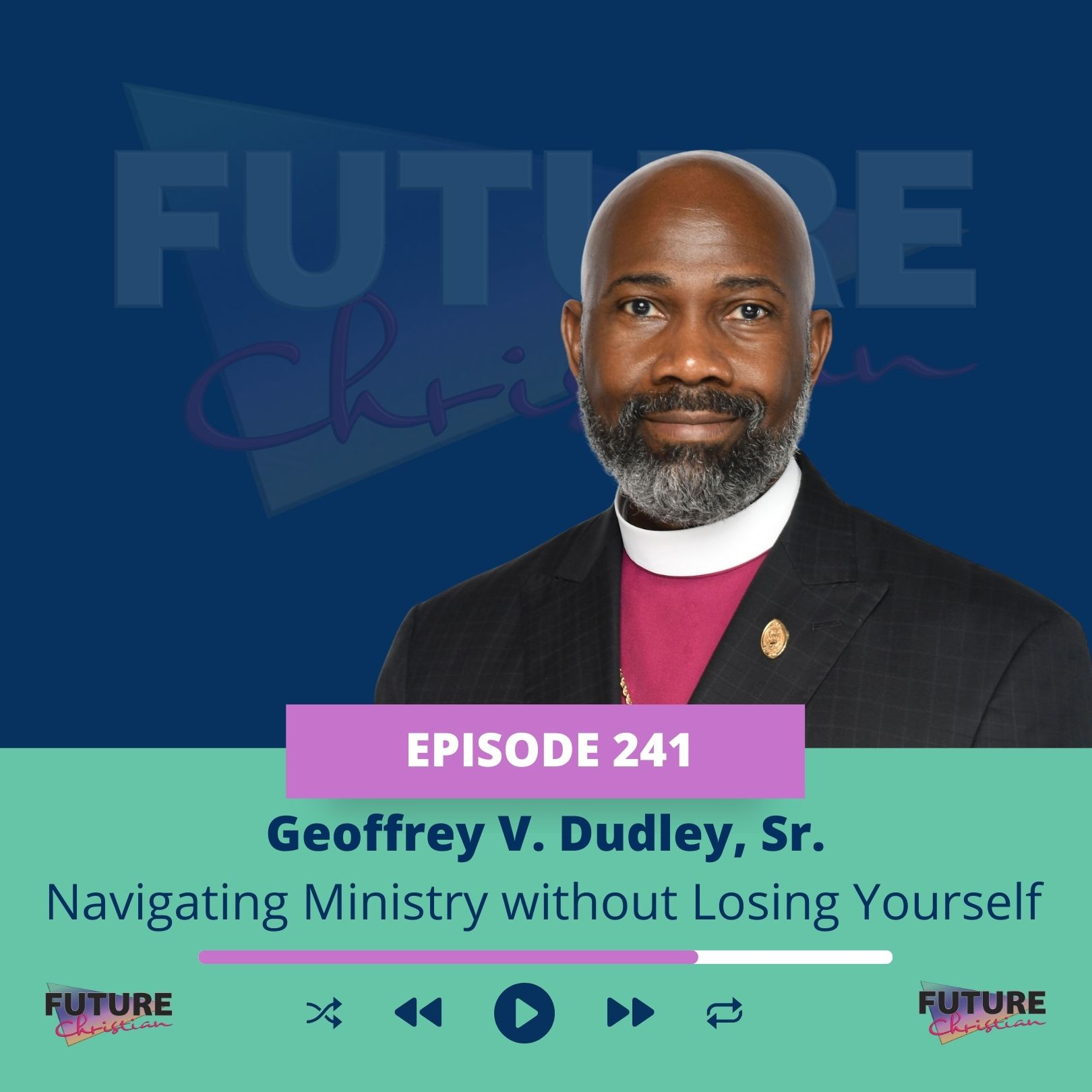
This struck me again while reflecting on a recent conversation I had with Bishop Jeffrey Dudley on the Future Christian Podcast. In his book Leading Through Storms, Bishop Dudley warns leaders against over-spiritualizing crisis. He said:
“If you over-spiritualize the battles, you may inevitably throw your hands up, like a hoarder. Hoarders say they soon become overwhelmed… they just give up and do nothing.”
What a striking image. When we assign too much power to our adversaries — whether the devil, “the system,” or “the powers” — we can end up paralyzed, overwhelmed, and inert.
I think that’s what I see happening in parts of the progressive left today. Influenced by thinkers like Michel Foucault, there is a constant focus on power—who has it, how it operates, and how systems entrench it.
There’s truth here: injustice and inequality are indeed embedded in structures. But when this becomes the only lens, the picture grows distorted. The powers begin to look omnipotent. Resistance feels futile. And so, like Dudley’s hoarder, many simply throw up their hands.
But for Christians, this despair is not an option. Scripture reminds us again and again that our faith is not in human systems but in God.
Empires rise and fall, but “the Lord reigns forever” (Psalm 146:10). Paul’s letters describe powers and principalities — but also proclaim that Christ has already disarmed them (Colossians 2:15). Our hope does not come from believing we can outmaneuver the system, but from trusting the One who has overcome the world (John 16:33).
In this world you will have trouble. But take heart! I have overcome the world.
- John 16:33 NIV
And this is where Bishop Dudley’s counsel is so helpful. Early in our conversation, he named prayer, quiet time, and reading as the practices that have sustained his ministry. Those disciplines are not escapism—they are ways of refusing to let the noise of the moment dictate the shape of our hope. They re-anchor us in the truth of God’s faithfulness, presence, and guidance, in contrast to the instability of every human system. They remind us that our hope is not in systems or structures but a Savior.
Later, Bishop Dudley told the story of his church in the middle of a painful season. Construction had stalled on a half-built sanctuary, weeds were growing up around the unfinished structure, and discouragement was setting in. Rather than throw up their hands, Dudley rallied his congregation: after breakfast, they went outside, grabbed weed-eaters, and cut the grass together. It didn’t finish the building, but it was a faithful step. And within months, new funding arrived to carry the project forward.
That’s the contrast to the Substack gloom I see today. Instead of obsessing over how broken the system is, we can ask: what small act of faithfulness is in front of me right now? To me, I’ve realized that means doing what I can, where I can, such as speaking on behalf of affordable housing at a city council hearing.
I think too often in our culture we look for “moon shots” — big, dramatic actions that will move the needle far ahead — when in reality progress is usually made by slow, steady, repeated acts of faithfulness.
If I may make a sports analogy, since the NFL season has just begun: a commitment to the running game takes discipline. Denver Broncos coach Sean Payton was repeatedly criticized last year for abandoning it after only a few bad running plays. Instead, he tried to chuck the ball all over the field with his young quarterback — a strategy that didn’t exactly produce spectacular results in week one of this season.
There’s a reason a dedicated running game is often described as “three yards and a cloud of dust.” It’s gritty, dirty, and often tedious. But over time, as the offensive line sharpens its rhythm and timing, and as the defensive line wearies from repeated contact, a big running play eventually breaks through — melting the heart and will of the opposition. So it is, I believe, with faithfulness: working for good, step by step, as co-laborers with God (1 Corinthians 3:9).
What can I do today to resist despair, to clear the weeds, to keep bearing witness to the God who is faithful, who is present, and who continues to guide us forward?
Our faith should not be in human systems — or in their collapse. Our faith is in God. And that faith doesn’t just name the powers; it keeps us from handing them the last word.