


TLDR
Drawing on Walter Brueggemann’s The Prophetic Imagination, this post reflects on how modern political power—especially in its totalizing forms—seeks to control people through numbness and despair. I argue that Trumpism in its current form mirrors what Brueggemann calls “totalism”: demanding absolute loyalty while crushing imagination and hope. Against this, the prophetic task of the church is not spectacle or outrage, but faithful resistance—offering an alternative vision of reality rooted in grief, moral clarity, and the conviction that no political regime is ultimate. We need to feel again. Only then can we hope.
Author’s note:
A friend recently asked whether I planned to write about the situation in Venezuela. I hesitated—not because I don’t care about what’s happening there, but because I try, as much as I can, to avoid writing pieces that are merely political. I’m not interested in offering hot takes on geopolitics or foreign policy.
What I am interested in is theology—especially the ways our theological imaginations are shaped, distorted, or captured by power. I write when I can see a clear theological frame, when Scripture and the Christian tradition give us language to name what is happening beneath the surface.
This post is written from that posture. It is not an attempt to analyze policy, but to reflect on despair, totalism, and the kind of moral and spiritual formation required to resist them.
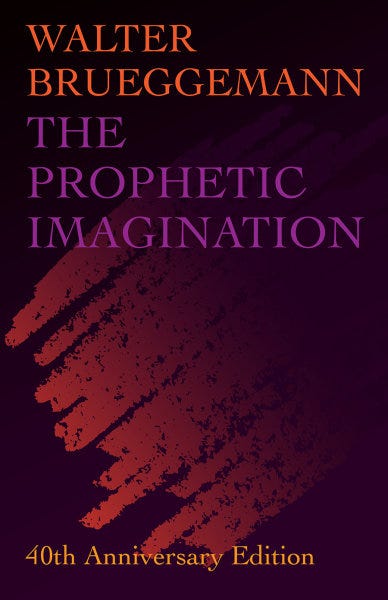
I just finished reading—again—Walter Brueggemann’s The Prophetic Imagination. Having read it about five years ago, I decided to pick it back up, and I was not disappointed in the endeavor.
For those unfamiliar, from the book description on Amazon: Brueggemann offers a theological and ethical reading of the Hebrew Bible. He finds there a vision for the community of God whose words and practices of lament, protest, and complaint give rise to an alternative social order that opposes the “totalism” of the day. Brueggemann traces the lines from the radical vision of Moses to the solidification of royal power in Solomon to the prophetic critique of that power with a new vision of freedom in the prophets. Linking Exodus to Kings to Jeremiah to Jesus, he argues that the prophetic vision not only embraces the pain of the people, but creates an energy and amazement based on the new thing that God is doing.
There are so many powerful and compelling points in the book that I cannot even hope to adequately touch on more than a few here—it may yet require further posts. For the purposes of this one, I want to briefly examine Brueggemann’s reflections on despair and the “royal consciousness”—or what, in his 2017 edition, he further clarifies as “totalism,” lest there be any confusion about his intentions.
Brueggemann notes that within the “royal consciousness” (or totalism), the way of keeping people down essentially takes one of two forms: numbness or despair. On numbness, he writes, “[In the royal program], God has no business other than to maintain our standard of living” (37). On despair, he observes, “The royal consciousness leads people to despair about the power to move toward new life” (59). In short, people will either feel nothing or feel everything—and thus be unable or unwilling to seek a better, different way. As he puts it, “Numb people do not discern or fear death. Conversely, despairing people do not anticipate or receive newness” (60).
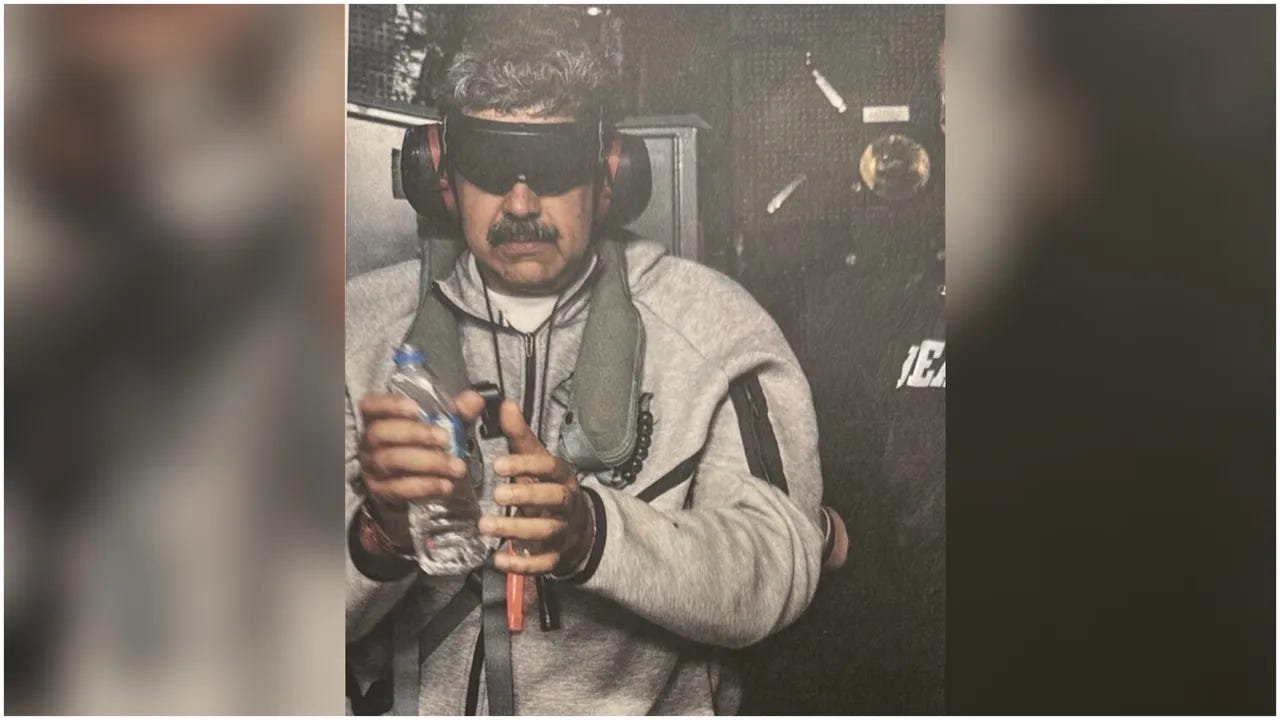
As I write this, we are approximately twenty-four hours out from the Trump administration essentially invading a foreign country and deposing the leader of that nation—something shocking and, by almost any past standard of American foreign policy and military diplomacy, unheard of. For someone old enough to remember that even Bush/Cheney respected the process enough to pretend there were WMDs at stake in Iraq, what is most striking here is how totalitarian the messaging has been, especially from within the party itself. There is no uncertainty, no questioning—only unflinching loyalty.
And I think this marks the stark difference between Trump 1.0 and Trump 2.0. Whereas the first administration was chaotic and disjointed, this version has operated with cold, ruthless efficiency—from Russell Vought to Stephen Miller to Kristi Noem, the latter two even recorded dancing to the tune of “ICE, ICE Baby…” at a New Year’s Eve party. The only acceptable posture is unwavering obedience and acquiescence. Those who dare refuse to bend the knee face vengeance and blowback, as my home state of Colorado is experiencing, with Trump & Co. vetoing bipartisan legislation to provide clean drinking water to rural, red districts in eastern Colorado and seeking to shut down the NCAR laboratory.
Trump, much like the royal consciousness—or totalism—Brueggemann describes, seeks to pump up the economy to keep half the country numb and comfortable, while overwhelming any opposition into despair, shame, and defeat.
It has been especially disappointing to see so many conservative Christians march in lockstep with his every action—and worse, respond vengefully when anyone dares to question. While I am hesitant to label every instance of support among conservative Christians as Christian Nationalism, there is no doubt a strong and foundational undercurrent shaping much of what now passes as politics and Christianity.1 And it is no wonder that questioning the system provokes such hostility, for as Brueggemann writes, “The reason for hostility, rather, is because the enunciation of the God of the covenant renders the claims of the totalism penultimate, while every totalizing regime (as in ‘Make America Great Again’) presents itself as ultimate. Prophetic deconstruction dismisses the ultimacy of allegiance and submission expected by the totalism. The enunciation of this God undermines all such pretensions” (129).
So then, what can be done?
In our time and culture, we are obsessed with big, bold acts. But as Brueggemann suggests, what is needed is not spectacle, but faithfulness. “The prophetic ministry does not consist of spectacular acts…[but] of offering an alternative perception of reality” (116).
What, then, might it look like to offer an alternative perception of reality in a time of totalism? Not dramatic gestures or viral resistance, but daily practices that quietly refuse to acquiesce, numb, or despair. The other day at the hospital, I held the hand of an older women gripped by despair—she asked to hold my hand, and I imagined she was longing to feel again. This past Sunday, I read Psalm 46 in small group: God is our refuge and strength, an ever-present help in trouble. Therefore we will not fear, though the earth give way and the mountains fall into the heart of the sea… And nearly every day, I try to remind my kids about doing the right thing, being kind, and understanding history and how we got here (oh, and I do occasionally email and call my congressman).
I remember Jeff Gill posting something to this effect a few months ago on Substack, and I was frankly offended. But then I realized—that my reaction was precisely the problem. That is what the royal consciousness wants: for us to be so despairing that we assume an alternative, hopeful future is impossible. As tired as I get of endless talk about the political horse races of 2026 and 2028, I do think such conversations can function as an alternative perception of reality. Trump is not forever. The royal consciousness is not forever. God is living and active in the world, still working and willing justice into being.
One final note. Brueggemann emphasizes the importance of grief and death, themes I’ve also encountered in Andrew Root’s work—connections I hope to explore in future posts. For now, the point to take from Brueggemann is this: when we grieve, we feel. Working as a hospital chaplain, I see daily how many people have numbed themselves through alcohol or other addictions, or have sunk so deeply into despair that they can no longer imagine another life for themselves. Grief restores feeling.
We need to feel. When we feel, we know we are alive. When we know we are alive, we know there can be a future.
To be clear, I don’t think every conservative Christian is a Christian Nationalist. But I do think the totalizing pressure of CN continually pushes conservative Christians more and more into acquiescence and allegiance.
Mind you, much of what I post is intended to encourage myself. A kind of inversion of Joan Didion's better known "I write in order to find out what I think." I post in order to evoke the world I want to live in.
We must all be thinking pastorally about the spiritual problem of despair, paralysis and the false notion perpetrated by CN. In my sermon Sunday, titled Hope in the Darkness, I tried to encourage Hope in the possibilities inherent in God as opposed to the defeatism inherent in our world order as so well stated by you Loren.