


TL;DR: Democrats may have won big not because Americans suddenly rejected Christian nationalism, but because they seemed more in touch with the everyday concerns of ordinary people. There's a lesson here for churches, too. It's not enough to reflect the demographics of your neighborhood. You have to actually know your neighbors, understand what keeps them up at night, and recognize that their needs go beyond material resources to deeper longings for forgiveness, belonging, and hope.
Who Seems Normal Now?
I had something else planned for today, but after the quite shocking election results, I felt compelled to write something different. While I am much relieved, I am also quite surprised.
Parts of the country where President Trump won by significant margins shifted significantly to the left instead. Take my own House District Eight, where Republican Gabe Evans narrowly won in 2024, only for the district to shift to Democratic candidate Manny Rutinel by 14%, a swing of approximately 15 points. Other parts of the country, including Kansas, Texas, and Mississippi, saw even more dramatic swings.1
Already, there have been a plethora of think pieces about why Democrats won so handily and Republicans lost so embarrassingly. Some explanations seem quite obvious, like the cost of gas and the state of the economy. Others strike me as more wishful thinking, like the suggestion that Americans are rejecting Christian nationalism and fascism.2
Sure. Sort of. Maybe.
I’ve always found the argument that Americans—even white American evangelicals—explicitly want “Christian nationalism” somewhat unconvincing. Whatever that term really means is itself debatable. And what’s more, data from Ryan Burge and others suggest that Christian nationalism may actually be on the decline.3
But I digress.
I think, as my friend Dennis Sanders has suggested, Americans chose Trump because he seemed the most “normal,” and they’ve since rejected Trumpism because he stopped being normal.4
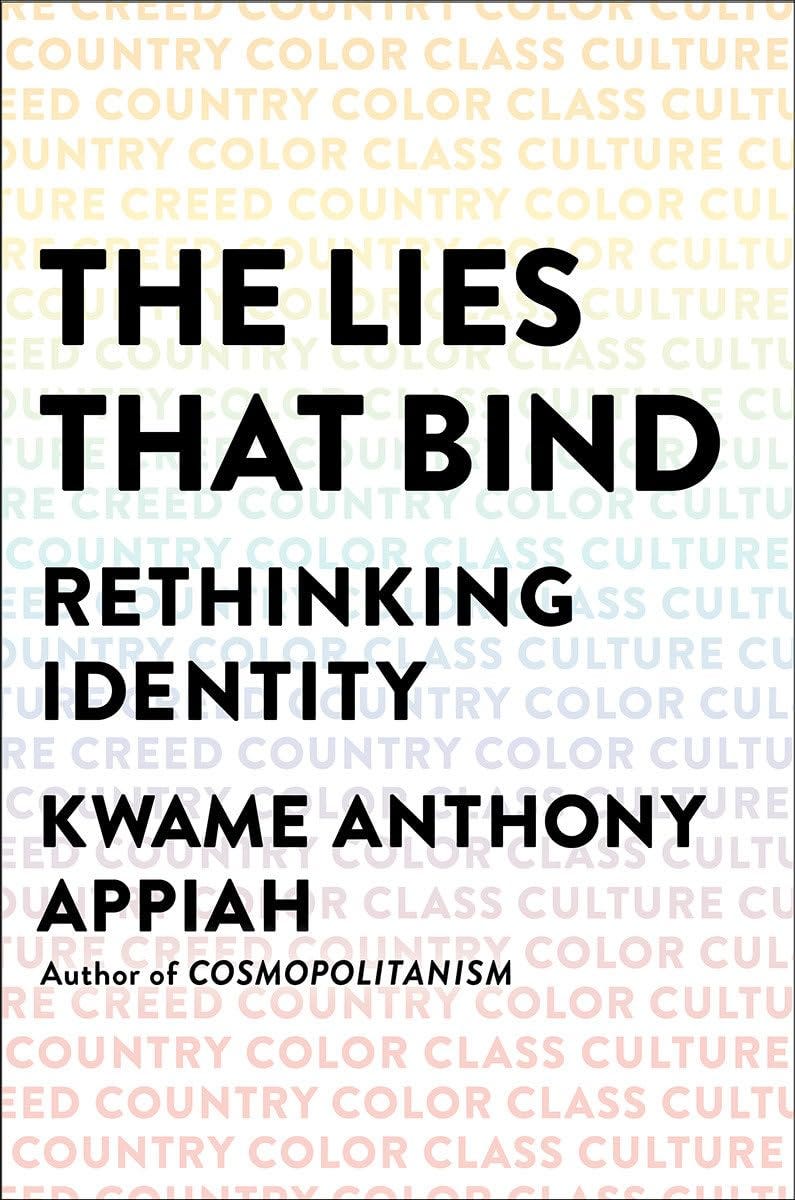
Recently, I’ve been reading The Lies That Bind: Rethinking Identity, Creed, Country, Color, Class, Culture by Kwame Anthony Appiah, a book that essentially argues that our collective identities are riddled with contradictions and falsehoods.
Except, when it comes to social class, Appiah argues, which in modern America is especially shaped by money.
It’s in his chapter on class where Appiah writes:
Twenty-first-century systems of social standing, in [America], look very similar to the patterns that shaped the worlds I grew up in. One (but, yes, only one) strand of the populist explosion that tipped Donald Trump into power was an expression of resentment against a class defined by its education and its values: the cosmopolitan, degree-laden people who dominate the media, the public culture, and the professions in our country. Populists think that liberal elites look down on ordinary Americans, ignore their concerns, and use their power to advantage themselves (167).
It’s noteworthy that Appiah published this book in 2018, meaning he was writing very much in the thick of Trump 1.0. He saw Trump’s shocking rise to power for what it was, at least in part: an appeal to “flyover country,” to people who had long felt ridiculed and shamed by the “coastal elites” for all sorts of cultural and behavioral things.
And especially as this was around the beginnings of “woke 1.0,” these same people, who were being called “backward,” “on the wrong side of history,” and so forth by the left, found a man willing to pretend he was like them and advocate for them.
As Appiah notes, and history seems to demonstrate, “Resentment of this sort, as Nietzsche taught us, can be a reaction against a sense of inferiority” (167).
No doubt, as Appiah hints at, some measure of bias and prejudice played into the decisions of many who voted for Trump. That’s human nature, after all. We all have our biases, and I think it’s been part of the foolishness of the left to assume that biases can ever really be removed.
What’s more, the classic “bias training” so frequently promoted by the left during “woke 1.0” may have only furthered the social rift between the right and the left. All these formal trainings and educational efforts provided yet another socioeconomic divide, marking separation and elitism.5
For many white working-class voters, there was a sense of subordination, derived in part from a lack of formal education, that quite clearly played a role in their politics (168).
So what shifted?
For one, Donald Trump had freakin’ gold plating installed throughout the Oval Office. He was talking about “how much money we were making” off the price of oil when so many Americans grimace every time they pull up to the pump. And he was knocking down buildings and constructing new ones while so many Americans were struggling with the cost of living.
Conversely, I think it’s quite clear that Democrats—traditionally the party of labor and the working class—began to seem normal again.
Candidates like Talarico and Hamilton made reasonable and sensible statements about trans issues.6 They focused on “kitchen-table” issues and continued to emphasize affordability. Normal stuff—the kinds of things the vast majority of Americans deal with every day.
Or at least a vast enough majority to swing an election by 20–30 points two years later.
Trump, for all his appeals in 2016 to be the advocate of the middle class and the “common man,” finally showed who he really was.
And Democrats got back to their roots, caring about the middle and working class.
Saying it differently, I suspect there are roughly 33% of Americans who will only vote Republican, 33% who will only vote Democrat, and another third who make their decisions based on who seems most sensible, reasonable, and relatable to them.
And perhaps that’s what we’re seeing here.
A Lesson for Churches
Now, as this is intended to be a newsletter about the church, I’d add one lesson for churches and pastors:
Good luck if your church and congregation look nothing like the socioeconomic makeup of your neighborhood.
I think that’s key here.
Not only did Democrats begin to look the part, but they also talked about the everyday issues people actually care about.
If you’re leading a church where the neighborhood has significantly shifted around it, you’ve got to find a way to become more like the character of that neighborhood and understand what really keeps people up at night.7
And perhaps there’s an important distinction here between a church reflecting its neighborhood and a church genuinely knowing its neighborhood. Ideally, we’d want both. But a church can look a lot like the people around it and still have little understanding of what they actually care about, what they’re struggling with, or what keeps them up at night.
And conversely, a church might look quite different from its neighborhood but have deep relationships with the people who live there.8
And let me add this, too.
I’m already reading takes about how the wins by Talarico and Hamilton speak to a revival of the religious left, something I just don’t really believe.
But I think there’s something more important here.
As much as people need healthcare and food security—and they certainly do—I wonder whether churches could find ways to connect with people and the deep yearnings of their hearts.
A few weeks ago, I sat with an older gentleman who was likely of a lower socioeconomic status than me. And while I suppose I could have, like some of the blogs I’m reading today, offered him resources for food and social services, what he wanted to talk to me about was his relationship with his sibling.
As I heard it, he wanted forgiveness for the mistakes he had made.
If food and healthcare ministries are what enable you to have these conversations, as I suggest in my new book, all the better.9
But don’t assume that all people really need, as I’ve read elsewhere, is material resources.
Get to know people. Like the Democrats did, find out what they really care about, what keeps them up at night, what they’re longing for.
And meet them with the good news of the gospel.
Obviously the number may change slightly as final votes are tallied.
I relish the image of Captain von Trapp tearing the Nazi flag too, but I don’t think that’s really what happened here.

I first found Dennis’ statement to be shocking, but increasingly, I’m convinced it’s true.
Appiah argues in his class chapter that education has historically been a marker of class
I understand this is a sensitive topic—but this is also my point. The stated position of much of the Democratic party in recent years was widely rejected by “middle-America.” One could argue Talarico and Hamilton were morally wrong in their statements and should have stood by these marginalized groups, that’s an argument for another time.
I’ve heard it said that professional sports teams become beloved when they adopt the character of their cities.
Again, a lesson I think we learned in 2024. The Democrats were obsessed with “representation” or looking the part, whereas so many voters of color felt Trump offered them a more realistic solution to their actual struggles.
My book, The Church As Community Hub!!
Losing touch would mean having been in touch. He’s never been in touch with anyone but himself, and I think even that might be a charitable statement.