


TL;DR:
I picked up Critical Dilemma expecting a predictable culture-war critique of Critical Race Theory and social justice ideology, but found a far more nuanced and serious treatment than expected. Reading it alongside Andrew Root’s Baal and the Gods of More, I’ve found myself wrestling with how certain forms of contemporary critical theory, when interpreted primarily through power and oppression, may lead some church leaders to see the church less as something to renew and more as something to resist or diminish. I affirm the reality of racism, sexism, and injustice—but I’m increasingly wondering whether some frameworks make it difficult to imagine the church as anything other than an oppressive institution.
A Diamond in the Rough?** (edited to add, it turned out pretty rough itself…)
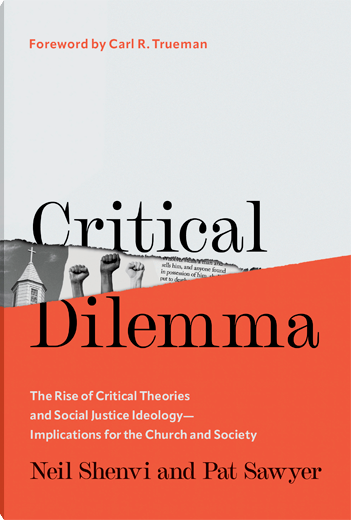
Recently, while perusing the normally disappointing religion section at my local library, I came across an intriguing title: Critical Dilemma: The Rise of Critical Theories and Social Justice Ideology—Implications for the Church and Society by Neil Shenvi and Pat Sawyer.
I checked it out with more than a little skepticism.
If I’m honest, I expected something closer to a right-wing, culture-war critique of Critical Race Theory and social justice discourse—heavy on hot takes and light on nuance.
So far, it’s been anything but.1
And to be clear, I’m not approaching this as someone hostile to conversations about race, power, injustice, or historical inequity.
What has interested me as I’ve read on was instead a different question:
How do certain theoretical frameworks shape the way we understand institutions—especially institutions like the church?
While I’m not yet sure I’ll agree with all of Shenvi and Sawyer’s conclusions, I’ve been struck by the seriousness of their work.
More Nuanced Than I Expected
Their treatment of what they call “contemporary critical theory” (CCT) stretches more than 200 pages before even reaching any of their critiques.
This is no strawman effort.
To be honest, I haven’t done a tremendous amount of reading in the anti-CRT world, short of Susan Neiman’s Left Is Not Woke, in which she boldly argues that the modern progressive “woke” movement has little to do with the foundations of the traditional liberal left.
I’ll skip a broader evaluation of Neiman for now, but one line stuck with me:
“If everything is power, does the concept have no bounds?” (63)
The same question about power lingered in my mind while reading Critical Dilemma.
What I’ve generally understood about critical theories is that power tends to be a central concern. What I hadn’t fully grasped, however, was just how thoroughly this lens of power shapes the interpretation of reality itself.
The other day, while reading Critical Dilemma, it struck me:
If unequal outcomes necessarily imply inequality, then of course Christianity did not “win” because it was true, but because it possessed power and cultural hegemony.
Again, Shenvi and Sawyer write:
“If we assume that equitable treatment would result in everyone achieving the same outcome, then unequal outcomes can only be the result of inequitable treatment” (134).
A few weeks later, at the same library, I grabbed the book Black and Catholic by Tia Noelle Pratt off the shelf. She makes this assertion:
“The legacy of this systemic racism is found not only in the disproportionately low number of Black Catholics in the United States but also in the dearth of Black priests and vowed religious'“ (16).
Now, it is entirely possible that I—or Shenvi and Sawyer—simply misunderstand these theories.
But honestly, I don’t think so. Looking at Pratt’s quote for example, she asserts that a lack of Black people in Catholicism means racist structures. Now, to be fair, there may be deep structural racism within Catholicism. I’m not disputing that. What I found compelling is how her words provide a real-life example of what Shenvi and Sawyer discuss.
So, if anything, I’ve found myself understanding them better through reading this book. And interestingly, there were moments where I almost wondered whether the authors were more sympathetic toward CCT than opposed to it.
That’s part of what has made the book so compelling to me.
It is nearly 500 pages long and engages all the notable figures—Kendi, DiAngelo, hooks, and others—with considerable nuance and detail.
Andrew Root and the Logic of “More”
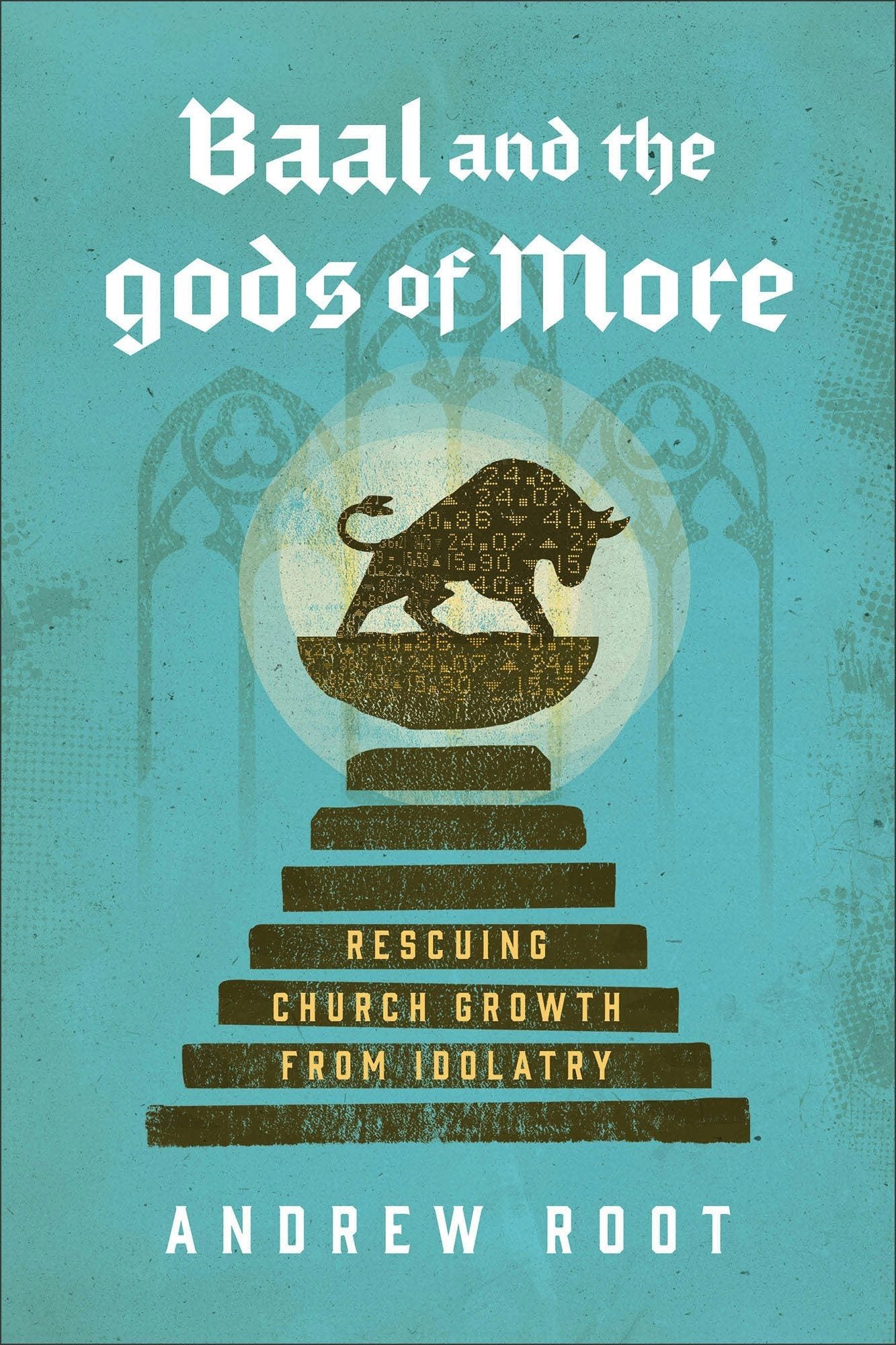
But while reading, something from Andrew Root’s latest book, Baal and the Gods of More, kept coming to mind.
To be fair, Root spends most of his time critiquing the church’s obsession with growth, especially since 2000. But he also critiques what he calls the “identitarians,” those who continually urge the church to “do better.”
Root shares a story—I honestly can’t remember whether it is real or imagined—but recounts the following:
“This pastor has shaped his leadership around his hope that the church is moving into declension. He says that the church has hurt too many people. ‘What needs to expand,’ he explained, ‘is our awareness of all the trauma the church has caused. All the people it has hurt. My leadership has nothing to do with growth; I want the opposite of growth. I want the church to diminish. That’s what I’m after’” (26).
I’ll admit, Root’s critique of the “identitarians” did not always feel fully integrated with his larger critique of evangelical growth culture.
But where I do think the connection becomes clearer is here:
Both the “identitarians” and the “techno-optimists,” as Root calls them, remain caught in the same logic of more.
For the techno-optimists, it is more growth, more scale, more innovation.
For the identitarians, it can become more recognition, more affirmation, more awareness.
As Root laments:
“We can’t signal our recognition and affirmation enough…to ever satisfy people” (117).
Again, there is no such thing as enough.
And reading Critical Dilemma, that logic suddenly made more sense to me.
Sawyer and Shenvi write:
“Based on these [critical theory] statements, you cannot—by definition—extend privilege to everyone. You can only eliminate privilege by eliminating oppression, which is the goal of social justice work” (99).
What I’m Wrestling With
So while I will probably write fuller reviews of both Root’s book and Critical Dilemma, I think I’m finally understanding something for the first time.
I can now see how some pastors and church leaders, deeply shaped by this form of CCT, might genuinely conclude that the church achieved its influence primarily through hegemonic power and that, therefore, the morally right response is not institutional renewal but institutional diminishment.
As Root says, that’s why the common thinking amongst identitarians is that they should even “resist… ecclesial structures” (147).2
To them, decline is seen as welcome news.
To be clear, I’m not saying every advocate of critical theory or social justice work arrives at this conclusion. Nor am I suggesting that churches should avoid hard conversations about power, exclusion, or injustice.
In fact, one of the more refreshing things about Critical Dilemma is that Shenvi and Sawyer are themselves quite direct about the reality of injustice, writing:
“real social injustices exist. Racism does exist. Sexism does exist. Actual oppression does exist” (19).
I’d completely agree.
What I’m wrestling with instead—particularly the tendency to interpret institutions primarily through the lens of power and oppression—is whether certain theoretical assumptions can make it difficult to imagine the church as anything other than a problem to be managed, resisted, or dismantled.
And maybe that’s the question I’m really trying to ask here.
Am I missing something?
Because at least right now, I don’t think I am.
I’m adding this footnote after the fact to say that the book definitely went off the rails a bit. I hope to plan a fuller review of the book later.
It totally makes sense to me know why so many Progressive Christians are so deeply skeptical of the Nicene Creed and post-Constantinian Christianity. I may be wrong on this, but it seem the logic would be that the Nicene Creed is less the result of the movement of the Spirit and more the conglomeration of hegemonic power.
That would certainly explain the lack of urgency about membership decline, as increasingly stringent purity tests are imposed on the members who do remain. If the gospel has been reduced to "we're from the Mainline and we're here to offer land acknowledgements and pronouns," who needs historic Creeds and Confessions anyway?
On a less bitter note, I hope: What could express "equity" more forcefully than the one who is equal to God humbling himself in the form of a man - even unto death on a cross? Why do we keep averting our eyes from what is already complete?
Yes, your analysis makes unfortunate sense. The white liberal or woke person must move from virtue signaling to self-hatred to self-destruction. It’s not enough to use your privileges and benefits to help other people or to build positive relationships- one must actively destroy the sources of good things in ones life. Sign me up!