


TL;DR: Fear often traps us in unhealthy coping patterns that once protected us but now control us. In Romans 8, Paul reminds us that through Christ we are no longer slaves to fear but beloved children of God. The Holy Spirit continually assures us that we are not alone, deeply loved, and already at home with God. Real freedom begins not when we fix ourselves, but when we trust that God has been with us all along.


What follows is the actual transcript of my sermon, delivered July 19 in at First Congregational Church in Loveland, CO, formatted for substack. Audio is available at the bottom.
I like you just the way you are.
Why did those simple words mean so much to so many people?
Perhaps you or maybe for some of us our kids or grandkids grew up watching Mr. Rogers’ neighborhood. Any? All right, some, yes. Maybe you remember the trolley, the cardigan, the puppets.
Perhaps more than anything, you remember those words.
I like you just the way you are.
Fred Rogers had a remarkable gift, and I think I mentioned this last week. He was a Presbyterian clergy person, but Fred Rogers had a remarkable gift for making people feel seen, safe, known, and loved.
A few years ago, Tom Hanks portrayed Mr. Rogers in the movie A Beautiful Day in the Neighborhood. But rather than retelling Mr. Rogers’ life, the film follows Lloyd Vogel, a cynical journalist assigned with writing a profile about Mr. Rogers.
Now, Lloyd was known for exposing people’s flaws in his writing.
But from the beginning, Mr. Rogers wasn’t interested in being interviewed, but rather interviewing, getting to know Lloyd Vogel.
At one point in the film, Lloyd even blurts out,
I’m supposed to be interviewing you.
As the film unfolds, Rogers gently earns Lloyd’s trust until Lloyd finally shares the painful story beneath all of his anger.
Years earlier, Lloyd’s father had abandoned the family just as his mother was dying of cancer. Lloyd was left alone with her beside his mom in her hospital bed, as she cried out in pain during her final moments.
No one, no one, should have to carry that kind of pain alone.
But Lloyd did.
And that loneliness of the moment became anger and bitterness that followed him for years. It shaped how he saw the world, how he treated people, and how he responded when life became difficult.
Anger became the place he returned to again and again.
When Protection Becomes a Prison
In many ways, what Lloyd experienced could be described as trauma.
And one of the fascinating things I’ve learned about trauma over the years is that two people can experience similar events but respond very differently.
Researchers have found that one of the greatest factors into whether trauma turns into long-term post-traumatic stress isn’t simply what happens to us.
But whether we have someone to help us carry that load, someone to help us process what happened, someone who reminds us that we are seen, safe, known, and loved.
But when we’re left alone dealing with a pain all by ourselves, we often develop coping mechanisms.
That’s what Lloyd’s anger was.
At first anger protected him.
Whenever something reminded him of that awful day his mother died, he could simply retreat into the bitterness instead of feeling the deep grief and pain beneath it.
So what began as protection slowly became a prison.
Over time, anger wasn’t simply something that Lloyd chose, it became his default response.
It shaped his relationships, it distorted how he saw the world and threatened the very people that he cared about the most.
He’d become trapped by the very thing that once helped him to survive.
We All Have Our Thing
I bet some of us can see some of ourselves in Lloyd.
Maybe for you it isn’t anger.
Maybe it’s perfectionism, this idea that if we can always prove that we’re good enough.
Maybe it’s busyness because if you’re busy, you don’t have to feel.
Maybe it’s people pleasing or control or cynicism, withdrawal, or work.
Or alcohol or something else.
We all have our thing.
Whatever it is, those patterns often begin as ways of protecting us.
But over time they begin to control us.
They become familiar paths, our minds almost travel automatically, and we fall back into them without even recognizing what we’re doing.
It’s almost as if they become our master.
And underneath so many of those patterns is often the very same thing.
Fear.
Fear of being hurt again.
Fear of rejection, fear of abandonment, fear of being alone.
But we were never, we were never, we were never meant to carry our pain alone.
Slaves or Children?
The Apostle Paul knew what it was like to feel trapped.
Early in Romans, in Romans chapter seven, perhaps you remember, Paul describes wanting to do the right thing, but finding himself so unable to do it, caught in patterns he could not seem to escape.
Now, to describe that experience, here in this text, Paul reaches for an image that everyone in the Roman world would have understood.
Slavery.
Now, while Roman slavery differed somewhat from American chattel slavery, the point is much the same.
A slave’s life was no longer their own, they weren’t in control of their own future.
They lived under the control of a different master.
That’s the image that Paul wants us to have in mind, that fear can become a slave master, and a cruel, cruel, cruel master with that.
Fear promises to protect us, but eventually it controls us.
We fall back into the same familiar patterns because the unknown feels more frightening than what we already know.
I was listening recently to a former crisis chaplain describe working with victims or survivors of domestic abuse.
He said that often what kept people trapped wasn’t their situation, but was fear.
The uncertainty of leaving into an unknown future felt scarier than the abuse that they were enduring.
Fear convinced them that a better life wasn’t possible.
Paul says here in Romans, this is not the life, this is not the life, the kind of life that God desires for us.
He says,
You did not receive a spirit of slavery to fall back into fear, but you have received a spirit of adoption.
I think it’s interesting here what Paul says.
He doesn’t simply promise that our circumstances will change.
He says, our identity, our identity has changed.
We are no longer slaves, we are God’s children.
And if we are God’s children, we are no longer alone.
This is why Paul can speak of confidence instead of fear.
Joy instead of slavery.
You know, I think the deepest fear beneath so many of our coping mechanisms is the fear of being abandoned, the fear of not having anyone to carry our burdens with us.
To that fear, Paul says,
I have good news.
You are not alone.
The Promise
So, what does then freedom look like?
Paul says it begins with a promise.
And the first promise is this, that when we cry out, God is already here.
Paul says that when we cry, Abba, Father, God is already with us.
Now, Abba is this word that Jesus himself used in prayer.
Paul even preserves it in the original Aramaic language that Jesus would have spoken himself, suggesting that this phrase was a common phrase used in early Christian worship practices.
But what’s important isn’t the phrase itself, it’s the promise.
Our cry does not summon God, it simply reveals that God is already present.
Long before we have the words to pray, long before we realize we need help, God is already present with us.
And the second promise, friends, the second promise is even better.
God’s presence by the Holy Spirit reminds us who we are.
Paul says the Spirit bears witness with our Spirit that we are the children of God.
Notice here, notice here who is doing the work.
This is not something we have to produce on our own.
The Holy Spirit is doing the work because fear always has a way of making us forget.
When we’re hurting, we begin to wonder if we’re alone, if we’re abandoned, if we’re even lovable at all.
But the Spirit continually bears witness with our Spirit, reminding us of a different truth:
that we are known,
that we are loved,
that we are seen,
that we’re not alone.
Even when you struggle to believe it for yourself, the Spirit keeps speaking that truth, promise over you and over me.
We Were Never Meant to Carry It Alone
I remember hearing a trainer for a debt collection company saying something that surprised me.
He said that when most people called, they weren’t asking for their debt to just simply go away.
They simply wanted someone to hear their story.
They wanted someone to understand what had happened:
the layoff,
the divorce,
the illness.
What had brought them to that moment?
It reminded me of what we talked about already at the beginning of this sermon.
That beneath our desire to be rescued is often an even deeper desire to not be alone.
And that’s one of the greatest promises that echoes throughout the entire Bible.
I am with you.
God says again and again and again.
God speaks these words to scared, tired, grieving, uncertain people.
I am with you.
That’s the promise that Paul wants us to trust.
Not that we’ll never suffer.
Not that we’ll never struggle.
But we don’t have to carry those burdens alone.
And as the Spirit keeps reminding us again and again whose we are, fear slowly begins to loosen its grip.
The patterns that once mastered us no longer have the final say.
We belong to God.
A Hospital Room
As I’ve mentioned before, I work part-time as a hospital chaplain.
Most every Thursday evening I walk the halls of St. Anthony North Hospital looking for people to visit.
I simply seek to put into practice all that I’ve just shared, to remind people they’re not alone, that God loves them, and God is with them even in the midst of their pain and struggle.
So I often walk around with a bit of enthusiasm.
Because I know I have good news to share.
And I often joke with the charge nurses,
“Hey, I’m looking for business, looking for some customers.”
One recent Thursday, a nurse took me up on my offer.
“Can you go see room 302?” she said.
“Sure, I’d be glad to,” I said.
So I do what I always do.
As I make my way to the room, I try to remind myself that God is already at work in that room.
God’s already present in that situation, and I simply need to be a part of what God is already seeking to do with that person in that room.
And I also always try to pray some snippet, at least, of the Saint Francis prayer.
Lord, make me an instrument of your peace.
Where there’s hatred, let me sow love.
Where there’s despair, hope.
Where there’s sadness, joy.
So, you know, I knocked.
I introduced myself.
“Hello, my name is Loren, I’m a chaplain.”
And since I knew I’d been asked to come see this woman, I kind of boldly made my way in and I sat down and I chatted with her.
She was a woman around my age, had just undergone a painful surgery, and it was quite apparent that she was quite uncomfortable in the moment.
But the more I began to talk with her and hear her story, what occurred to me was as much as she was suffering under the pain and burden and weight of this recent surgery, the real story and pain that was holding her down was a deep woundedness.
As a child she had experienced abuse from her parent.
A parent perhaps acting out of their own pain and abuse, coping mechanism perhaps of their own.
And this woman in the years since had been living out that pain and abuse and trauma through abusive relationship after abusive relationship.
And the one thing I found myself saying to this woman wasn’t that,
“You’re fine,”
or,
“You’re special,”
or,
“You’re unique.”
I wanted her to know,
You are not alone.
God is with you.
Because even in that moment, as we were talking, she said something deeply heartbreaking to me.
She said,
“I’m not sure I’m worthy to be loved.”
And so I looked at her with as much conviction and courage as I could and I said,
God loves you.
You are a beloved child of God.
You Are Worthy of Love
It’s amazing how often beneath all of the stuff, we all sort of deeply want to know we’re loved and seen and known and cared for.
In that moment, I don’t think what she needed was someone to solve all her problems, not that it could anyway.
She needed to know that she wasn’t alone.
That God loved her.
And I really think underneath that pain that we all feel, that fear that we all fear, is the same question that that woman wrestled with herself.
Am I worthy?
Am I worthy of being loved?
And the gospel answers, yes.
The gospel answers affirmative—
I can’t say the word—the gospel answers, what’s the word I’m looking for?
Extremely, yes.
Not because of what we’ve done.
The gospel answers yes, not because of what we’ve done, but because of whose, because of whose we are.
We belong to God.
And I think that’s where the real freedom begins.
Because not that we finally become strong enough.
Not that we finally fixed ourselves.
But when through the Spirit we begin trusting that God has been with us all along.
That’s where freedom comes from.
Have you ever felt that kind of freedom?
Have you ever felt that kind of welcome?
Home
I remember when I was a teenager or young adult myself when my grandparents were still alive.
And often because of my activities or adventures, I’d find myself on their side of town.
Often I’d just swing by.
I’d walk in the back door and say,
“Hey, anybody home? Loren’s here.”
No matter what they were doing, they’d stop.
They’d come to greet me.
It didn’t matter if they were watching TV or working in the shop or cooking dinner.
What mattered was that Loren was there, one of their beloved grandchildren.
They welcomed me.
They welcomed me with kindness, joy, and love.
Looking back, I think that’s one of the closest pictures we have of what Paul means by adoption.
Not having to wonder whether we’re welcome.
Not having to wonder whether the door will be opened.
Not having to wonder whether you belong.
Simply knowing that when you walk in, you’re home.
I mean, that’s what it means then to be Christ’s body, Christ’s church here on earth.
When people walk in, to let them know they are home and they are loved.
Perhaps this morning you’re like that woman I met in the hospital room.
Maybe you’ve never experienced that kind of welcome.
I hope this morning, even at this time right now, through this church you’re at least experiencing a little snippet, a little taste of that welcome.
Even still, hear Paul’s words again.
When you cry, “Abba Father,” you are not trying to convince God to come near.
You don’t have to earn God’s love and presence.
God is already with you.
God already loves you.
The Spirit is already reminding you that you are God’s beloved child.
You do not have to fall back into fear again.
You do not have to carry your pain alone.
Because in Christ, you are already home.
That’s good news, friends.
That is good news.
Thanks be to God.
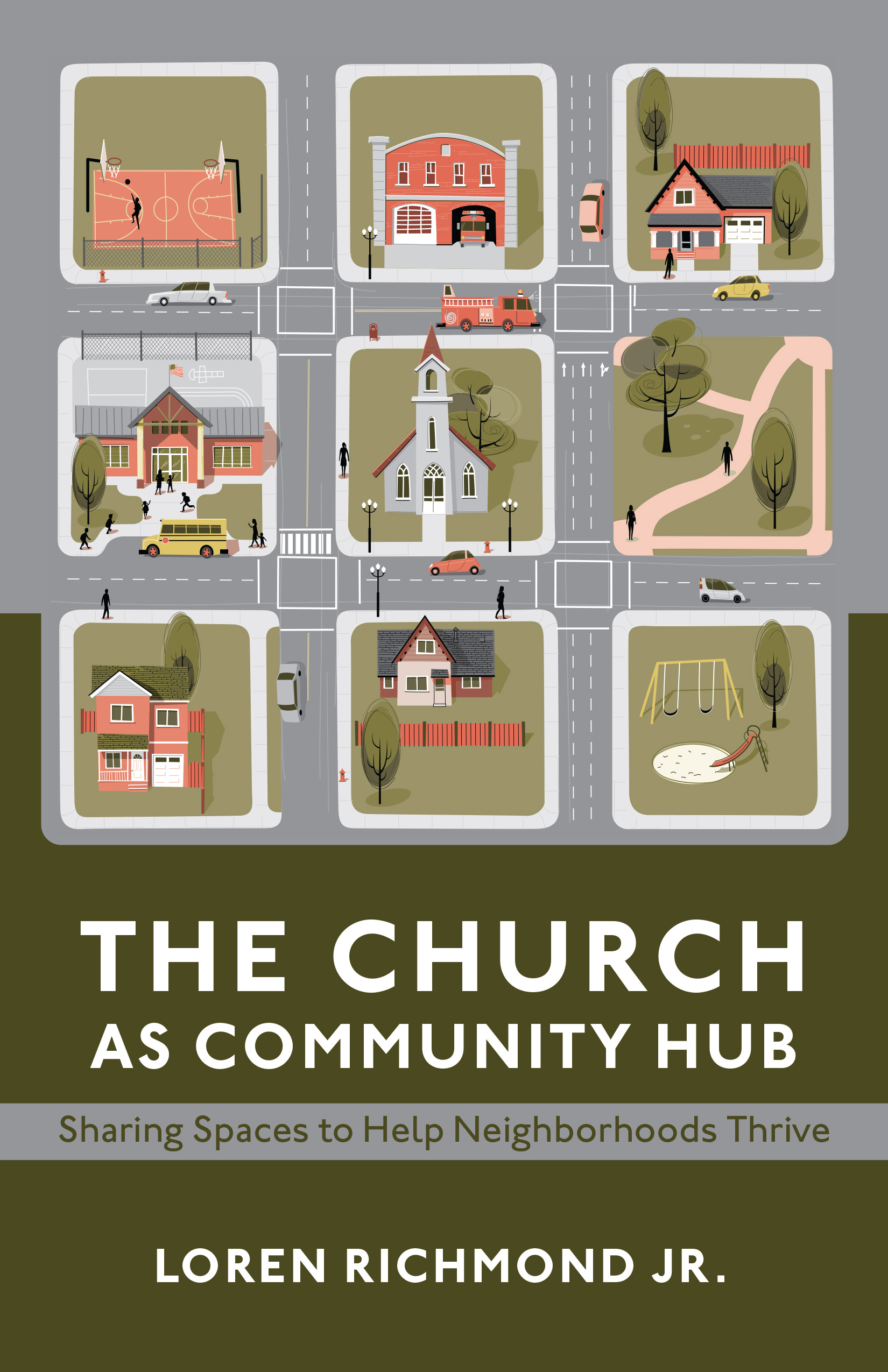
P.S. 📖 Save 25% on my new book! Church as Community Hub: Sharing Spaces to Help Neighborhoods Thrive is now available for pre-order. Use promo code CHURCH25 at checkout to save 25% through July 31. Pre-order your copy →
My son 57 lives in Oregon; we live in Tn. He feels his girlfriend stole his identity and he has spent 3 yrs trying to prove it. He is homeless living in a van. We think he is paranoid. We can’t afford to go there. Your sermon today strikes a cord. Do you have suggestions for what I might say to home so he can move forward. John at: johnsturnings@gmail.com