


TL;DR: Two recent Future Christian podcast conversations—with Bonnie Kristian and Francisco Herrera—revealed a surprising point of agreement across the theological spectrum. Both are calling their respective traditions not to become something different, but to recover something essential about who they already are and should be. PLUS—my book is a month old!

An Unexpected Point of Agreement
As I’m writing this, I’ve recently interviewed two authors who are perhaps on opposite sides of the theological spectrum. Yet, in my conversations with them for Future Christian, I think they both made essentially the same argument, just in reverse.
Bonnie Kristian, in her new book In Defense of Evangelicalism, basically argues that Evangelicalism IS and SHOULD BE something other than what many people have come to associate with it: racist, judgmental, and so forth.
Obviously, there are exceptions, and one could disagree with some of her points throughout the book about how evangelicals should live out their faith. But I think she’s ultimately trying to make the point that Evangelicalism has an identity and a set of convictions worth maintaining/recovering, rather than simply abandoning the tradition because of its failures.
In a similar, but reversed way, in a recent podcast conversation I had with Dr. Francisco Herrera, he made the point that Mainline traditions can and should be evangelical.
We were talking about an article he had written for The Christian Century, “Donald McGavran’s Complicated Legacy.” Herrera was explicit that he is a progressive Christian and certainly has his bona fides in that space. But he was equally insistent that evangelism matters, saying in our conversation:
“It stupefies me that whenever I mention the importance of evangelism or church planting, or how important it is to bring people to Jesus, a lot of my colleagues look at me funny.”
Herrera’s article was quite intriguing and worth a read—I’d recommend checking it out.
Becoming Who We Already Are
I guess what I’m saying is that I think both writers—in different ways—are calling their respective traditions to be what they are and should be. Neither is arguing that their tradition needs to become something else, but rather that each has lost sight of something essential to its own identity.
This is one of my favorite things about doing the podcast—talking to writers and thinkers from so many different perspectives, and sometimes discovering surprising points of agreement.
Neither of these episodes is out yet. Bonnie’s will be released in about three weeks, with Herrera’s coming the week after. So I suppose it will be interesting to hear them one after the other.
A Late-Night Addition
I’d already scheduled this post and was trying to settle into bed when another thought popped into my head (added the next day).
I think both Kristian and Herrera are also fighting back against implicit claims within their respective traditions—such as, in the case of Evangelicalism, that one can be a good Christian without being concerned about racial and systemic injustice.
And this is where the connection to Herrera’s article is especially intriguing, because he argues that many Evangelicals took McGavran’s work and used it to justify their lack of racial integration or concern for racial justice.
Yet, as Herrera notes both in his article and in my conversation with him, what ultimately drove McGavran toward the Evangelical world was the strong resistance he encountered to evangelism and church planting within his (and my) denomination, the Christian Church (Disciples of Christ), as well as the broader Mainline context.
So, I guess what I mean to say is this: I think both writers are pushing back against the sort of poison pills that have taken hold within their respective contexts—that Evangelicals can’t care about racial justice, and that Mainliners can’t care about evangelism. Neither of those things should be true. And yet, somehow, we’ve come to treat them as though they are.
As always, if you haven’t already, please listen and subscribe to the Future Christian podcast.
In Other News
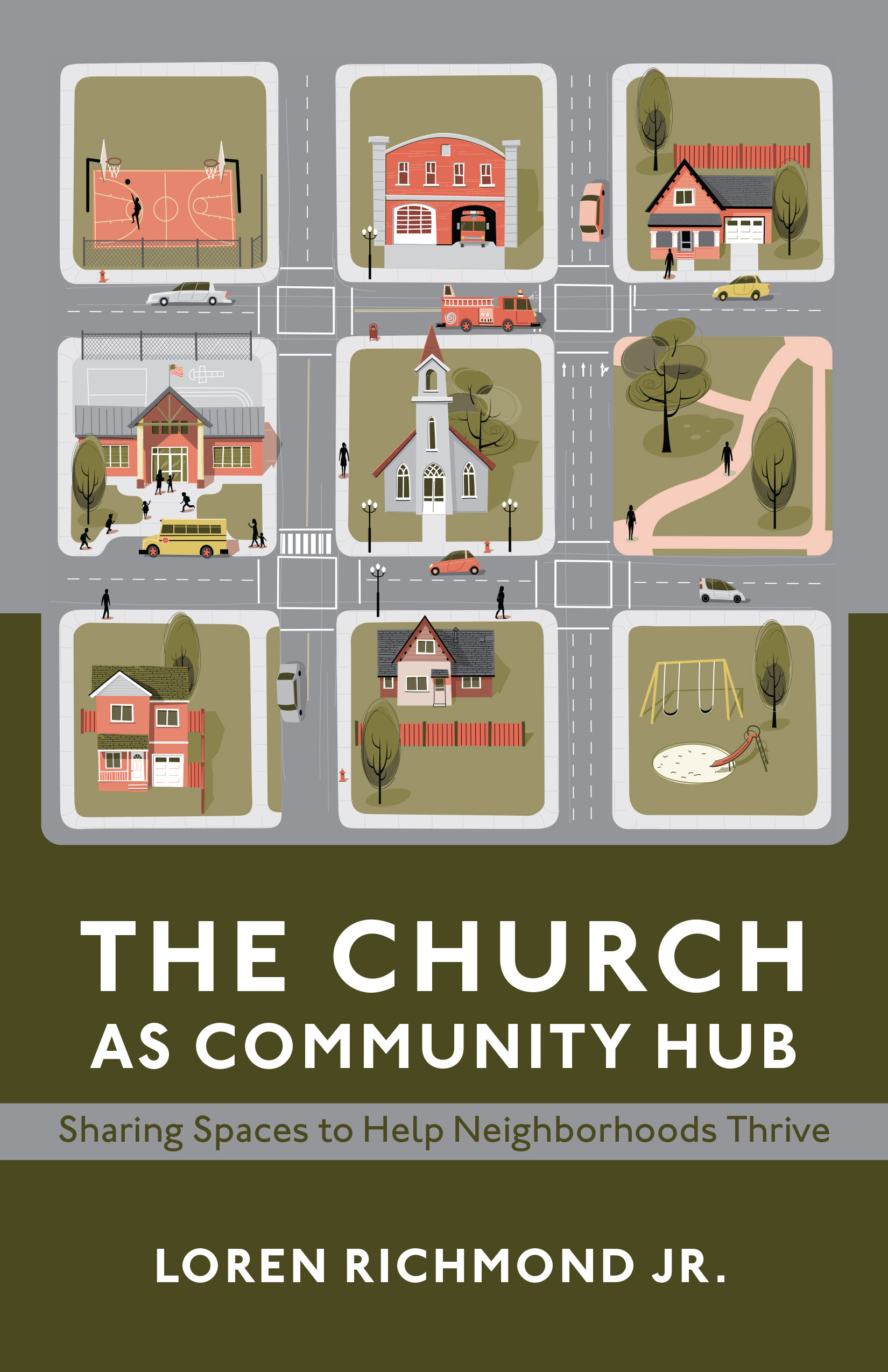
My new book, The Church as Community Hub: Sharing Spaces to Help Neighborhoods Thrive, is now a month old!!
The book offers practical guidance and real-world examples for congregations seeking to use their buildings, relationships, and resources to support neighborhood flourishing throughout the week.
You can order directly from Church Publishing using code HUB20 for 20% off. Bulk-order options are also available for churches, cohorts, classes, and other groups.
One BIG request: If you bought a copy of the book on Amazon already—thank you!—would you please take a moment to write a review for the book there? Reviews really do help other readers discover it.
And I am still offering a promotion where new paid subscribers to this Substack can get a copy of my book.
Well, that’s it for now. Nothing too complicated this week, just some things I’ve been thinking about.
Loren, As a preacher who uses the lectionary, we have been in the season of Jesus confronting the chief priests and elders....it strikes me that this is what Jesus was doing in those difficult parables----"calling their respective traditions to be what they are and should be. Neither is arguing that their tradition needs to become something else, but rather that each has lost sight of something essential to its own identity." Thanks for all the reading and reflection you do so faithfully. I am a regular reader!! Peace, Nancy (episcopal priest)