


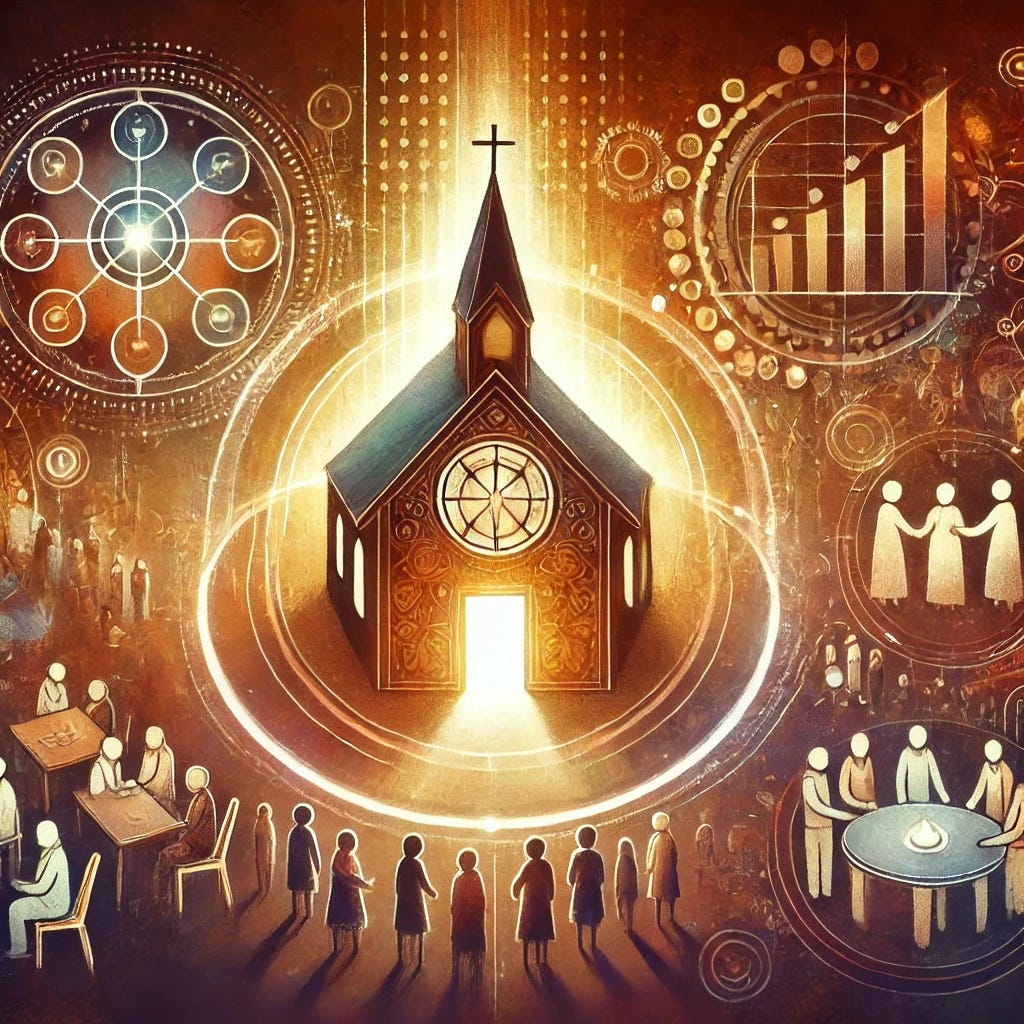
What is the church, and what is it for?
This question has shaped theological debate for centuries, yet many church leaders today focus more on how to do church rather than first asking what the church actually is.
Defining the Church’s Purpose
Even in my days as a Baptist, pastors and laypeople alike would debate the true purpose of the church. Is it a hotel for believers? A hospital for the sick and unsaved? A hostel or temporary respite along the journey of faith?
Or now as many progressive Christians might say, a social welfare organization dedicated to love and mercy? A social action committee advocating for justice?
Why Ecclesiology Matters
How we understand the core purpose and mission of the church—and, more importantly, when and how we believe the church is most fully realized—fundamentally influences how we shape it. In short, when and how is the church most truly realized?
The Future Christian Podcast: An Ecclesiology Conversation
I often tell people that the Future Christian Podcast is, in many ways, an ecclesiology podcast, centered on issues that affect churches and pastors, asking foundational questions about faith communities in a changing world.
That’s why I was so excited to explore Types of Ecclesiology: Five Theological Approaches by Rev. Dr. David Emerton, which outlines different ways theologians have understood the church.
I had the opportunity to speak with him on the podcast, and his insights are especially relevant as many faith communities wrestle with decline, identity crises, and competing visions of what it means to be the church.
Exploring Ecclesiology with Dr. David Emerton
Dr. Emerton categorizes four major approaches to ecclesiology, each emphasizing different aspects of the church’s identity:
Empirical Ecclesiology – This approach sees the church primarily as a human community. It emphasizes sociological and historical realities, studying how churches actually function in the real world. In this view, human agency is central—church structures, leadership decisions, and community dynamics define what the church is.
Performative Ecclesiology – This approach also prioritizes human agency but focuses on the church’s practices rather than its structures. The essence of the church is found in what it does—worship, sacraments, and ethical engagement. While performative ecclesiology acknowledges God’s presence, it is mostly concerned with the church’s lived expressions.
Communion Ecclesiology – This approach shifts the emphasis toward divine agency by grounding the church’s identity in the triune life of God. Communion ecclesiology often connects the church most deeply with the Eucharist (Holy Communion), seeing the gathered body of believers at the table as the heart of its identity.
Ideal Ecclesiology – This is the most theological and abstract approach, placing nearly all emphasis on divine action rather than human participation. In this view, the church is ultimately what God does, and human structures and experiences are secondary to this divine reality. Critics argue this perspective can sometimes detach theology from the real-world struggles of faith communities.
Where We Begin Shapes Everything Else
As Dr. Emerton points out, where we begin shapes everything else. Churches that define themselves primarily through human effort (empirical and performative models) may emphasize programming, leadership strategies, and engagement with culture. Churches that lean toward divine agency (communion and ideal models) may focus on theological purity, sacramental worship, and maintaining continuity with tradition.
In the end, Emerton argues for what he calls “Ecclesial Ecclesiology,” which is sort of a middle ground between the four approaches and seeks to hold the tension between human effort and divine agency.
I especially appreciate this approach as I don’t think church is simply about human effort and actions, most clearly defined by a sociologist. But neither do I understand church to be only and solely about God’s divine action with humans simply as pawns or bystanders.
A Call to Deeper Reflection
The way we define the church shapes everything—from our leadership models to our worship practices, from our engagement with culture to our response to change. As faith communities navigate an uncertain future, embracing a thoughtful, balanced ecclesiology can help us avoid simplistic answers and instead hold space for the rich complexity of what it means to be the church.
Dr. Emerton’s work challenges us to consider not just how we do church but what the church truly is. And perhaps more importantly, it invites us to ask: How might our understanding of the church better reflect the reality of God’s presence and action in the world today?