


TL;DR: Elections matter, and our choices have real consequences. But Jesus’ response to the question of paying taxes to Caesar reminds us that no political outcome is ultimate. When we trust that the future rests in God’s hands rather than entirely on our ability to make the right choices, we are freed to act with love, generosity, and courage rather than fear.
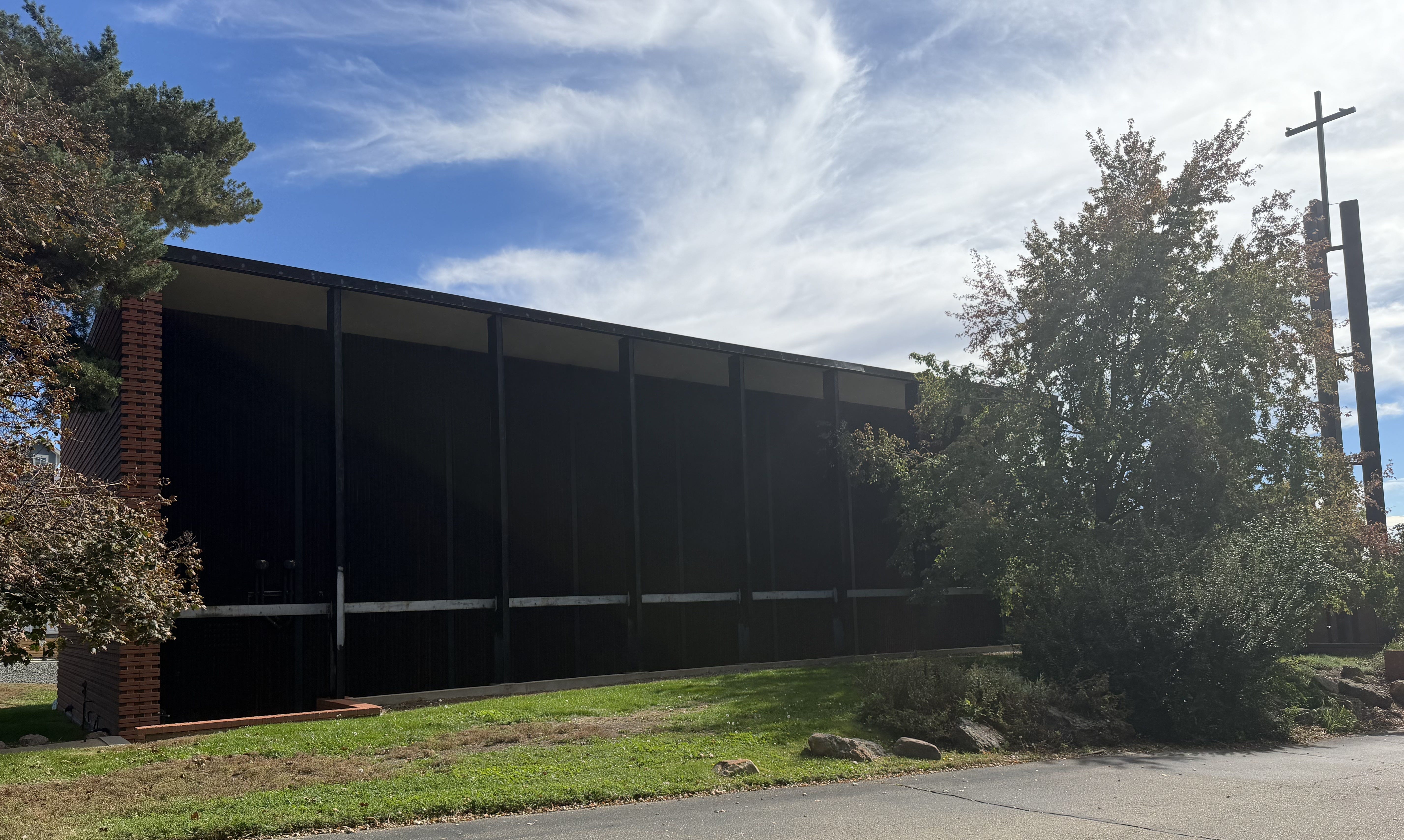
This is a transcript—formatted for Substack—of my sermon delivered Sunday, October 18 at Wheat Ridge Congregational Church
What do you remember about the fall of twenty eleven?
The final Harry Potter movie had just been released.
Didn’t quite expect that one to land that quick. Okay. So no. Steve Corell had just left the office. Apple had just introduced Siri. And for Broncos fans, Tebomania was going crazy.
I still have a Tim Tebow jersey hanging in my closet.
But more than that, I remember the thick of the twenty twelve election season and things were tense. Or at least other people seemed tense. While I felt strongly committed to my own choice, I found the stakes that others attached to the election somewhat humorous. I remember writing even a blog post suggesting that many considered the election to be life or death, because they themselves might not have many elections left.
I was, in a way, being unkind to a particular voting block. Maybe because for me the election simply did not seem that serious. Perhaps my youth or social location insulated me from some of the stakes that others felt. Whatever the reason, the election season did not feel that consequential to me then.
Fast forward, here we are, fifteen years later, and wow, do things feel different.
Imagine I am hardly alone in feeling that increased tension.
In recent months, this election has been described as quote a philosophical war to save the greatest nation in history. An election we must win because our whole democracy is at stake. No pressure.
The pressures may be different, but beneath each line the same message. Everything depends upon your choice.
Years ago, even back in twenty eleven, it did not seem quite as true. Maybe that’s simply hindsight or rose colored glasses, but back then it seemed like one could reasonably justify not voting or even maybe wasting a vote on a third party candidate. But not today. Not when congressional races like my own eighth congressional district in Colorado was decided by only a few thousand votes.
Not when statewide policies are enacted by seemingly the narrowest of margins, not when relatively a sm a small number of votes in a few states can decide the electoral college.
More and more it seems like everything depends upon your choice. Your choice could determine which policies become law. Your choice could determine which party to holds the House or the Senate. Your choice could even help determine who becomes president.
And if everything depends upon your choice, then you had better get that choice exactly right. There’s no room for uncertainty, no room for incomplete information, no room to misjudge what the future might hold. Everything, it seems, is riding on you.
The Ultimate Gotcha Question
What if I told you this morning that in our reading Jesus himself was actually presented with such a high stakes decision?
A choice which it a choice in which either answer could carry life or death consequences, a choice designed to make everything depend upon what he said next.
In our reading from Matthew, we see the Pharisees trying to trap Jesus with the ultimate gotcha question. First, they they they butter him up.
Teacher, we know that you are sincere. You teach the ways of God in accordance with truth and show deference to no one. You do not regard people with partiality.
Like a good political reporter, we might say.
They are setting him up for the real gotcha question.
Tell us then, what do you think? Is it lawful to pay taxes to the emperor or not?
They think they have got him with this question. No amount of talking points or generic answers will get him out of this. Either answer will carry devastating consequences.
Here’s why. Roman taxes were oppressive, placing heavy economic burdens on first century Jewish residents. Even worse, they’re often collected by fellow Jews.
If you remember Zacchaeus’s story.
So to say yes to paying taxes would have aligned Jesus with the emperor and alienated him from his own people. But the opposite choice was arguably worse. If Jesus denied the responsibility to pay taxes, he could have been accused of fostering rebellion or sedition and face immediate consequences from Roman rulers who would add absolutely zero tolerance for such.
Jesus himself grew up only a few miles from Sephorus, a Jewish city that had been destroyed by Roman forces after a failed rebellion and whose inhabitants had been sold into slavery. It was later rebuilt during Ju Jesus’ youth, and some scholars speculate that Jesus himself might have participated in in the rebuilding.
So Jesus would have understood what it meant to go against Roman authority. He could he would have understood what could have happened.
So the Pharisees in their political scheming wanted to make everything seem as if it all depended upon his choice.
Say yes and align yourself with Caesar, say no and align yourself with a rebellion.
Jesus surprises them. Bring me bring me a bring me a denarius, he says.
Perhaps he holds in his hand, flipping it over.
I wonder if you know maybe he’s spinning it on the ground. And he says, whose head is on this? Whose title?
Sort of flummox they say the emperors.
And Jesus responds Give to therefore to Caesar, give therefore to the emperor the things that are the emperors, and to God the things that are God’s.
Not the answer they wanted.
Sort of confused and flummox they walk away.
What Belongs to God?
Now often we hear Jesus’ answer as advice for dividing life into separate categories. Determine what belongs to Caesar, determine what belongs to God, then make sure everything ends up in its proper category.
This way of thinking has deeply shaped American life. Religion is allowed to own, excuse me, religion is allowed to occupate, occupy its own separate sphere, personal worship, personal beliefs, personal piety. But increasingly it appears that everything that is actually capable of changing the world belongs to Caesar.
Our institutions, our elections, our future even our deepest moral and spiritual convictions must eventually be translated into political choices.
I’ll be honest and admit that this year there are measures on the ballot that I myself am struggling to decide between. I’ve even considered leaving parts of my ballot blank. But this year especially, it doesn’t seem like that’s an option. It seems I must choose one side or the other, yes no.
So while we may still speak about God, we begin acting as though our choices are ultimately what determines what happens next. Choose correctly and the country can be saved. But choose wrongly and everything will be lost.
But notice what Jesus says here. He doesn’t merely say, Give to Caesar the things that are Caesar’s. He also says, Give to God the things that are God’s. And I just wonder about this.
What if the things that belong to God are not just simply one more category sitting besides the things that belong to Caesar?
What if Jesus is asking whether Caesar and the choices placed before us are not really as ultimate as they appear?
Because as Caesar is not ultimate, then neither are the choices placed before us.
And assumed within Jesus’ answer is actually some really good news. Elections have real power, they have real consequences, but they are not ultimate. Our choices matter, but the future does not rest ultimately upon them. God has got this.
And I know that’s a big, perhaps overly simplistic theological statement to make. We may understand God’s work differently in the world or have theological, different theological lenses around how we interpret or state that to be true.
But foundational throughout Jesus’ life and ministry was his conviction that all of life was bound up within God.
Man shall not live by bread alone, but by every word that proceeds from the mouth of God, he said.
Seek ye first the kingdom of God and his righteousness.
Thou shalt love the Lord with all thy heart and with all thy soul and with all thy mind.
Even before the cross, in the moment that was quite literally life and death, Jesus prayed,
My Father, if it is possible, let this cup pass from me, yet not what I want.But what you want.
Jesus did not deny the seriousness of the consequences or the choices before him. He did not pretend that his actions carried no consequences. But neither did he act as though everything depended upon what he chose next. He trusted that life and the future itself was held within the love and care and provision of God.
And friends, that is good news. That is good news that Jesus offers to us even today.
I recognize that election seasons and election outcomes may threaten some of us and some of our neighbors in ways that do not threaten all of us. I cannot tell another person that their fear is exaggerated or that the consequences they may face are unreal.
But this theological claim does not stem from my own privilege. It begins with Jesus, a first century Jewish man living under Roman occupation, answering a question that potentially had life or death consequences.
Jesus does not deny the seriousness of the choice. He denies that the choice is ultimate.
So I’m not saying that everything will be fine regardless of what we choose. What I am saying is that our choice does not get the final word. No choice gets the final word. And that the future does not depend upon our ability to make every choice correctly.
Because no political outcome can place the world beyond the reach of God.
And friends, when we trust in this promise, it frees us not from responsibility or accountability, no, but to instead act with love and generosity and joy rather than fear.
Learning to Let Go
Think about a work or family or a personal relationship that has started to go sideways. You know, you can sense, right, that things are beginning to fall apart, or you know, the relationship with your boss is a little tense, or you have a you have a son or daughter or or child, that’s just it’s kind of things are slipping away, you feel.
We often put all the more energy into evaluating everything we’re saying, everything we’re doing.
We place every word under a mic microscope. We analyze every decision. We’re afraid that one wrong move might cost us the relationship or the job.
Does that ever really work?
Often the fear only makes things worse.
But when we live and act from a place of secure love, we do not abandon our responsibilities. We still make choices, we still do our part, but we no longer act as if the entire relationship depends on us getting every decision right.
We trust that we are held by something larger than our own performance. We trust that love has got us.
In the same way, faith does not free us from making difficult decisions or even the consequences of wrong choices. It frees us from believing that everything ultimately depends upon our choice.
Perhaps the most clearest picture of what fear does to us comes from the two two thousand three movie Finding Nemo.
At its heart, the story is about a father who deeply loves his son, but whose love has been shaped by devastating loss and fear. As a result, he feels an overwhelming need to control. Marlin and his son, Nemo, or clownfish, if you remember the movie.
And before Nemo is born, Marlin loses his wife and nearly all their eggs in a barracuda attack.
Nemo is the only surviving child. And after that, Marlin vows to keep him safe. But Marlin’s love is shaped by fear. He watches everything Nemo does. He anticipates every possible danger, acting as if Nemo’s safety depends on his ability to make every decision correctly.
Then on Nemo’s first day of school, Marlin’s worst fear happens. Nemo is captured by scuba divers and taken far from home. Marlon eventually searches for him, running into Dory, and they swim all the way to Sydney.
At last, father and son are reunited. But just as about their just as they’re about to return home, Dory is caught up in a fishing net, if you remember, with a school of other fish.
Nemo knows what they need to do. Swim downward together, right? But Marlin has just gotten his son back, and he cannot bear the thought of losing him again.
Nemo looks at his father and says, Trust me.
And Marlon does something that fear has made almost impossible. He lets go. Nemo swims into the net.
They get all the fish swimming down together, the net breaks, and the fish escape.
Marlin discovers that loving Nemo does not mean controlling every decision that Nemo makes. For once, he lets go of the belief that everything depends upon him. He lets go and he trusts.
Seasons of fear and anxiety, like Jesus in first century Palestine, or the one we experience today in our own election season, have ways of making Marlins of us all.
We’re told that disaster is only one wrong choice away. We are told that everything depends on getting this one decision correctly. So we tighten our grip, we analyze every possibility, we try to control what happens next.
Please hear this good news this morning. History does not depend upon our shoulders or our choices. Yes, elections matter. They have real consequences, but they are not ultimate.
We can choose, we can vote, we can act, but we do so from the secure belonging of God.
Not from the terror that everything depends upon us.
In the middle of our fear God says, Trust me. Everything does not depend on your choice. The future rests in me, God.
And friends, that is good news. Thanks be to God.
You would have had me hanging on every word and leaving feeling better.
Amen. God's got this, always has and always will.