


In our anti-institutional age, churches—both conservative, progressive, and in-between—have largely removed barriers to participation. Interestingly, in this same period (think the “Church Growth Movement” of the ‘90’s and beyond), overall church attendance has continued to decline. While Evangelical churches have increasingly moved to a “seeker sensitive” model and many progressive Mainline churches have emphasized their openness and inclusivity through theological assertions, the societal-wide declines in church attendance suggests this move toward inclusivity has fallen flat. What if the way to grow a church isn’t by making it more inclusive, but rather more exclusive?
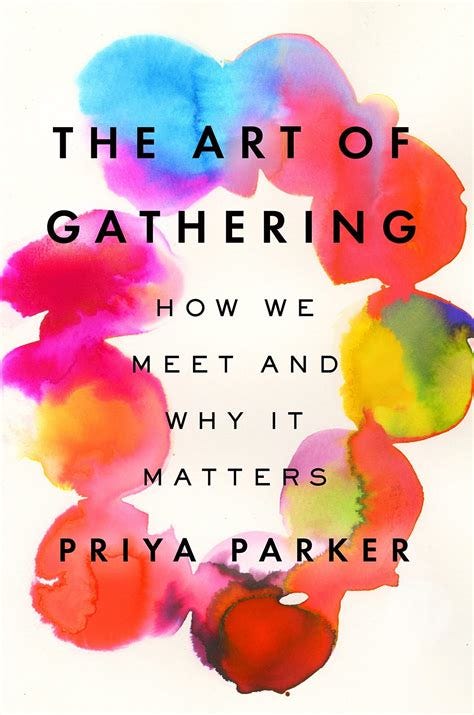
Recently I was listening to an episode of the No Stupid Questions Podcast in which they discussed the book The Art of Gathering by Priya Parker. It’s been a few years since I read the book, and regrettably I’ve since given away my copy, but this episode highlighted a couple points from the book and reminded me of a few others. And, I’d certainly recommend the book for anyone who is in charge of gatherings—especially pastors and church leaders. The most important point I took from the book was to understand the purpose behind the gathering. For instance, in one job I had, the weekly staff meeting would drag on for 90 minutes, sometimes even two hours. Part of the reason the meetings went so long is that each staff member was invited to “check-in,” sharing what had been going on in their live over the past week. When I figured out the the real purpose of the meeting wasn’t so much about managing the staff but rather building camaraderie and connection amongst the staff, my impatience for the length of the meetings lessened.
Listening to this podcast episode, I was reminded of another important point Parker makes, that gatherings have to be somewhat exclusive to be compelling. The hosts, Angela Duckworth and Mike Maughan, give an example from their own experiences. Maughan noted that when he was starting a book club with a friend, a group which both he and Duckworth have belonged to for more than seven years, the initial idea was to invite a large group of people to ensure a critical mass each time. In short, they wanted to ensure a gathering of 5-7 people, so they thought expanding the group of invites to 12-15 might ensure enough participation for each gathering. Interestingly enough, one of the group founders pushed back, suggesting that opening the group up to such a large number would essentially suggest that attendance and participation didn’t really matter that much. Basically, if someone is already planning for one’s absence, their attendance can’t matter all that much.
This of course got my mind thinking about church, especially as so many churches—whether conservative or more progressive, like to remove barriers of entry or any sort of expectation of commitment and participation. The problem with such, as noted before, is that such an attitude essentially suggests that their attendance doesn’t really matter that much. It’s often noted that megachurches have a huge so-called “backdoor,” meaning lots of people come in for church as new people, but quietly end up leaving through the “back door.” This trend plays out slightly differently in Mainline/progressive churches. As these churches trumpet a more theological openness and removal of theological barriers—what also gets highlighted (whether intentional or not) is that church attendance really isn’t that important or vital.
Now, before I proceed, I want to be clear that I appreciate theological openness and inclusivity, especially in this month of Pride. I’m not trying to suggest that churches need to go back to membership tests or a far more rigid and exclusive theology. What I am trying to say is that having some sort of barriers or norms or expectations actually communicates that the gathering matters, that it has importance, that its worth one’s time and attendance. Church then is not simply an “added good” as Andrew Root writes about, but an essential part of one’s faith and practice as a Christian.
I can’t remember the book, but when I was working on my MBA, I had to read a marketing book in which the author gave several ideas to make businesses or products seem compelling and exclusivity was one of those ideas. In the book, the author highlighted a bar which modeled itself as a Prohibition “Speakeasy,” having a hidden entrance and limits on how many could come each night. The bar was always packed out and participants found the exclusivity made the location more desirable. It’s basic marketing 101, setting limits on an offer like “limited time only,” “the first 100,” or “ending soon,” suggests exclusivity and extra value. In the podcast episode, the hosts also share a story about an annual party invitation the receive in which there is distinct start time, dress/apparel suggestions, and an RSVP requested via an invitation sent by mail. The podcast hosts suggest that this invitation has far greater appeal than a simple text message invite.
Again, I understand this seems paradoxical or contradictory. Shouldn’t we want to make participation easier and to require less effort? One would think. Yet, there’s a reason why fraternities, sororities, and other special groups or clubs have such appeal—it’s not because they have easy barriers of entry—rather it’s because they are exclusive. Cults tend to work in the same way, as the high barriers of entry suggest an ultimacy or uniqueness not found elsewhere. Or, from the commercial I remember hearing again and again as an adolescent— “The Few, the Proud, the Marines.” I had ZERO interest in joining the military as a teenager, but if I had to join one, it would have been the Marines!
So what does this look like in churches? Well, I think partly this may look like bringing back membership, not in an “I’m a part-owner of this voluntary association” sort of way, but rather in an “I’m partly responsible for the health and ministry of this church” sort of way. As the Faith Communities Today Survey has shown, there are a LOT of churches of 50 people or less. To the outside observer, these small churches should all be on the verge of collapse. Yet, that’s clearly not the case. For, in these small churches, the expectation is that every participant will actively contribute to the life of the church. I heard it this way recently in another podcast (I can’t remember which one), that whereas in most churches there is the 80/20 rule where 20% of the people do most of the work, in small churches, the other 80 have all left, meaning all that remains are the 20% of people willing to do the work. Similarly, when a new person comes in (and sure, that may be rare), that new person is quickly invited into active contribution/participation (and likely, the new person is aware that visiting such a small community will lead to such).
I want to clarify once again that I am not advocating for a more exclusive theology (though I think there may also be some nuance there as well—I’ll save that for another post). I think a church can be open and inclusive in their theology while also having some amount of barriers and expectations. And the openness might also extend to something like “this church is welcome to all, though we understand that all may not be willing/able to make a commitment at this time, we welcome you when you are ready.” As I’m writing this in Pride month, I could image an “Open and Affirming” Church in my tradition, the Christian Church (Disciples of Christ), having an expectation of membership or church leadership that one would themself be open and affirming. Certainly, in the DOC tradition, a church would welcome them to the table and not bar them from participation, but such a “barrier of entry” would imply “we’re serious about our LGBTQ+ positions.” Again, if a church or gathering implicitly implies that nothing is lost by you not being there—your presence doesn’t really matter either way (This is also another good reason why megachurches don’t do us that much good communally and societally either).
Years ago, I was pastoring an older, very traditional Mainline church. While prior to my time, the church had seen years of decline, I brought in an attitude of outreach and growth, including an emphasis on adding new members, with some 24 people or so joining during a 3 year span. Even beyond the membership push, I would invite new members to a “membership class” in which I outlined a few “expectations” for their involvement now that they were members (I may have done this class prior to their joining, I can’t really remember). The basic expectations were give, serve, and attend; pretty simple. Yet, one meeting in which I was making a gentle push about the importance of contributing financially, a deacon of the church quickly piped up and said, “or don’t give, that’s okay too, either way.” This deacon wasn’t trying to undermine me (at least intentionally)—he was trying to lessen the tension.
This is perhaps the key point, in removing any and all tension or “anxiety” from the other, we again send the message to them that their giving, serving, attending doesn’t matter while also shifting all the responsibility of getting them to give/serve/attend onto ourselves as church leaders. We want people to feel SOME amount of anxiety or tension. We want them to feel as if this church matters and their involvement in important in the life and health of the church—not in a “the whole ship will sink without you” sort of way or “you’re going to hell if you don’t join our church today” sort of way (the first method will scare people off, the second will either scare them off initially or burn them out eventually).
This is where my exclusivity gets inclusive. Because I believe God’s love has no limits, I believe God’s invitation will always be waiting. While I believe that people will be better served by making and taking a commitment to follow Christ and serve the church sooner rather than later, I can also trust that God’s love will still be waiting for them when they are ready. In truth, I think they are the ones ultimately missing out by not making the commitment sooner. But, this way of thinking, my way of thinking, assumes that there is some uniqueness or sacredness to this whole thing, that this is a tradition or story or truth worth preserving, and that asserting this uniqueness and exclusiveness of this story will make it all the more appealing. For as Simon Peter once answered, even after Jesus told his disciples how hard the road ahead would be, “Lord, to whom shall we go? thou hast the words of eternal life.”
Always thought-provoking essays from you, Loren! This one has me scratching my chin, wondering how to apply in in my context.