


TL;DR: Thomas Jay Oord’s A Systematic Theology of Love is an ambitious and impressive attempt to build a comprehensive theology around the idea that God’s nature is fundamentally love. While I remain unconvinced by aspects of open and relational theology, I found many of Oord’s ideas—particularly his concepts of God’s “becoming,” amipotence, and healing—to be thoughtful and engaging. I especially appreciated his insistence that Progressive Christianity needs theological substance rather than vague appeals to mystery. Even when I disagreed with Oord, I found myself challenged by his careful thinking about God, suffering, prayer, and creation.
Ambitious and Impressive
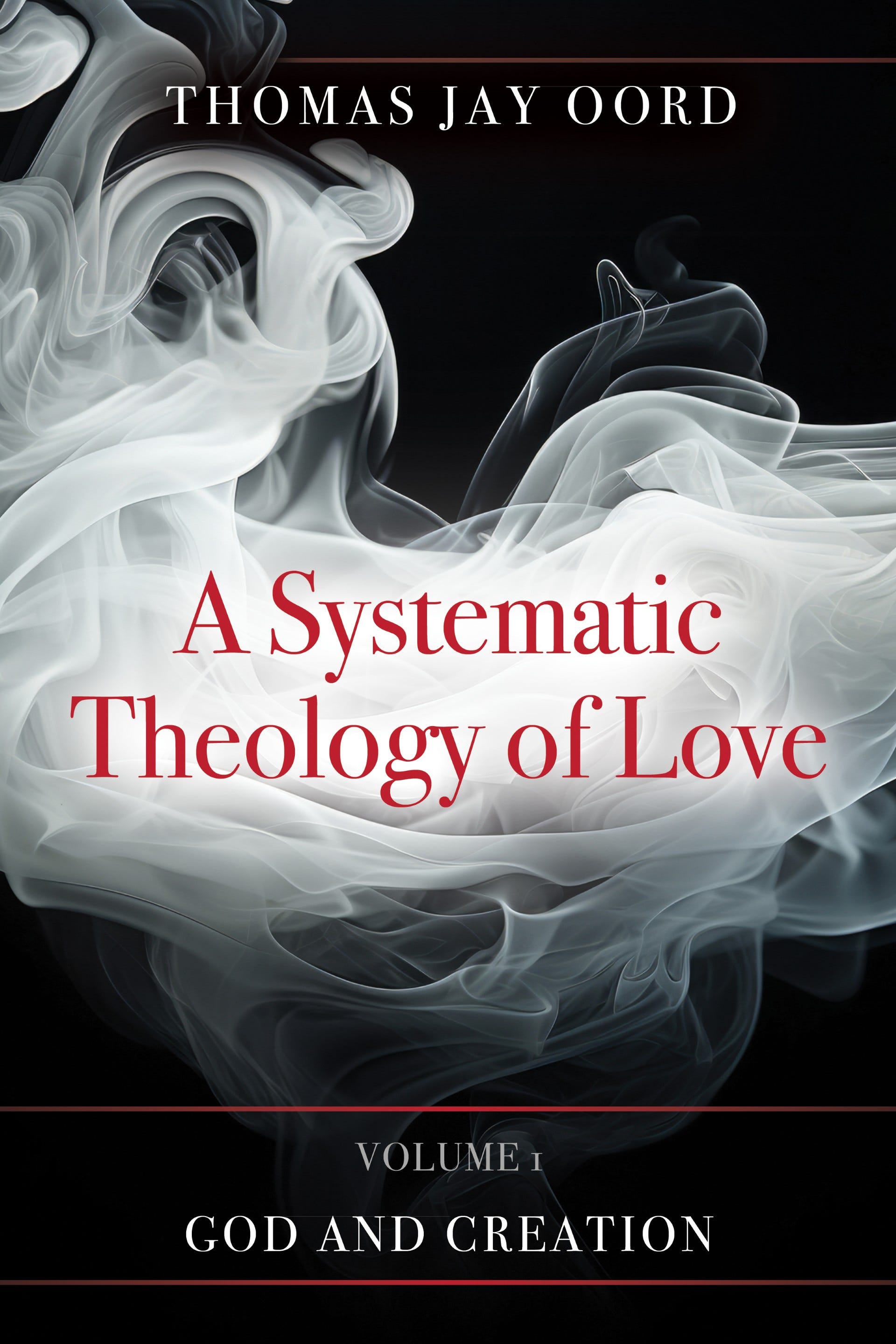
Those are the two words that come to mind when I think about Thomas Jay Oord‘s latest book, A Systematic Theology of Love: Volume 1, God and Creation.
Ambitious because Oord is attempting nothing less than a comprehensive theology centered on love.
Impressive because, whether one agrees with his conclusions or not, it is obvious he has spent decades thinking deeply about God, creation, suffering, and what it means to say that God is love.
I’ll be honest and admit that I struggled through portions of the opening chapters. The early sections are dense and detailed, and at times I found myself weighed down by the sheer volume of theological argumentation.
I’d also acknowledge that I’m not entirely sold on open and relational theology.
But Oord certainly has some compelling ideas.
God as Becoming
One intriguing concept is what Oord calls “gino-theology,” which “describes God’s becoming” (132).
Oord argues for a “becoming” understanding of God as a “dynamic person who engages in moment-by-moment relations with creatures and creation” (129). He prefers this language over traditional “being” language, suggesting that “becoming” language “names what moves” and that God “lovingly becomes” (132).
While I’m not entirely persuaded, I appreciate what Oord is trying to accomplish. He wants a vision of God that is relational, active, and genuinely engaged with creation.
Amipotence and the Problem of Evil
As an open and relational theologian, Oord also argues against omnipotence and in favor of what he calls “amipotence.”
I’m still not entirely sure how to pronounce the word.
I first encountered the idea in his earlier book Pluriform Love, where he began developing the concept. While I remain unconvinced in some respects, I do think it offers a thoughtful response to the problem of evil and suffering, a topic that clearly motivates much of Oord’s work.
As I understand it, Oord’s argument is essentially this: God always acts out of love.
He writes:
“Amipotence says a universal Spirit—One in whose nature love comes first—prompts us to act in good ways and live good lives. This means that God’s nature is the ultimate measure of goodness and the wellspring for the possibility of well-being” (390).
Again, I’m not sure I agree with all of Oord’s conclusions. But I appreciate that he is wrestling seriously with questions that matter deeply to people who suffer.
A Progressive Theology with Content
Another aspect of the book that I found refreshing was Oord’s insistence on theological substance.
Although Oord would certainly be identified as a Progressive Christian—and I suspect would willingly embrace the label—he is also critical of the tendency within some progressive circles to become overly vague or imprecise when speaking about God.
He writes:
“it’s impossible…for progressives to believe in an utterly mysterious God. There’s not content there to believe” (242).
Similarly:
“I also worry about a much less-discussed problem found more often in progressive circles…a God that’s too vague…” (250).
And later:
“Without belief in God, we can’t explain well our intuitions about—and the actualization of—the good, true, beautiful, just, and loving” (395).
I may disagree with some of Oord’s conclusions, but I appreciate his commitment to theological clarity.
Even when I found the book dry or overly detailed—and there were certainly moments when I did—it was obvious that Oord is trying to build a coherent vision rather than simply gesture toward mystery.
Healing, Prayer, and Hospital Rooms
Perhaps the most intriguing section for me came later in the book, when Oord discusses healing and miracles.
As a hospital chaplain who regularly encounters patients and families desperately hoping for healing, I often find myself wondering how best to pray and even what exactly I should be asking for.
Again, I’m not entirely sold on open and relational theology. But I’m also not convinced by the strongest versions of divine sovereignty often associated with Calvinism.
That’s why I found Oord’s discussion so interesting.
He suggests that an:
“amipotent Spirit…wants everyone healed. But miracles require creaturely cooperation or conducive conditions in creation. We should blame neither the cooperating victim nor God when miraculous healing doesn’t occur, or when things don’t align sufficiently” (414).
Whether or not I ultimately agree, I find the proposal thought-provoking.
And honestly, it resonates with some of my own observations.
Beyond my experience in hospital settings, I think about church life as well. I have heard countless Christians confidently declare that “God wants” or “God wills” something to happen.
Yet I also think there are times when human beings genuinely resist or obstruct what God desires.
I’m reminded of Paul’s warning not to “quench the Spirit” (1 Thessalonians 5:19).
If that command means anything, it seems to imply that our actions matter.
Final Thoughts
So, I’m still not entirely sure what I think about open and relational theology.
And I’m certainly not sure I agree with everything Oord says.
But that may actually be part of the value of reading him.
Few contemporary theologians push me to think as deeply or carefully about God, love, suffering, and prayer.
I found A Systematic Theology of Love ambitious.
I found it impressive.
And even when I found it frustrating, I found it thought-provoking.
That’s not a bad combination for a theologian.
I really appreciate Loren Richmond's analysis of my Systematic Theology of Love.