


TL;DR
A small hotel mishap reminded me how much loving our neighbor has less to do with better theology—and more to do with better rhythms. A thoughtful new book shows why context, not intention, often determines our capacity for kindness.
Author’s Note:
This is the second of a week full of “book review” posts
A few weeks back, I traveled out of state for a conference and speaking engagement. As it happened, the hotel I stayed at the first night was the same hotel I’d be lodging in for the rest of the conference. The only difference was that the reservations were listed under two different names. After that first night, I fully packed my suitcase before realizing the mix-up.
The next morning, instead of checking out, I went downstairs and asked the front desk if they could simply adjust the upcoming reservation so I could stay in the same room.
No problem, they said.
Well—it turns out it was a problem.
When I returned later that afternoon, my room was in the middle of being cleaned, and both my suitcase and the groceries I’d bought from a nearby store were gone. I was disappointed about the food—my gummy bears were missing, along with some actually healthy fruits and vegetables—but more than anything, I was worried about my clothes.
Thankfully, it turned out to be a simple misunderstanding. The staff had assumed the room needed a full turnover rather than a standard daily cleaning. They had my suitcase, and to make things right, they gave me some money to replace the groceries—including, yes, gummy bears.
What surprised me most wasn’t the resolution—it was how apologetic they were, and how calm I was.
Maybe they assumed I was a big-shot business executive because I was wearing a blazer.
Or maybe they’re used to getting yelled at by frustrated guests.
Either way, I was surprised by my own patience and understanding.
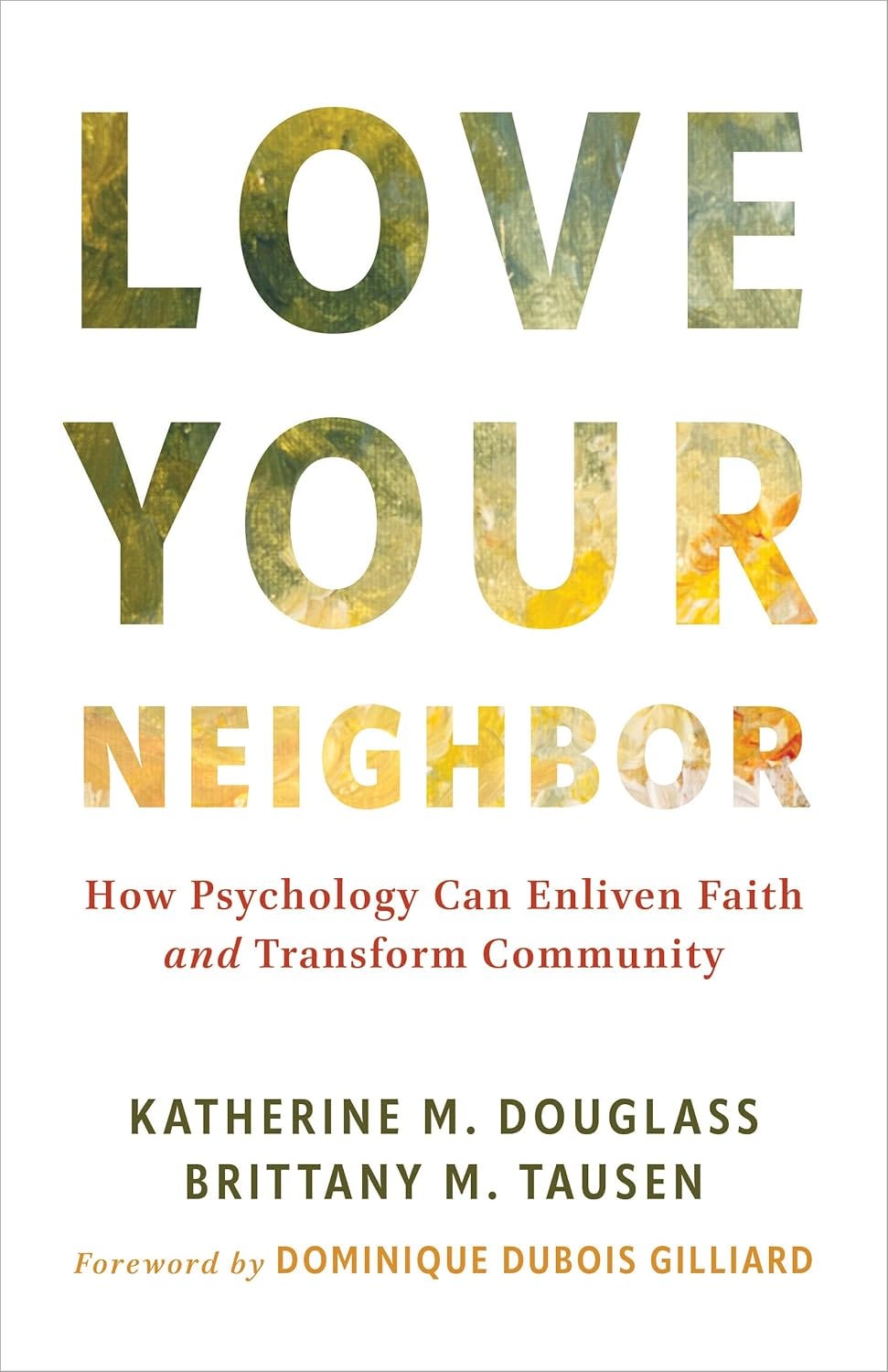
Too often, in situations like this, I can feel intense frustration. Even when I’m not rude—I try very hard not to be—I can feel that internal seething. What struck me afterward was that, having just read Love Your Neighbor: How Psychology Can Enliven Faith and Transform Community by Katherine M. Douglass and Brittany M. Tausen, I had unintentionally put some of their insights into practice.
About the Book
From the book description:
The biblical call to “love your neighbor” echoes through centuries, yet remains one of Christianity’s most profound—and challenging—practices. In this innovative synthesis of practical theology and psychological science, professors Katherine M. Douglass and Brittany M. Tausen bring ancient wisdom from Scripture and cutting-edge research into a conversation that can revolutionize how you build meaningful connections.
Pulling from their respective areas of expertise, Douglass and Tausen illuminate the psychological pathways and spiritual practices that activate neighbor love. Through engaging stories and evidence-based insights, they reveal why human connection often falters—and provide actionable strategies to overcome these barriers.
In short, the book pairs psychological insight with biblical and theological grounding, aiming to help Christians actually practice what they claim to believe—like loving their neighbors.
Why Context Matters More Than Intent
One example they highlight is the famous Good Samaritan study from 1973. Forty seminary students were set up to encounter a person in need. Beforehand, they were told they were either early, on time, or running late.
That variable alone made a massive difference in whether they stopped to help.
This line especially stood out to me:
“Just like we learned from the Good Samaritan psychology study, feeling frantic or like you don’t have enough time is likely to greatly reduce your support for others… To be a good neighbor, then, might not require a change of heart or theology, but rather a change of schedule” (27).
That sentence gets to the heart of the matter.
I grew up in Christian contexts that emphasized doing the right thing but gave far less attention to the structures that actually make doing the right thing possible. I’ve watched people genuinely want to become more Christlike without ever being equipped to understand what that looks like in real life.
For me, this book isn’t revelatory or groundbreaking—but it is an important reminder: living out our faith has less to do with strong theology alone and more to do with strong contexts. This isn’t to say theology doesn’t matter—of course it does.
But, if I want to be patient, kind, and generous, I need to build margin into my life—to not always feel rushed, pressed, or behind.
As an Enneagram 5, time is a core value for me. That means I have to be especially mindful not to overschedule myself (which makes me frantic) or feel like time is being wasted (which is why I bring a book almost everywhere).
This book is filled with insights like this—paired with theological grounding for why they matter—so that we can better practice what we preach and genuinely love our neighbors.
I’d recommend it.