


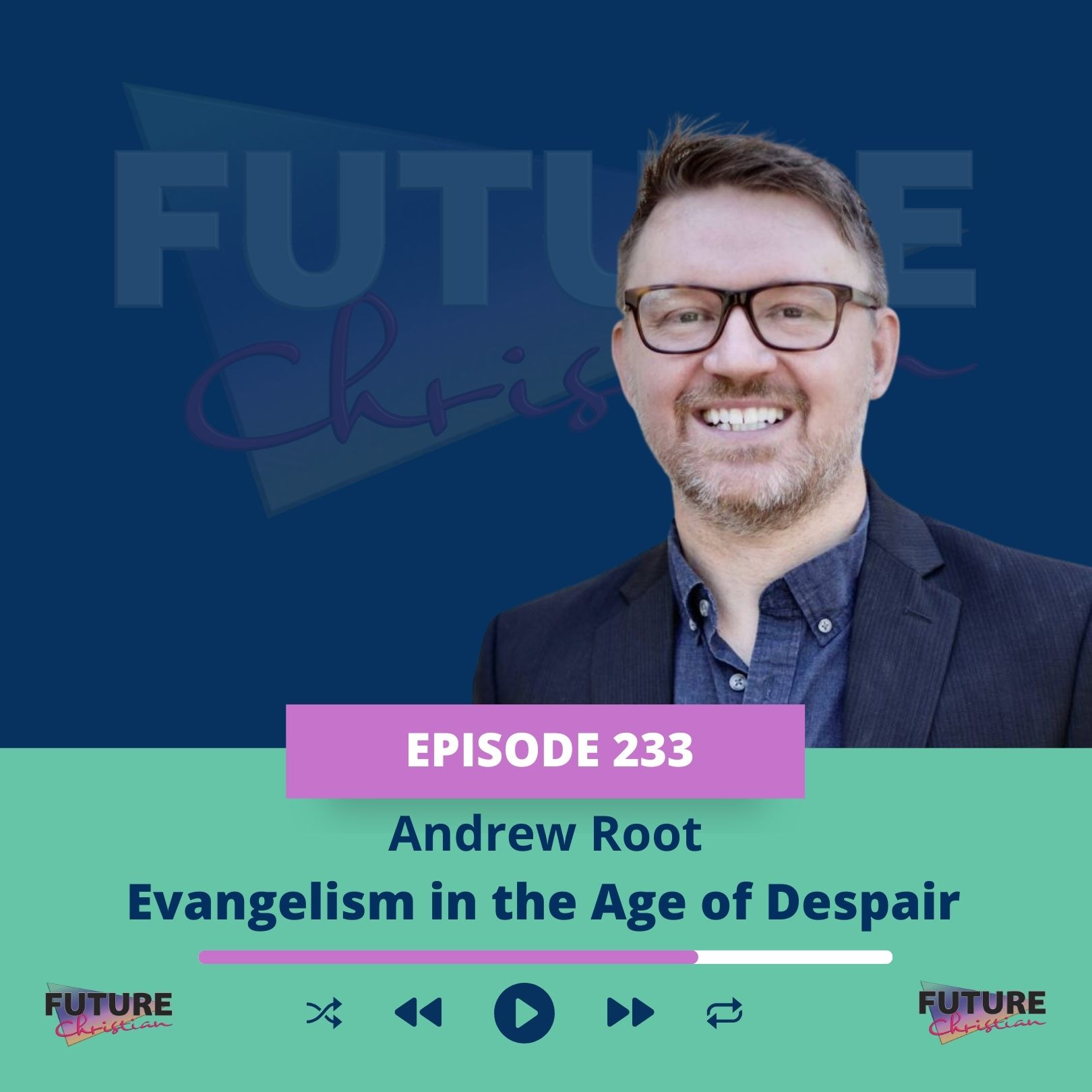
If the church wants to find its theological voice for today, we should be looking less to academic departments and more to local pastors.
Theology divorced from pastoral presence is often sterile, disconnected, and overly abstract. What the church needs now—especially in an age marked by anxiety, grief, and despair—is theology rooted in lived experience. That means we need pastors at the theological center. For some time, it hasn’t been that way.
Writing in his book Respecting Congregations, Clyde Ervine writes:
…twentieth-century theology did not give significant theological attention to congregations, in part because academic theology does not always prioritize the doctrine of the church. In fact, during the Enlightenment, particularly in Germany, a concerted effort was made to move the study of theology from church institutions to more intellectually rigorous universities, where it could be studied free of ecclesiastical oversight. It was this liberal, nonconfessional, church-suspicious theology to which Karl Barth reacted after the First World War.
I believe we need to switch things back to local churches and pastors having precedence, and it was reading Andrew Root’s Evangelism in the Age of Despair that confirmed this conviction. In the book, he writes about what he calls “a theology of consolation,” but I see it as the natural outgrowth of faithful pastoral ministry—walking with people through sorrow, offering presence instead of prescriptions, and bearing witness to God’s work in the most painful parts of life. So much of his words to start the book sounded flat-out pastoral. Then he just came right out and said it.
“An evangelism of consolation needs at its core… a pastor.”
— Andrew Root, Evangelism in the Age of Despair, p. 200
To be clear, Root is an academic, not a pastor. But what gives Root’s theology credibility in my opinion, and what sets him apart from many academic theologians, is his proximity to a pastor. In our Future Christian Podcast conversation, I wondered how much of his theological vision is rooted in watching his wife, Kara Root, serve as a pastor of a small congregation in Minneapolis, and he concurred.
“In many ways, you could reduce all my work down to giving a vision to what my wife Kara does as a pastor.”
Kara is not leading a megachurch or building a platform. She is accompanying people through life’s most difficult moments—grief, dying, disappointment—and that, Root says, is where theology is most real. She doesn’t theologize from a distance. She shows up. And Root sees that work as theological in its own right.
This is what makes pastors such powerful theologians. Their theology isn’t speculative or performative — it’s incarnational. It’s born in hospital rooms, over coffee tables, in the narthex after a hard funeral. They are forced to wrestle with pain, doubt, fear, and finitude every single week. And if their theology can’t survive there, it isn’t worth much anywhere.
“A pastor walks into the grief… not to fix it… but to be present within it, and to testify to God’s presence in the midst of that presence.”
This is what gives me pause about elevating academics above all else. I’m not suggesting we abandon the academy or ignore scholarly voices. But we need to reverse the hierarchy. Theology that doesn't touch the ground should not be the theology that leads the church. And if consolation is indeed a form of evangelism, then we need leaders who are in the room when real pain is voiced. Pastors are there.
We’ve long treated theology as the domain of experts — and often, that has meant white men writing books in elite institutions, disconnected from the daily life of local congregations. What we need instead are theologians formed in the practice of presence. Not just PhDs, but pastors. Not just lecturers, but listeners. Not just arguments, but accompaniment.
In an age of despair, the theologians we need are the ones showing up at the bedside.
As a small town pastor, I thank you wholeheartedly for this reflection. There is a disconect between my daily work, which you have so accurately described as "presence," and some of what flows from the academy. The act of preaching, for example, requires that I translate my seminary training, and my study of theological writings, into something which speaks to the lived experience of the congregation. Pastors and academics have much to learn from, and to teach, one another.
I think you may enjoy the works of Bo Giertz. He was a pastor who turned his back on a promising academic career to be a pastor. He became bishop of Gothenburg in Sweden because he channeled his pastoral experience into books, especially his novel's "The Hammer of God," and "Faith Alone, The Heart of Everything." When he became bishop he wrote "A Shepherd's Letter" which distills his theological and pastoral program. If you start there you will see his love for the church and being a pastor.