



Why are young adults leaving the church—or are they?
Headlines often highlight declining church attendance, especially among the younger generation. But is this the whole story? Two insightful podcasts reveal a different narrative—one of engagement, authenticity, and a deep desire for meaningful community.
Jeff Keuss, author of Defiant Hope, Active Love, recently joined the Future Christian Podcast to discuss the importance of church for young adults, drawing on his sociological research and extensive experience in ministry. His book explores the transformative power of hope and love, urging readers to confront despair and injustice with resilient faith and practical expressions of love through service, kindness, and advocacy. Keuss’s insights on the relevance of church for young adults—centered around authenticity, leadership, and community—shed light on why many still find church meaningful.
This conversation aligns with a recent episode of All Things Episcopal, hosted by Clare Stern-Burbano, which featured a panel of young Episcopalians: Clare herself, Glenn Green, and Mason Weber. Each shared their personal experiences of faith, the challenges they’ve faced, and the reasons they’ve stayed connected to church.
Clare, a college, youth, and children’s minister discerning a call to priesthood, reflected on how the Episcopal Church has been a spiritual home for her since childhood, providing a place of belonging and purpose. Glenn, a lifelong Episcopalian, spoke about her journey worshiping in various states before finding a church home in Kansas City. She highlighted the importance of youth ministry and how being part of a vibrant community has enriched her faith. Mason, a student and diocesan leader, shared how his involvement at St. Paul’s in Manhattan, KS, has shaped his faith journey and allowed him to grow as a leader and mentor for others.
The panel discussion provided a window into the lives of young adults who have found faith and community within the church. Their stories underscored the themes explored in Keuss’s work—authenticity, mentorship, and the transformative power of rituals.
Authentic Community
From the Future Christian Podcast, Dr. Keuss emphasizes that authenticity is a cornerstone for young adults seeking faith communities. They desire spaces where they feel seen, heard, and free to express their struggles without judgment. This sentiment is echoed by Mason Weber from All Things Episcopal: "I stayed because I felt seen and heard. At St. Paul’s, they don’t expect me to have it all figured out. That’s huge." This highlights how crucial it is for churches to create environments where young adults feel valued and understood without the pressure to perform.
Relevance to Modern Issues
Young adults value churches that engage meaningfully with contemporary challenges rather than avoiding them. As Dr. Keuss shares in his interview, faith communities must connect theology with real-world issues to remain relevant. Glenn Green shared this experience: "My church doesn’t shy away from talking about hard topics. Faith should help us make sense of the world, not ignore it." Churches that engage with societal issues demonstrate that faith is not just theoretical but deeply practical and applicable to everyday life.
Leadership Opportunities
Another point raised by Dr. Keuss is that young adults flourish in environments where they are trusted with leadership roles. Glenn’s journey reflects this: "Being on the youth leadership team has shown me that my voice matters. It’s not just the older members making decisions—it’s all of us together." When churches provide leadership opportunities, they empower young adults to invest in the community and grow their own sense of purpose and agency.
The Power of Rituals
Often, it’s assumed that traditional practices and rituals are outdated or ineffective, yet again, this is not what the research shows. Rituals and sacraments play a vital role in anchoring young adults spiritually. Respondents from All Things Episcopal spoke about the transformative power of practices like communion. Mason noted: "Through the Eucharist, I’ve felt God’s presence in a way that changed my life. It’s what keeps me rooted."
At the same time, barriers to entry can make these rituals feel inaccessible to newcomers. Glenn Green shared their experience of this challenge: "If you're not a cradle Episcopalian and you walk into an Episcopal Church on a random Sunday... no one tells you anything, and you're like, where do I go? What do I do? What is this red book? What is this blue book? Some churches do a really good job at explaining what all of the books are in our pews. Some not so much."
It’s clear that rituals provide a tangible connection to faith, reminding young adults of the sacred and offering a sense of continuity in an ever-changing world. By offering clear guidance and creating a welcoming atmosphere, churches can ensure that these sacred practices become powerful, inclusive tools for spiritual growth rather than intimidating barriers.
Mentorship and Invitation
Finally, both podcasts highlight the value of mentorship. Clare, reflecting on her journey as a young Episcopalian, noted: "Mentorship has been a game-changer. Having someone invest in my faith journey reminds me that I’m not alone in this." Mentorship builds trust and creates spaces where young adults can explore their faith alongside trusted guides, reinforcing their sense of belonging and purpose. Dr. Keuss added to this, emphasizing the importance of intergenerational connections in faith communities. He explained that young adults often thrive when they feel supported by mentors who are not only willing to listen but also share wisdom and offer accountability. These relationships are essential in helping young adults navigate both spiritual and life challenges, creating a deeper connection to the church.
The Role of Community
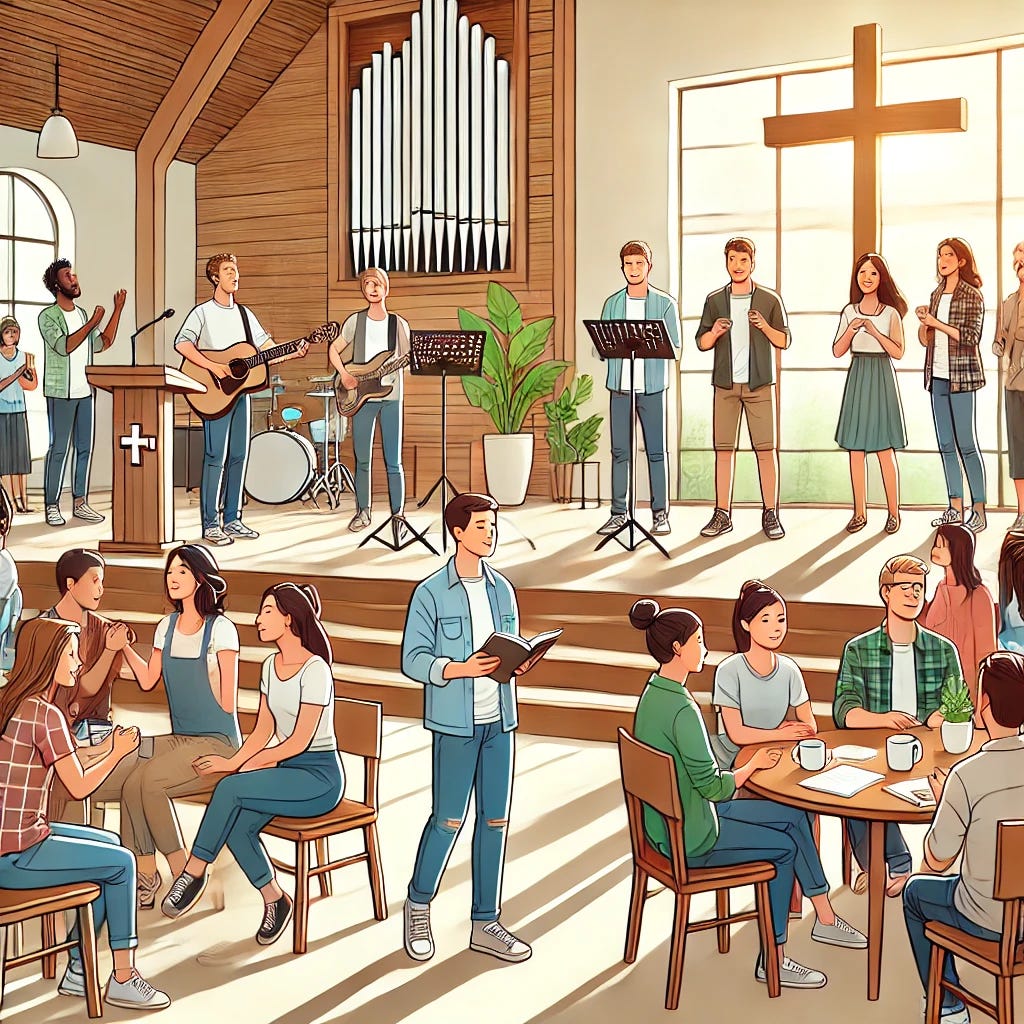
At the heart of both podcasts is a powerful truth about faith: it thrives in community. Clare summed this up beautifully in All Things Episcopal: "You can’t be Christian alone. While faith is personal, it’s also shaped by the people around you." Faith is not meant to exist in isolation but as part of a broader network of shared experiences and mutual care. Community provides a space where doubts can be expressed, questions explored, and spiritual growth encouraged. It is through the relationships within a faith community that individuals find support during difficult times, celebrate shared joys, and discover new ways to live out their beliefs. This reminder challenges churches to be places where relationships are central, creating environments that nurture faith through shared experiences, support, and growth. As both podcasts suggest, the future of the church lies in its ability to foster authentic connections that remind individuals they are part of something larger than themselves.
Final Thoughts
These insights reveal a compelling truth: young adults are interested in church and faith when communities meet their core needs for authenticity, relevance, leadership, rituals, and mentorship. Pastors and church leaders, the opportunity is clear—young adults are searching for spiritual homes.
To respond to this call:
Create intergenerational mentorship programs to build trust and nurture spiritual growth.
Offer leadership opportunities to young adults, empowering them to shape the community.
Host forums for open discussions about societal issues and faith.
Provide clear guidance for newcomers, making rituals accessible and meaningful.
By listening to their stories and investing in their journey, you can build communities where young adults thrive, deepen their faith, and inspire others to do the same. The future of the church is one of relationship, authenticity, and shared purpose.
Podcast Episode from Future Christian Podcast:
Richmond Jr., Loren. “Dr. Jeffrey Keuss on Young Adults and the Church.” Future Christian Podcast
Podcast Episode from All Things Episcopal:
Stern-Burbano, Clare. “Why Young Adults Stay in the Episcopal Church.” All Things Episcopal. Audio podcast, 12/15/2024.